The Circleville Letters: Inside Ohio's Unsolved Mystery of Threats, Murder, and a Town's Silence
The Circleville Letters: a decades-old mystery of threats, a deadly trap, and a wrongful conviction that still haunts an Ohio town. Read the unsettling true story.
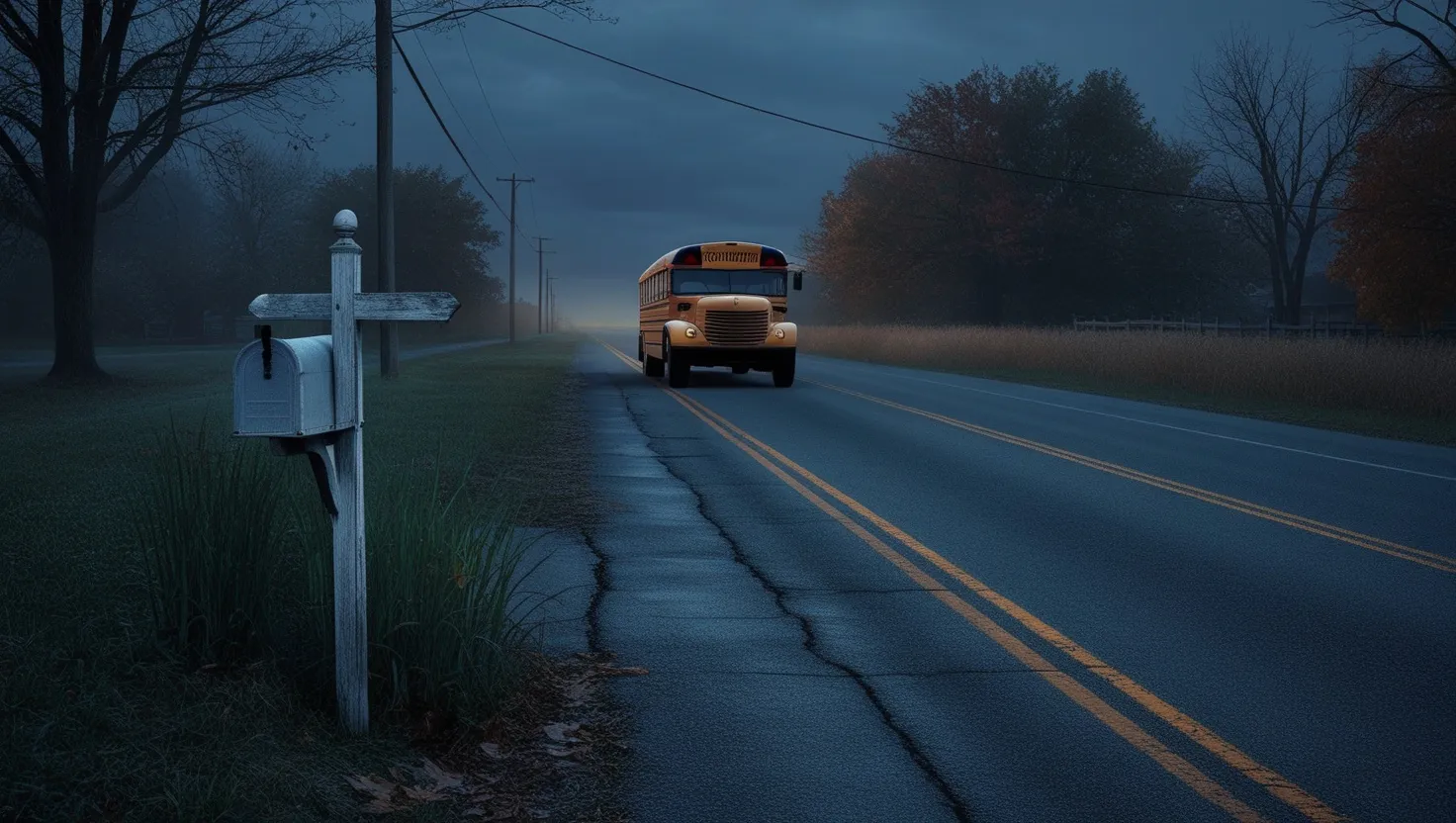
Let me tell you about a small town in Ohio that got a letter nobody could ever quite explain.
The year was 1976. The town was Circleville. And the person who opened that first envelope was a woman named Mary Gillispie, a school bus driver with two kids and a husband named Ron. The letter said she was having an affair with the school superintendent. It knew things it should not have known. Details about her daily routine. Comments about conversations that happened behind closed doors. Who writes something like that? And more importantly, how did they know?
She assumed it was a cruel prank. Most people would. But then more letters came. Not just to her. To her neighbors. To her coworkers. To people connected to her life in ways that made no sense unless someone was watching very closely, very patiently, for a very long time.
Can you imagine getting mail like that?
Picture checking your mailbox every day, never knowing if today is the day another letter shows up accusing you of something, threatening someone you love, or revealing a secret you thought was buried. That is what living in Circleville felt like for years. Not months. Years.
Ron Gillispie, Mary’s husband, became obsessed with finding out who was sending these letters. He thought he had a lead. One night in 1977, he drove off to confront someone, or so the story goes. He never made it. His car crashed into a tree. Police called it an accident. He had been drinking, they said. Case closed, they said.
But here is where it gets strange. Witnesses later claimed they saw another vehicle near the crash site that night. A vehicle that left before anyone could get a good look at it. If this was just a drunk driving accident, why did people remember another car at all?
“The truth does not change according to our ability to stomach it.” — Flannery O’Connor
That quote fits Circleville perfectly, because what came next was harder to stomach than a car accident.
The letters did not stop after Ron died. If anything, they got worse. They named names. They made threats. And then, in 1983, something happened that moved this whole case from disturbing to genuinely dangerous.
A trap built to kill
Mary found a sign posted near a spot she drove her bus route every single day. The sign insulted her, same as the letters always had. But this sign was wired to a gun. A loaded, booby-trapped weapon rigged to fire if the sign was disturbed. Mary’s brother found it first and managed to avoid triggering it completely. If he had been slightly less careful, he would have been shot.
Think about the mind behind that. Writing nasty letters is one thing. Building a functioning firearm trap and placing it exactly where you know a specific person will walk is something else entirely. This was not some bored teenager playing pranks. This was someone with patience, access to weapons, and a willingness to kill.
Investigators traced the gun. It belonged to Paul Freshour, Mary’s brother-in-law. He was arrested, charged, and eventually convicted of attempted murder, largely on the theory that he was also the letter writer all along.
Here is the part that should bother you
Letters kept arriving in Circleville after Paul Freshour was locked up in prison. How does a man write threatening letters to an entire town while sitting behind bars under supervision? Prison officials searched his cell. They found nothing connecting him to new letters. Yet the letters did not stop, and some of them specifically referenced his incarceration, taunting investigators with knowledge that an isolated inmate should not have had.
Freshour always said he was innocent. He took polygraph tests. Experts who reviewed his results said he passed. Handwriting analysts who compared his writing to the letters could not make a definitive match. Prosecutors leaned heavily on circumstantial evidence and a theory more than hard proof.
Doesn’t that make you wonder what justice actually looked like in this case?
He served about a decade in prison before being released. He was never cleared. He spent the rest of his life insisting he had nothing to do with any of it, and he died still carrying that cloud over his name.
“A lie can travel halfway around the world while the truth is putting on its shoes.” — Mark Twain
In Circleville, the lie did not even need to travel. It just needed to sit quietly in a filing cabinet while an innocent man, maybe, lost ten years of his life.
So who actually wrote the letters?
Theories still circulate decades later, and none of them wrap up neatly. Some believe it was a local figure with intimate knowledge of the town, possibly someone in law enforcement given how specific and well-timed the letters always were. Others suspect a small group working together, since the volume and spread of letters seemed too much for one person to manage while avoiding detection.
There is also a theory that gets less attention but deserves more thought: what if the letters were protecting a secret bigger than an affair? What if the real target was never Mary Gillispie at all, but something she stumbled into without realizing it? Small towns often guard secrets collectively, whether about corruption, old crimes, or relationships nobody wants exposed. Could Circleville have simply decided, consciously or not, to stop asking questions once the letters quieted down?
That is maybe the strangest detail of this entire case. The letters eventually stopped, not because anyone solved the mystery, but because people stopped paying attention. No grand confession. No final answer. Just silence replacing fear, which is its own kind of unsettling.
What does it say about a community that lets a mystery like this go cold?
Ask yourself honestly. Would you keep digging if a threat against your own family suddenly disappeared? Or would you, like most of Circleville, just feel relieved and move on?
I think that is the real horror of this story. It is not the letters themselves, or even the gun trap. It is how a whole town can experience years of fear, suffer a death that was never fully investigated, convict a man on shaky evidence, and then simply let the entire thing fade without resolution.
“Evil is unspectacular and always human, and shares our bed and eats at our own table.” — W.H. Auden
Whoever wrote those letters likely did share tables with the Gillispie family. Attended the same church, maybe. Shopped at the same grocery store. Waved at Mary on the street while knowing exactly what was coming in next week’s mail.
Does that not make your skin crawl a little?
The Circleville letters case file remains incomplete to this day. No official closure exists beyond Freshour’s conviction, which many researchers and even some investigators consider unsatisfying at best. DNA testing was not what it is now back in the 1970s and 80s, and whatever physical evidence existed has likely degraded or disappeared entirely.
What remains is a town with an open wound disguised as old news, a family that lost a husband and father under murky circumstances, and a man who died without ever clearing his name.
I keep coming back to one simple question whenever I think about this case: how often does the truth get buried, not through some elaborate conspiracy, but through ordinary people simply choosing comfort over confrontation?
Maybe the writer of those letters is long dead now. Maybe they are still alive, sitting somewhere quiet, having kept their secret for nearly five decades. Either way, Circleville never got its answer, and that absence says something uncomfortable about how mysteries like this get handled when a community decides fear is easier to live with than the truth.
What would you have done if you lived there?
Would you have kept searching for answers, or would you have been relieved enough by the silence to simply let it go, the same way an entire town apparently did?