The Max Headroom Broadcast Hijack: The Unsolved Signal Theft That Changed TV Forever
Uncover the truth behind the 1987 Max Headroom broadcast hijack — Chicago's strangest unsolved TV mystery. Who did it, how, and why does it still matter? Read on.
There are moments in broadcast history so strange, so perfectly weird, that they feel like they were dreamed up by someone on very little sleep and very strong coffee. The Max Headroom broadcast hijack is one of those moments. It happened fast. It was bizarre. And nearly four decades later, nobody knows who did it or why.
Let me paint the picture for you.
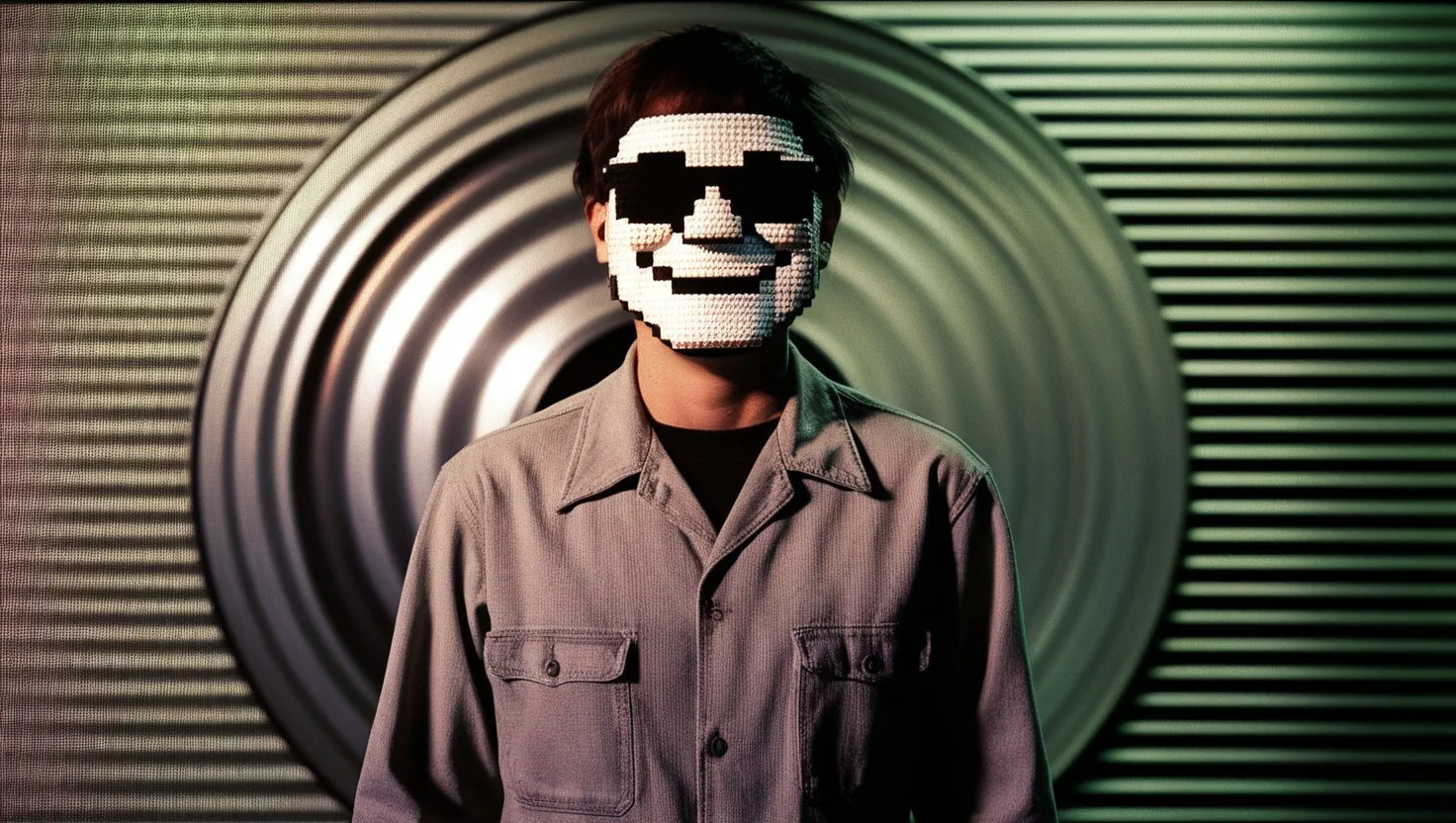
It was November 22, 1987. A Sunday night in Chicago. WGN-TV was airing its evening sports highlights when, without warning, the signal cut out. For about 25 seconds, a figure appeared on screen. The figure was wearing a Max Headroom mask — that pixelated, grinning, sunglasses-wearing AI character from the 1980s — and stood in front of a rotating corrugated metal background. No audio came through. The station engineers managed to switch frequencies and kill the feed before the intruder could say anything. Problem solved? Not quite.
About two hours later, WTTW — a PBS affiliate — was airing a Doctor Who episode. Same masked figure appeared again. This time, the engineers weren’t so quick. The signal ran for nearly 90 seconds. The figure hummed, muttered, held up a Pepsi can and called it “New Coke,” got spanked with a flyswatter by an unseen hand, and at one point dropped his pants and exposed his rear end to the camera. Then the signal cut. The broadcast returned to Doctor Who. Nobody was ever caught.
“The medium is the message.” — Marshall McLuhan
That quote has never felt more literal. Because what the Max Headroom hijacker understood — consciously or not — is that the act of interrupting a broadcast IS the message. You don’t need coherent words. You don’t need a manifesto. Breaking into a signal tells everyone watching that the thing they trust, the box in their living room that delivers reality to them every night, is not as controlled as they think.
So who did this? And more importantly — how?
Let’s talk about the how first, because it’s more interesting than most people realize. Television broadcast signals in 1987 were analog. They traveled through the air as radio waves, and a powerful enough transmitter pointed at the right tower could override the signal. This is called “signal intrusion” or “broadcast piracy,” and while it sounds impossibly technical, it had actually happened before. What made the Max Headroom incident different was the level of preparation. This wasn’t someone flipping a switch. Whoever did this had a high-powered FM transmitter, a camera, a costume, lighting, and a pre-planned set. The rotating corrugated metal background behind the figure? That was intentional stagecraft.
The FCC investigated and couldn’t crack it. The Chicago Police Department looked into it. The signal was never traced to a location. No arrests. No suspects named publicly. The case went cold.
Now here’s where it gets genuinely strange.
Have you ever wondered why nobody came forward, not even anonymously, to claim credit? Most hackers, pranksters, and performance artists eventually want recognition. The Max Headroom hijacker never did. In the internet age, when every anonymous act eventually gets traced or bragged about, this one stayed silent. That silence is either the sign of incredible discipline or something else entirely.
One theory — and this is the one that keeps resurfacing in the darker corners of broadcast history — is that this was an inside job. Not inside WGN or WTTW specifically, but inside the television infrastructure. Someone with knowledge of how signals were routed, how often engineers monitored feeds, and exactly when a PBS station’s engineering staff would be at minimum capacity on a Sunday night. That’s not a casual prankster. That’s someone who understood the system intimately.
“We shape our tools, and thereafter our tools shape us.” — John Culkin
The timing of the second intrusion is telling. WTTW on a Sunday night, during Doctor Who, was chosen because its engineering team was small. Weekend skeleton crews, minimal live monitoring. If you wanted 90 uninterrupted seconds on a broadcast signal, that was your window. Someone knew that.
The Max Headroom character himself is worth thinking about. Created in 1984 as a satirical AI news anchor, Max Headroom was a commentary on television itself — on the vapid, commercial, manufactured nature of broadcast media. He glitched, stuttered, and said uncomfortable things in a world of polished anchors. Choosing that mask wasn’t random. It was a statement. Whoever wore it was either making a pointed cultural commentary about television, or they were just a very dedicated fan who thought it would look cool. Both are possible.
What did the hijacker actually say? The audio quality was poor and distorted, deliberately so. Fragments have been transcribed by people who’ve studied the footage obsessively. There’s a reference to “catching” WGN news anchor Chuck Swirsky. There’s something about his “brother” and a Pepsi can. There’s humming, nonsense syllables, and the infamous spanking scene. None of it forms a coherent narrative. This could mean the message was intentionally coded. Or it could mean there was no message at all and the whole thing was performance for performance’s sake.
Here’s a question worth sitting with: Does a prank need a reason to be significant?
The hijacking happened exactly 24 years after the Kennedy assassination — November 22nd. Chicago. Some researchers have pointed to this date as intentional. Others call that a coincidence. The overlap is interesting enough that it doesn’t fully disappear when you try to wave it away.
“Television is a medium of entertainment which permits millions of people to listen to the same joke at the same time, and yet remain lonesome.” — T.S. Eliot
There’s a conspiracy theory — never proven, often repeated — that the incident was a test of broadcast vulnerability by a group with military or government ties. The Emergency Broadcast System existed at the time specifically to override commercial signals during national emergencies. If someone wanted to probe whether a civilian group could execute a similar override, the Max Headroom hijack would be a perfect dry run. Bizarre enough to be dismissed as a prank. Technical enough to prove a point.
This theory sounds outlandish until you remember that the FCC’s investigation was closed with no public explanation of how the signal was hijacked. For an agency whose entire job is regulating broadcast frequencies, finding no technical trail at all is unusual. Signals leave footprints. Transmitters have power signatures. The fact that nothing was traced suggests either extraordinary skill on the hijacker’s part, or that someone with access to that information decided it shouldn’t go public.
The internet eventually did what the FCC couldn’t — kind of. In 2010, a Reddit thread appeared where someone claimed to have inside knowledge of who did it. The post described a group of young broadcast engineers and technical enthusiasts in Chicago who pulled it off as a sophisticated prank with no political motive whatsoever. The post was detailed. It named no names. It was never confirmed or denied by anyone in a verifiable position to know. The original poster disappeared from the platform.
Is the mundane explanation — bored, talented young people with broadcast knowledge and a good costume — more satisfying than the conspiracy? Maybe. But it’s also less complete. It doesn’t explain the clean disappearance. It doesn’t explain the absence of any deathbed confession, bar story, or accidental slip in 37 years.
What does the Max Headroom hijack actually tell us, if we look at it plainly?
It tells us that the systems we trust to deliver information are more fragile than they appear. It tells us that the line between authorized and unauthorized broadcast is, or at least was, thinner than most people imagined. And it tells us that whoever stood behind that mask understood something about media that most viewers in 1987 didn’t — that television isn’t a one-way street. It’s a frequency. And frequencies can be stolen.
“The most courageous act is still to think for yourself. Aloud.” — Coco Chanel
Whether the Max Headroom broadcast was a prank, a protest, a technical demonstration, or something stranger, it achieved something real. It made people look at their television sets differently for a moment. It introduced doubt. And in a media environment built entirely on the illusion of controlled, trusted delivery — that doubt was radical.
The mask is still out there somewhere. The corrugated metal background probably ended up in a dumpster. And whoever wore the costume that night in Chicago is either very old, very quiet, or very good at keeping secrets. None of those options make the story less interesting. If anything, the silence is the loudest part of the whole broadcast.