5 Ancient Plagues That Vanished Without a Trace: History's Deadliest Unsolved Medical Mysteries
5 ancient plagues that killed millions remain unidentified to this day. Explore history's deadliest medical mysteries and what they reveal about disease.
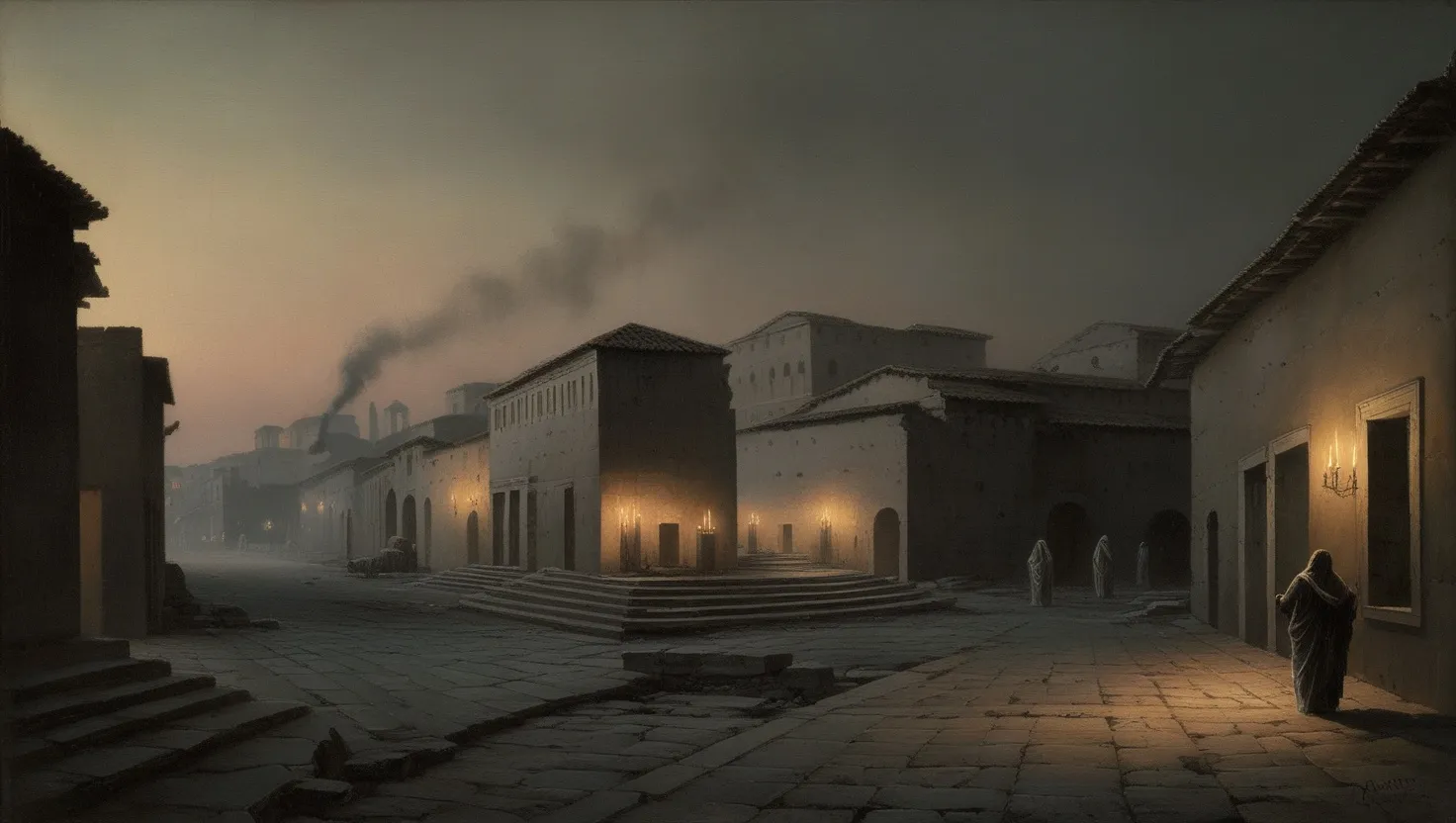
Let me take you back to a time when a sickness could kill thousands of people and then simply walk away, leaving behind nothing but confused writers and empty cities. No lab reports, no blood samples, no way to go back and check. Just stories written by scared, grieving people trying to describe something they had never seen before and would never see again. That’s what makes these five plagues so strange. We know they happened. We just don’t know what they were.
Let’s start with Athens, around 430 BC. The city was packed with refugees because of the war with Sparta, and suddenly people started dying in horrible numbers. The historian Thucydides was there, and he actually caught the disease himself and survived, which is probably why we have such a detailed account at all. He wrote down everything: the fever, the redness in the eyes, the coughing blood, the skin covered in blisters. He wasn’t a doctor, but he tried his best to describe it so that if it ever came back, people would recognize it.
Here’s his famous line, and it still gives me chills every time I read it:
“The nature of the distemper was such that no words can describe the violence of it.”
Isn’t that an odd thing for a historian to write? Normally historians explain things. But Thucydides is basically telling us, I saw it, and I still can’t explain it to you. Doctors today have guessed everything from typhoid fever to measles to Ebola, but nothing matches perfectly. And here’s the kicker: the disease killed Pericles, the most powerful man in Athens, the leader who built the Parthenon. If it could take him down, it could take anyone down. Then, after wiping out maybe a third of the city, it just stopped. Where did it go? Nobody knows.
Now jump forward about 600 years to the Roman Empire, and we meet the Antonine Plague. This one hit during the reign of Marcus Aurelius, the philosopher-emperor, somewhere around 165 AD. Roman soldiers came back from fighting in the East and brought something with them, something that spread through the entire empire like wildfire. We’re talking about possibly five million deaths. Think about that number for a second. Five million people, in a world without antibiotics, without any idea of germs, without any concept of what was actually killing them.
A physician named Galen actually treated patients and wrote down the symptoms: fever, diarrhea, and a skin rash that would turn into sores after about a week. This description sounds a lot like smallpox to modern doctors, but we can’t confirm it. Galen even left Rome at one point during the outbreak, which some historians think was him fleeing for his life, and others think was just bad timing on a trip. Either way, the guy who was supposed to be the smartest doctor in the empire couldn’t stop it either.
Did you know some historians believe this plague might have been the beginning of the end for Rome’s dominance? It weakened the army, drained the treasury, and shook public confidence. Marcus Aurelius himself may have died from it in 180 AD. A disease doesn’t care how smart you are or how powerful your empire is. That’s a humbling thought, isn’t it?
About 85 years later, Rome got hit again, and this one might have been even worse. This is the Plague of Cyprian, named after a bishop in Carthage who wrote about watching his own city collapse under the weight of the dead. He described people vomiting, their bowels failing, their eyes bleeding, their limbs rotting from infection. It sounds almost too horrific to be real, but multiple sources from that time period confirm cities losing massive portions of their population.
Cyprian wrote something that I think applies to every single plague on this list:
“Many of us are dying in this mortality, that is, many of us are being freed from the world.”
That’s a strange way to look at mass death, right? He was trying to comfort his people by telling them that dying from plague was basically a shortcut to heaven. Whether you believe that or not, you have to admit it’s a creative way to deal with watching your entire city collapse around you. At its peak, this plague reportedly killed 5,000 people a day in Rome alone. A day. Imagine that happening in a city without modern medicine, without refrigeration for bodies, without any understanding of contagion. The disease has been guessed to be anything from smallpox to measles to some kind of viral hemorrhagic fever like Ebola, but again, nobody can prove it.
Now let’s go back even further, way before Athens, before Rome, to the Hittite Empire in what is now Turkey, around 1320 BC. This one doesn’t get talked about nearly enough, and I think that’s because it comes from such an unusual historical source: prayers. King Mursili II wrote a series of prayers begging the gods to stop a plague that had been killing his people for twenty years. Twenty years. Not twenty days, not twenty months. Two whole decades of sickness grinding down his kingdom.
Mursili blamed the plague on his father breaking a treaty with Egypt, which tells you something about how ancient people tried to make sense of invisible killers. If you can’t see germs, you look for moral reasons instead. Was it punishment from the gods? Was it bad luck? Mursili actually wrote out his father’s sins in detail, almost like he was trying to confess on his father’s behalf to make the sickness stop. Can you imagine being a king and believing that your family’s mistakes were killing your entire population for two decades?
Some researchers now think this plague might have come from Egyptian prisoners of war, possibly carrying tularemia, a bacterial disease. But that’s a guess based on limited clues, not a confirmed diagnosis. The Hittite Empire never fully recovered its former strength, and some historians wonder if this prolonged sickness played a role in weakening it before its eventual collapse.
Let’s fast forward now, way past the ancient world, into Tudor England. This next one is strange because it’s recent enough that you’d think we’d have better records, yet it’s still a total mystery. The sweating sickness first appeared in 1485, right around the time Henry VII took the throne, and it kept returning in waves until 1551, when it vanished completely and never came back.
Here’s what made it so terrifying: it killed fast. People could be perfectly healthy in the morning and dead by evening. The main symptom was intense sweating along with fever, headaches, and exhaustion, but the speed of death is what really spooked everyone. Nobles were especially hit hard, which is unusual because most diseases of that era targeted the poor living in cramped, dirty conditions. This one didn’t care about social class.
Even Henry VIII was terrified of it. He reportedly fled London multiple times to avoid outbreaks and was obsessive about hygiene because of his fear. Think about that. One of the most powerful kings in English history, a man who could execute anyone who displeased him, was genuinely scared of this invisible killer he couldn’t control with his crown or his army.
A diplomat at the time wrote: “It is the deadliest disease that ever a man saw, and the most strange, for sometimes in one house three or four shall take it and two shall die and two escape.”
That randomness is what makes it so eerie. Modern researchers have guessed hantavirus, a rodent-borne illness, as a possible cause, but like all the others on this list, nothing’s been confirmed. And then, after 1551, it simply never showed up again. Not in England, not anywhere else in the world. A disease that could kill a healthy adult in hours just stopped existing.
So here’s a question worth sitting with: if we can’t identify diseases that happened only 500 years ago, with written records and detailed symptoms, what does that tell us about diseases from thousands of years before that? And what does it tell us about diseases that might be circulating right now, waiting for us to fully understand them?
I think these five plagues teach us something important about how fragile our control over nature actually is. We like to believe that with enough science, enough technology, enough research, we can explain anything. But these five outbreaks remind us that history is full of gaps we may never fill. The ancient world didn’t have microscopes or blood tests, so all they left us were words: prayers, histories, letters, and panicked observations from people who were just trying to survive something they couldn’t see coming and couldn’t see leave.
Maybe that’s the real lesson here. These weren’t just medical events. They were stories about fear, about faith, about how people cope when the thing killing them has no name and no face. And honestly, isn’t that still true today in some ways? We fear what we can’t explain. The difference is, now we at least have the tools to try.