The Hessdalen Lights: Norway's Unexplained Phenomenon That Has Baffled Scientists for Decades
Discover the mystery of the Hessdalen Lights — a real, unexplained phenomenon in Norway studied for decades. What causes them? Science is still searching.
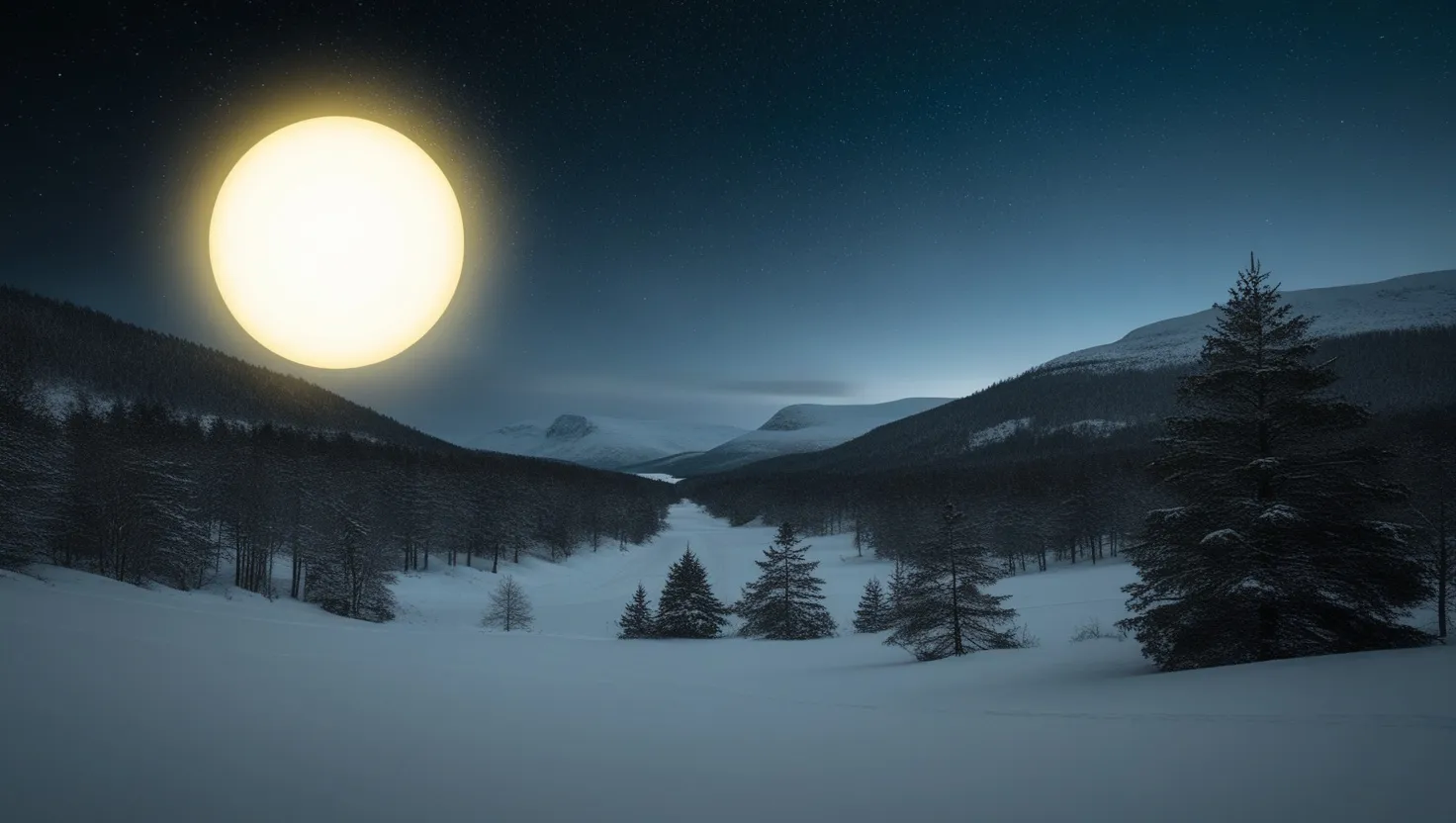
There is a valley in central Norway called Hessdalen, and if you live there, you learn to watch the sky. Not for auroras, not for shooting stars, but for something that does not have a clean name yet. Since the early 1980s, residents have watched lights rise from the valley floor, drift through the cold air, hang completely still for minutes, and then disappear as if someone switched them off. White, yellow, red, sometimes blue. Pulsing, splitting, hovering. Not planes. Not stars. Not anything you can dismiss with a quick explanation.
Think about that for a moment. Imagine walking outside your front door on a winter night and watching a ball of light float silently above the trees. You watch it for three minutes. Then it is gone. You tell your neighbor. Your neighbor says they saw it too, last Tuesday.
The Reports Started Piling Up
By the early 1980s, these sightings had become so frequent that locals stopped being surprised and started being frustrated. Nobody was taking them seriously enough. In 1983, a group of determined researchers decided to stop guessing and start measuring. They called it Project Hessdalen, and they arrived in the valley with cameras, spectrometers, radar equipment, and radio receivers. Over a few weeks, they recorded more than fifty sightings. That is not a rounding error. That is data.
What they found was both exciting and maddening. Some of the lights showed a spectral signature consistent with plasma, which means hot, ionized gas, the kind of stuff you get in a lightning bolt or a fluorescent tube, but different. Other recordings showed nothing unusual at all. The lights were inconsistent enough to resist a single explanation, but consistent enough to confirm they were real.
“The universe is under no obligation to make sense to you.” — Neil deGrasse Tyson
In 1998, the project installed a permanent automatic station in the valley. It has been recording ever since. Thousands of logged events. Still no final answer.
What Is Actually Under the Ground?
Here is where it gets genuinely strange, and I want you to pay attention to this part because most people who talk about Hessdalen skip it entirely.
The valley sits on a fault zone. The rock beneath it is loaded with copper and zinc. And inside that rock there is a great deal of quartz. Now, quartz has a peculiar property called piezoelectricity. When you squeeze quartz, it generates an electric charge. Squeeze it hard enough, and you get a burst of electricity. The Earth is always squeezing rock, especially in fault zones under seismic stress. Could that electrical energy be traveling upward through the ground, ionizing the air above the valley, and creating glowing plasma?
Some researchers believe yes. The ground in Hessdalen also releases radon gas, a radioactive gas that rises naturally from certain types of rock, and methane. Both of these can affect the electrical properties of the air above them. You could imagine a kind of natural electrical engine running quietly beneath the surface, occasionally producing visible results in the sky above.
But there is a problem. The lights do not always appear in the spots where radon is highest. They sometimes move against the wind, which rules out any simple gas-cloud theory. And here is the part that makes serious scientists uncomfortable: some of the lights appear to respond to observers. When research teams have flashed lights at them, some have flashed back. That sounds absurd, and yet it is in the documented record.
Do not let that spook you into thinking something mystical is happening. What it probably means is that our understanding of plasma behavior in the open atmosphere is still very limited. Plasma can be sensitive to external electromagnetic fields. A camera flash, a radar pulse, even a radio signal, could theoretically affect an unstable plasma formation. We just do not fully understand how.
Why Hessdalen Matters More Than Most People Realize
Earth lights, which is the general term researchers use for this type of phenomenon, have been reported in dozens of places around the world. The hills of Wales, the shores of Japan, the mountains of China. But almost none of those locations have been watched with permanent instruments. Hessdalen is extraordinary not because the lights are necessarily more unusual there, but because someone actually put a measuring station in the field and kept it running for decades.
“The first step toward knowledge is to know that we are ignorant.” — Richard Cecil
Think of it like this. Imagine a strange sound happening in your house every few weeks, but you only try to record it once, and then give up. You will never figure out what it is. Hessdalen kept the recorder running. That patience has produced something genuinely rare in science: a long-term, real-world dataset of an unexplained atmospheric phenomenon.
If researchers eventually confirm that the lights are caused by piezoelectric effects and plasma formation from seismic stress, that would change how we think about the electrical relationship between the ground and the atmosphere. It would mean that the boundary between the solid Earth and the air above it is far more electrically active than most textbooks currently suggest.
And if the phenomenon turns out to be a combination of several known effects working together in an unusual way, that is still worth knowing. It would mean that under the right geological and atmospheric conditions, the planet can produce light shows that look completely alien without any alien involvement whatsoever.
The Part Nobody Talks About
Most articles about Hessdalen focus on the dramatic sightings, the bright orbs, the long hover times, the impossible angles of movement. What rarely gets mentioned is the mundane side of the data. A large portion of what the automatic station records turns out to be ordinary things. Aircraft flight paths, car headlights bouncing off fog, simple reflections. Researchers have had to build a filtering system just to sort the real events from the noise.
That matters because it tells you something honest about the phenomenon. The researchers are not believers looking for confirmation. They are working scientists doing boring, careful work in a cold Norwegian valley, sorting through thousands of hours of data to find the events that genuinely cannot be explained. The fact that those events keep appearing, even after all the ordinary explanations are stripped away, is what makes this serious.
“I would rather have questions that can’t be answered than answers that can’t be questioned.” — Richard Feynman
Ask yourself this. If you had the resources, would you set up a permanent monitoring station in a remote location and watch the sky for twenty years just to study something nobody fully understands? Most institutions would not. The researchers connected to Project Hessdalen did. That kind of sustained scientific curiosity deserves more attention than it usually gets.
So What Are the Lights?
Nobody knows completely. That is the honest answer. The best current hypothesis involves a combination of geological and atmospheric factors, piezoelectric energy from stressed rock, ionized air from released gases, and local electromagnetic conditions that occasionally produce stable plasma formations visible to the naked eye.
But the lights do not always behave the way that hypothesis would predict. They appear at times when seismic activity is low. They move in ways that simple plasma drift cannot explain. They vary in color and intensity in ways that suggest multiple different processes might be at work at different times. It is possible that what people call “the Hessdalen lights” is not one single phenomenon but several distinct effects that have been grouped together because they all look similar from the ground.
That would actually make a lot of sense. The valley has unusual geology, unusual atmospheric conditions, and a resident population that pays close attention to the sky. They are going to notice things that people elsewhere walk past without looking up.
The automatic station keeps recording. Researchers keep analyzing the data. The lights keep appearing, indifferent to all the theories written about them.
There are no ghosts in Hessdalen. There are no spacecraft. There is something more interesting than either: a real, physical phenomenon that the scientific community has not fully explained yet, sitting quietly in a cold Norwegian valley, waiting for someone to ask exactly the right question.
That someone might be a physicist working with plasma models. It might be a geologist studying fault zone emissions. It might be an atmospheric chemist who has never even heard of Hessdalen yet. Science works that way sometimes. The answer comes from an unexpected direction, and suddenly a mystery that lasted forty years makes complete sense.
Until then, the valley keeps its secret. And the sky above it keeps glowing.