Let me take you back to a cold Sunday morning in Atlanta, January 7, 1973.
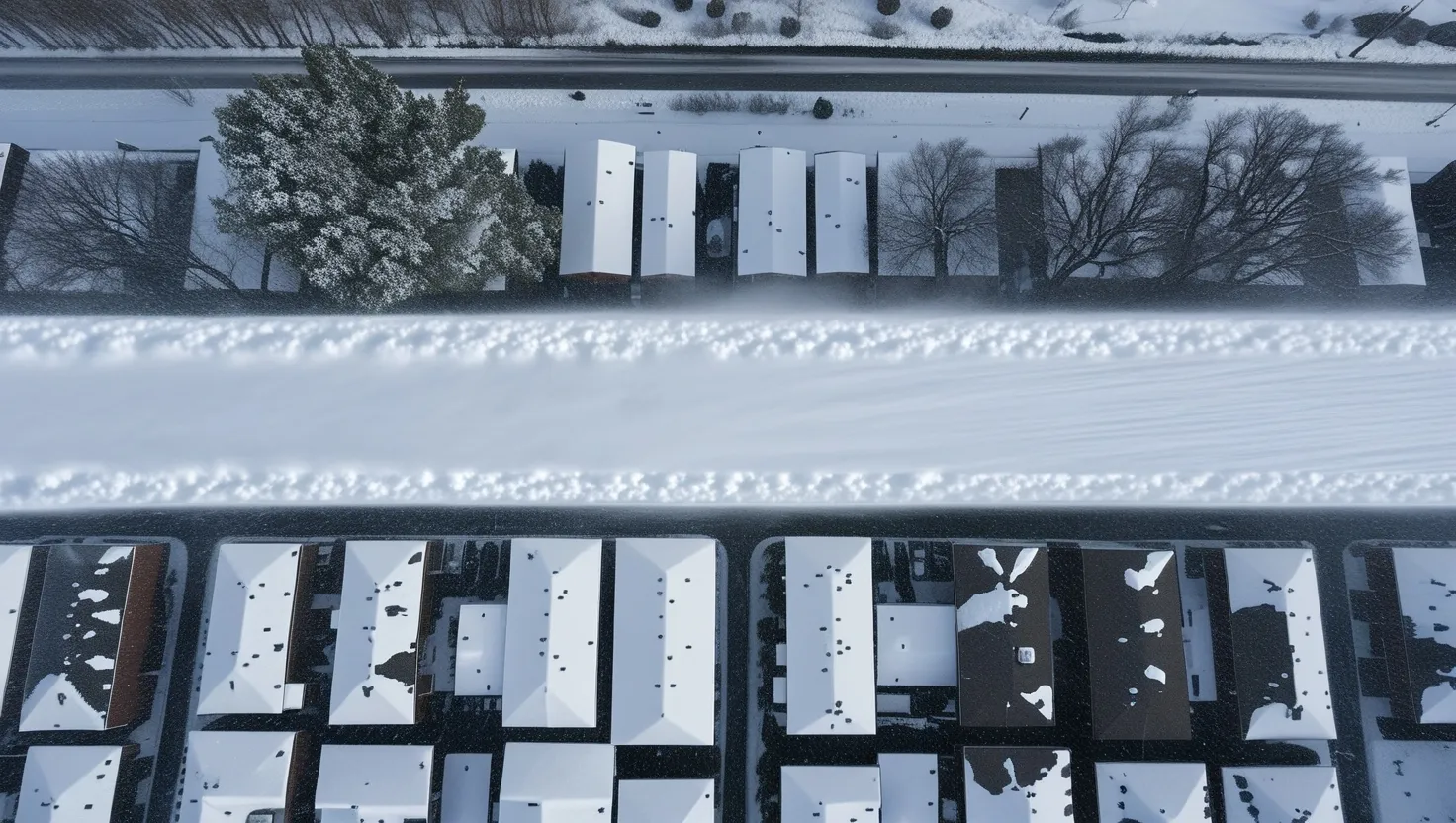
If you had looked out the window in some northern suburbs, you would have seen something that did not fit the usual script for Southern weather. A narrow band of fine, powdery snow was falling hard, piling up to more than six inches in some spots. Just a few miles away? Almost nothing. A few lazy flurries. Wet roads. People going about their day wondering why the radio kept mentioning “heavy snow” when they barely saw a dusting.
That strange split is where our story starts.
Most snowstorms have a big, obvious setup. You see a front on the map, you see clouds moving in, you feel the temperature drop. In this case, the official line was simple: a rare mix of just enough moisture in the upper atmosphere and a shallow layer of cold air near the ground. On paper, that explanation seems tidy. But as I walk you through what made this day different, I want you to keep asking yourself one question:
If this really was just a fluke, why does it look so much like a controlled experiment?
The snow itself was odd. People who were there remember it not as the usual heavy, wet Southern snow that turns to slush the second a car touches it. They talk about snow that looked and acted more like dry powder, the kind you see in ski resorts out West. It was light. It piled up efficiently. It stuck to cold surfaces without forming thick icy chunks. Have you ever handled two different types of flour—say, regular flour and powdered sugar—and noticed how they fall differently? That was the kind of contrast people felt: this was not “normal” Georgia snow.
Meteorologists later noted that surface reports described this snow as unusually dry for the region. It sounded almost like someone had dialed in a snow “setting” without turning up the water content.
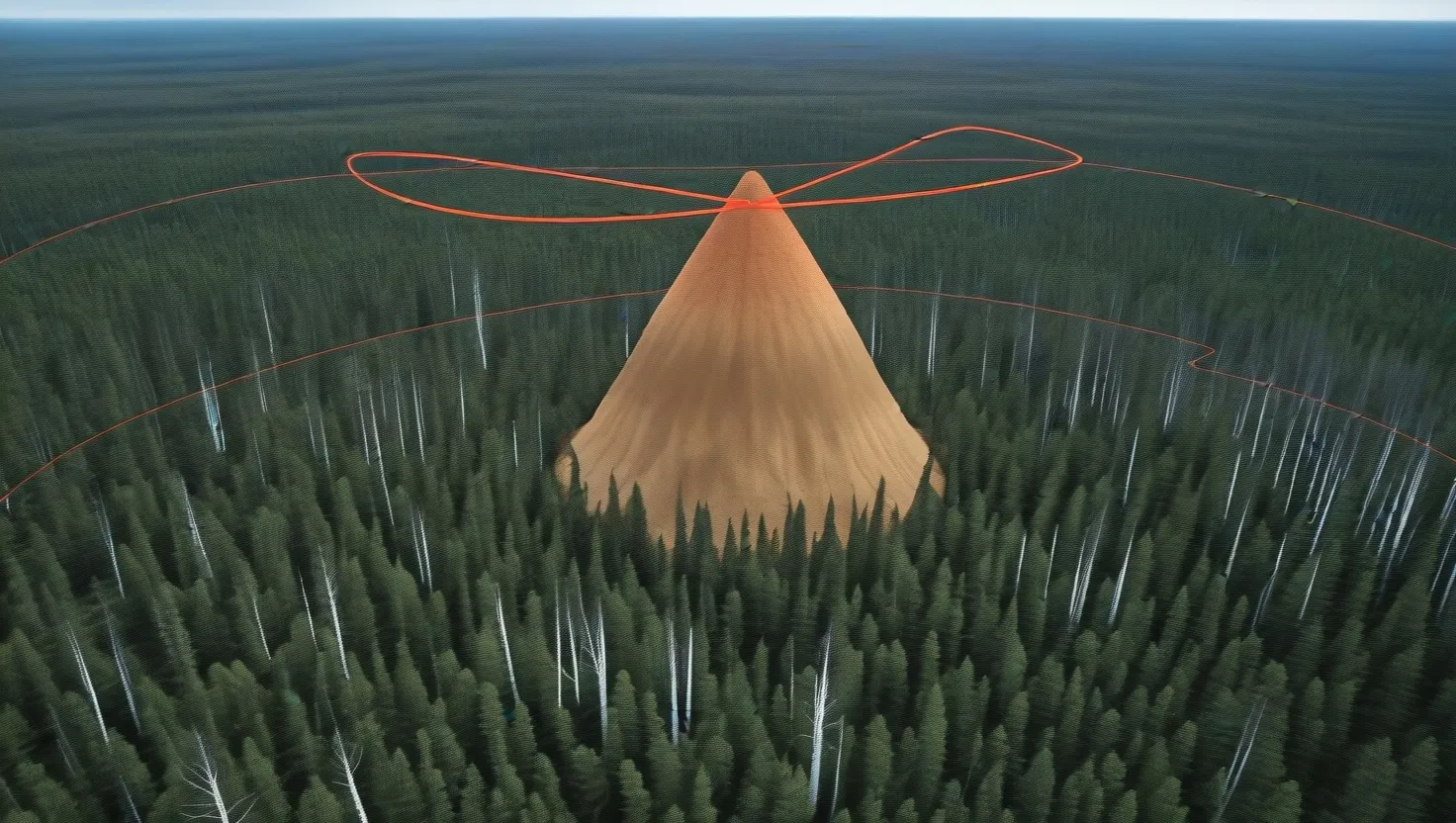
Now think about the shape of the storm. Radar images from that morning showed a tight, narrow band of precipitation. It formed quickly, sat almost still over a particular strip of suburbs, dropped its load of snow, and disappeared. Usually, strong snow bands in the Southeast are tied to a clear, moving front or a larger storm system drifting across several states. This one looked more like a paintbrush stroke laid carefully across one part of the map and ignored the rest.
Does that feel random to you?
When forecasters tried to plug that day’s conditions into standard weather models, the storm did not behave the way the equations said it should. The ingredients were borderline. The outcome was exaggerated. It was like throwing a small pebble in a pond and getting a tidal wave in one narrow strip of water while the rest of the pond stayed calm.
On its own, that might be just a curious story. But the date matters. We are in the heart of the Cold War. At that time, the idea that humans could modify weather was not science fiction; it was a serious military interest. The United States had already run Project Popeye in Southeast Asia, where planes seeded clouds to make rain over supply routes in Vietnam and Laos. The goal was not just to make puddles. The goal was to change the battlefield by stretching the monsoon season, washing out roads, and making movement harder.
Let me ask you directly: if a government is willing to try making extra rain in a war zone, do you really think it would stop there?
Declassified papers from that era show that researchers were looking at more advanced ideas—how to guide where rain falls, how to get local effects out of large-scale systems, how to trigger or enhance storms in specific places. The target concepts included transportation choke points, economic hubs, and communication centers. When you look at Atlanta in the early 1970s, what do you see? A fast-growing, strategically located city with key highways, rail lines, and air routes. In other words, a perfect real-world test bed.
Here is where the theory gets bolder: some people believe that the 1973 snowfall was not just an odd storm, but part of a covert weather test run on home soil.
Before you decide what you think, let’s walk through the main pieces.
Supporters of a purely natural explanation like to compare this event to lake-effect snow, which forms when cold air passes over a warm lake, picks up moisture, and then dumps intense, narrow bands of snow downwind. That can look a lot like what happened near Atlanta: one sharp band, big totals, sharp edges. So the argument is: maybe something similar happened, but with land instead of water—a very rare “land-effect” situation. Some suggest that moisture from the Gulf of Mexico, funneled along just the right path in the upper air, might have fed that band.
But here is the problem: Georgia is not sitting beside a Great Lake. The Gulf is far away. There was no single large, warm body of water nearby to serve as a giant steam engine. And in classic lake-effect events, those snow bands usually drift as the wind shifts; they do not sit perfectly still over one corridor for hours. The Atlanta band behaved more like a line painted on a map and held in place.
So we are left with this: a highly localized band, with unusual snow texture, forming quickly, staying put, and then stopping as abruptly as it started. Weather models struggle with it. Surface readings describe strange conditions. That alone does not prove anything, but it keeps the door open.
Here is a thought experiment. If someone wanted to test the ability to precisely aim a weather effect—say, to see if they could limit heavy snow to a relatively narrow region in a developed area—what would that test look like from the ground?
You might see:
A band that builds sharply over one corridor while nearby places barely notice.
Snow that looks and feels a bit off compared to the region’s usual storms.
A lack of the broader, textbook front that you would normally expect.
A quick, focused impact followed by a clean shutdown.
That list lines up disturbingly well with what people describe from that day.
Now, is there any direct proof that planes were seeding clouds over Atlanta that morning? No. Are there public documents that name “Atlanta 1973” as a test? Not that we know of. But here is something important: serious weather experiments do not always look dramatic from the outside. Many rely on nudging conditions that are already close to a threshold. If the atmosphere is almost ready to snow but not quite, a small added push—like seeding—might not create a storm from nothing, but might sharpen and focus what does happen.
In that kind of scenario, outside observers would see a storm that “almost makes sense” but not quite. The odds would feel wrong. The spatial pattern would feel too tidy.
The cultural side of this event adds an extra layer. People who grew up there remember that day not just as “a snowstorm,” but as something almost surreal. Some described snow falling while parts of the sky still looked partly clear, without the solid, grey lid of cloud cover that you normally expect before a heavy snow event. That visual—precipitation coming down hard under a sky that does not look fully closed—shows up in historical accounts of certain early cloud-seeding efforts, where seeded parts of clouds drop their moisture quickly and leave clearer gaps around them.
One of the most interesting things is how stories from that storm have survived. Old-timers talk about it like a legend: “the weird snow,” “that one stripe of heavy snow in ’73.” When locals have to explain it, they shrug. The official explanation sounds technically correct—“a rare setup,” “a weird band,” “unusual moisture”—but it does not feel satisfying. And when explanations do not feel satisfying, people look for alternative stories.
Let me pause and ask you: when we talk about weather, how often do you assume that “nature did it all” by itself?
We live in an age where we accept that humans can warm the planet, thin the ozone layer, and affect rainfall patterns by accident over decades. Yet when someone suggests that weather might be deliberately nudged on shorter time scales in a particular place, many people dismiss it at once. But why? The physics is not magic. If we can send a rocket into orbit and land it again, why would we think we are forever helpless passengers under the clouds?
At the same time, we have to be careful. It is easy to slide into wild claims. You and I are not looking for fantasy here; we are trying to sort out what is plausible, what is known, and what sits in the grey area. Atlanta’s 1973 snowfall falls neatly into that grey area: strange enough to raise questions, not documented enough to give firm answers.
To make sense of events like this, I like to think in three layers.
First layer: basic physics. We know that small changes in temperature, humidity, and aerosols can tip the balance between rain and snow, between drizzle and a downpour. Cloud seeding, for example, adds particles that encourage ice crystals or droplets to form. That is textbook science.
Second layer: intentional human activity. We have documented cases of governments and private groups seeding clouds, trying to make rain, reduce hail, or change fog. Some of this is public (like attempts to increase water supply over mountains), some was once secret (like military programs in Southeast Asia).
Third layer: classification and secrecy. Military projects, especially during the Cold War, often tested boundaries quietly. If a test failed or produced confusing data, it might never appear in public records. If it worked too well, it might stay classified even longer.
So when I look at the Atlanta event, I see a storm sitting at the intersection of those three layers. The physics could allow a small nudge to have a big, local effect. The era was full of exactly the kind of research that would try such ideas. And the pattern of the snowfall has that “this is too neat to be just noise” feeling that naturally leads to suspicion.
Let me bring in a voice that speaks to the broader idea of control and nature. There is a famous line by physicist Richard Feynman:
“What I cannot create, I do not understand.”
If we flip that for our topic, we might ask: once we can create or shape something like weather, do we start to understand it better—or do we mostly learn how easily we can get in over our heads?
Another fitting quote often attributed to Mark Twain is:
“Climate is what we expect, weather is what we get.”
On that January day in 1973, what Atlanta “expected” and what it “got” were two very different things. Forecasts were caught off guard. Models struggled. People woke up to a city split by a snow line drawn with surprising precision.
Modern atmospheric models are far better than what forecasters had in 1973, but even now, people who go back and try to rebuild that exact event still find it odd. When they stack its conditions against thousands of other winter days in the Southeast, the combination looks extremely rare. Not impossible—but close to the edge of what chance alone would likely produce. That “edge of probability” feel is exactly where questions about hidden influences thrive.
So where does that leave you and me?
I cannot sit here and tell you, “Yes, this was definitely a secret weather weapon test.” There is no open document that says so. But I also cannot look at the physics, the timing, the shape of the precip band, the unusual character of the snow, the Cold War projects in play, and then calmly say, “This was just an ordinary fluke, nothing to see here.”
If we are honest, the best we can say is this: the Atlanta snowfall of 1973 is a genuine mystery in plain sight. It fits both a natural-but-rare explanation and a subtle-test explanation. It also forces us to ask a harder question:
If a powerful actor did run a weather experiment over a major city and nothing obvious “blew up,” how would we ever know?
That is the question that lingers long after the snow has melted. It is not just about one strange storm in Georgia. It is about how we, as ordinary people, think about the line between natural chaos and human influence in the sky above us.
When the next bizarre, ultra-local weather event hits some city—maybe yours—will you just shrug and say “nature is weird,” or will you pause for a second and quietly wonder who, if anyone, had a hand on the dial?