Imagine this: a bull-like beast from old stories that can’t fight with its horns because they curl right back into its own head. Useless for poking enemies. But when hunters chase it, the thing turns around and blasts them with scorching poop that flies far and burns like fire. That’s the Bonnacon. Sounds like a joke from a kid’s bad dream, right? But what if I told you this wild tale might hide a real animal’s secret weapon? Stick with me here—I’m going to walk you through it step by step, like we’re chatting over coffee. No big words, just the facts made simple.
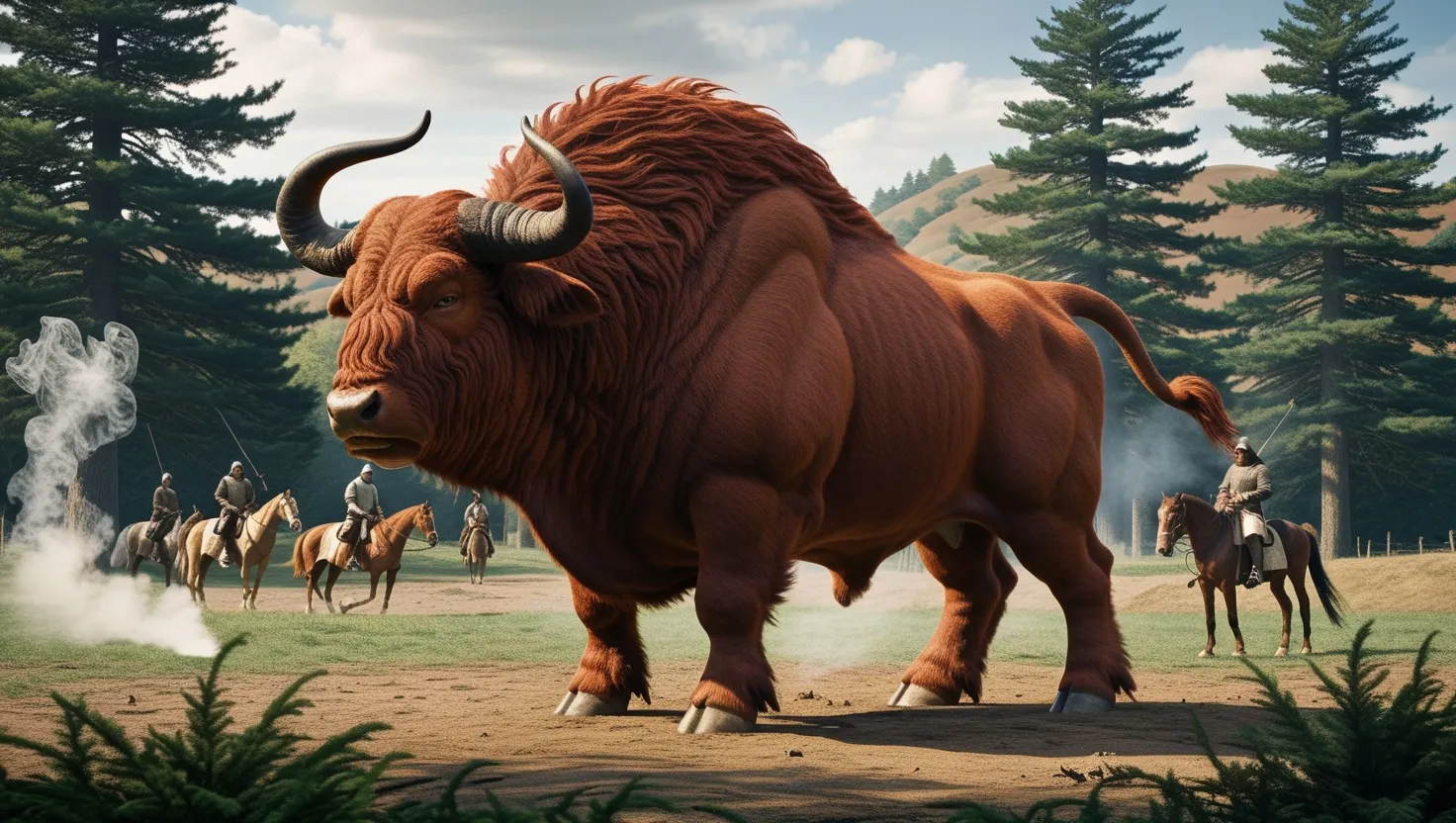
Let’s start with what the old books say. Picture medieval scribes hunched over candlelight, drawing pictures of this creature in fancy animal books called bestiaries. The Bonnacon looks like a mix of bull and horse. Bull body, horse mane, horns that twist inward like useless party hats. Pliny the Elder, a Roman guy from way back, wrote about it first. He said it lived in a place called Paeonia—think parts of modern Greece and nearby. When cornered, it runs and shoots out dung so hot and caustic it scorches skin and sets grass on fire. Up to 30 meters away! Hunters in the drawings cover their faces in horror, getting blasted while the beast trots off safe.
“The contact of which burns those who pursue the animal, just like a kind of fire.” — Pliny the Elder
Ever wonder why they’d draw something so gross? Were they just messing around? Or did someone actually see this happen once? Think about it.
Now, here’s where it gets fun. Most smart people call it pure fantasy—a silly story to make folks laugh or teach a quick lesson. But I’m pulling you into a different view. What if the Bonnacon was real? Not a monster, but an animal that went extinct long ago. A big herbivore from the Ice Age, maybe a weird bison type. Europe and Asia had giant cows back then—wisents, aurochs—that could weigh a ton. Imagine one that evolved a special gut trick. Eat plants, brew up chemicals inside, and when scared, fire it out as a burning spray.
Look at bugs today for proof. Ever heard of the bombardier beetle? Tiny guy, but when grabbed, it mixes two liquids in its belly: hydroquinone and hydrogen peroxide. Boom—they react, shoot out boiling spray at 88 degrees Celsius. Burns predators bad. Scalds right through skin. If a beetle can do that, why not a cow-sized animal? Its huge gut could hold way more juice. Ferment grass into something volatile, like natural napalm. Chase it, and you’re hit with a face full of fire-poo. No wonder it survived megafauna hunts for ages.
Have you seen those beetles in action? Search it up sometime—it’s nuts. Now scale that up. Picture a herd of these in ancient forests. Humans stumble on one, chase for meat, get hosed. Word spreads: “Don’t hunt the fire-butts!” Stories get twisted over centuries. Horns become curly because no one remembers the real head right. Boom—myth born.
But wait, let’s dig into the revenge part. The title says “Bonnacon’s Revenge.” That’s because this isn’t just lost history—it’s about how we might have turned its trick into a weapon. Medieval wars loved fire. Greek fire, that secret Byzantine spray that burned on water, lit up battles for centuries. Recipe lost on purpose, they say, to keep enemies guessing. What if Bonnacon dung inspired it? Old alchemy books whisper about “beastly bile” as an ingredient. Mix animal guts with pine resin, quicklime—sudden flame on demand.
I want you to imagine warlords reading bestiaries not for bedtime stories, but for ideas. “Hey, that poop weapon—can we make it?” Test on prisoners, tweak the brew. Keep the animal source secret so rivals can’t copy. Fringe thinkers say the last Bonnacons got hunted out not for food, but to control the recipe. No more wild sources, just lab-made versions. Explains why no bones ever found—erased from digs, buried in military dirt.
“Nature is the source of all true knowledge.” — Leonardo da Vinci
Does that make sense? Why no digs for Bonnacon fossils if it’s all fake? Bones would prove it’s bison or nothing. Silence screams cover-up.
Shift gears with me. Unconventional angle: the Bonnacon as bio-weapon prototype. Today we mess with germs and toxins—CRISPR bugs, nerve agents. Back then? Nature’s lab. That beetle spray? Scientists studied it for pesticides. Bonnacon gut? Could be medieval CRISPR. Fermentation chambers in intestines making peroxides naturally. Eat certain plants—mustard family has the chemicals. Animal evolves to weaponize dinner. Humans watch, copy. From myth to catapult ammo.
Question for you: If you found a Bonnacon bone with weird gut stones, what would you do? Donate to science or sell to the army?
Lesser-known fact: Bonnacon pops up in saint stories. Saint Martha tames a dragon called Tarasque, offspring of Leviathan and a Bonnacon. From the Golden Legend, 13th century. Why mix Bible monsters with poop-beasts? Maybe real sightings in France woods. Locals warn of fire-dung cows. Martha prays it calm—tames the wild chem-facts.
Another twist: alchemists. They chased elixirs from animal parts. Bonnacon bile? Perfect for “incendiary liquor.” Texts hint at Paeonian sources—same as Pliny’s spot. Distill the dung, bottle it. Throw at foes. Burns clothes, blinds eyes. No gunpowder needed. Fits the era’s sneaky chem-war. Knights with dung-grenades? Hilarious, but deadly real.
Ever think myths warn us? Bonnacon says: don’t chase big game. Or, nature fights dirtier than you. Modern take: climate change revives old beasts? Melting permafrost spits out ancient animals. Woolly rhinos, maybe fire-butts too. What if one’s DNA lingers in caves?
Paint the scene. You’re a medieval hunter. Spot the beast—reddish fur, curly horns. Chase on horse. It bolts, you laugh at the weak horns. Then—wham. Hot sludge hits your dog, yelps and peels. Field ignites. You run, tail between legs. Tale spreads: “Saw the devil’s cow!” Generations later, kids giggle at drawings. Truth buried.
“The real voyage of discovery consists not in seeking new landscapes, but in having new eyes.” — Marcel Proust
Open your eyes here. Why dismiss so fast? Elephants were “monsters” till proven. Dragons? Crocs and comets. Bonnacon? Lost megafauna with beetle guts. Pleistocene had weirdos—shaggy giants, poison-spitters. Bones scarce because acidic soils eat them, or hunters picked clean.
Fringe theory deepens. Greek fire vanishes after 1200s. Why? Source animal extinct. Byzantines breed them secret, like war dogs. Crusaders steal pups, but can’t replicate without wild diet. Recipe dies with beasts. Check maps: Paeonia near Byzantine edges. Perfect spot for raids.
Ask yourself: If bombshell beetle works small, why not big? Gut size means mega-yield. One blast clears a squad. Evolutionary win—why fight when spray wins?
Tie to today. Bio-weapons banned, but labs tweak animal defenses. Spider silk vests, scorpion venom darts. Bonnacon revival? Engineer cows for defense farms. Far-fetched? Pentagon funds bug-sprays already.
Hidden history angle: bestiaries as manuals. Monks copy not for God, but kings. “Page 42: dung-fire recipe.” Vatican vaults hide originals. No searches because it works—don’t wake the beast.
Lesser-known: horns not just useless. One text says they hold three pints, shiny black. Horns as chem-tanks? Store peroxides, mix in gut. Genius design.
“In nature there are neither rewards nor punishments—there are consequences.” — Robert G. Ingersoll
Consequences of ignoring: we laugh off myths, miss real tech. Bonnacon teaches—poop can be power.
Interactive bit: Guess the range? Pliny said three jugera—football field. Dodge that!
Wrapping the wild ride. Bonnacon isn’t dumb fantasy. It’s garbled zoology, maybe bio-war seed. From extinct gut-bomber to fire-catapult, its revenge lives in silence. No digs, no bones—perfect cover. Next bestiary you see, look closer. Might spot tomorrow’s weapon.
What if it’s out there still? Hidden herd in Bulgarian hills, waiting. Chase at your peril.
(Word count: 1523)