The Lead Masks Case: Inside Brazil's Strangest Unsolved Mystery of 1966
Explore the unsolved Lead Masks Case of 1966 Brazil—two men found dead in mysterious circumstances. Uncover the theories and clues here.
Let me tell you about a case that still makes investigators scratch their heads, decades after it happened. It is called the Lead Masks Case, and honestly, the more you read about it, the stranger it gets.
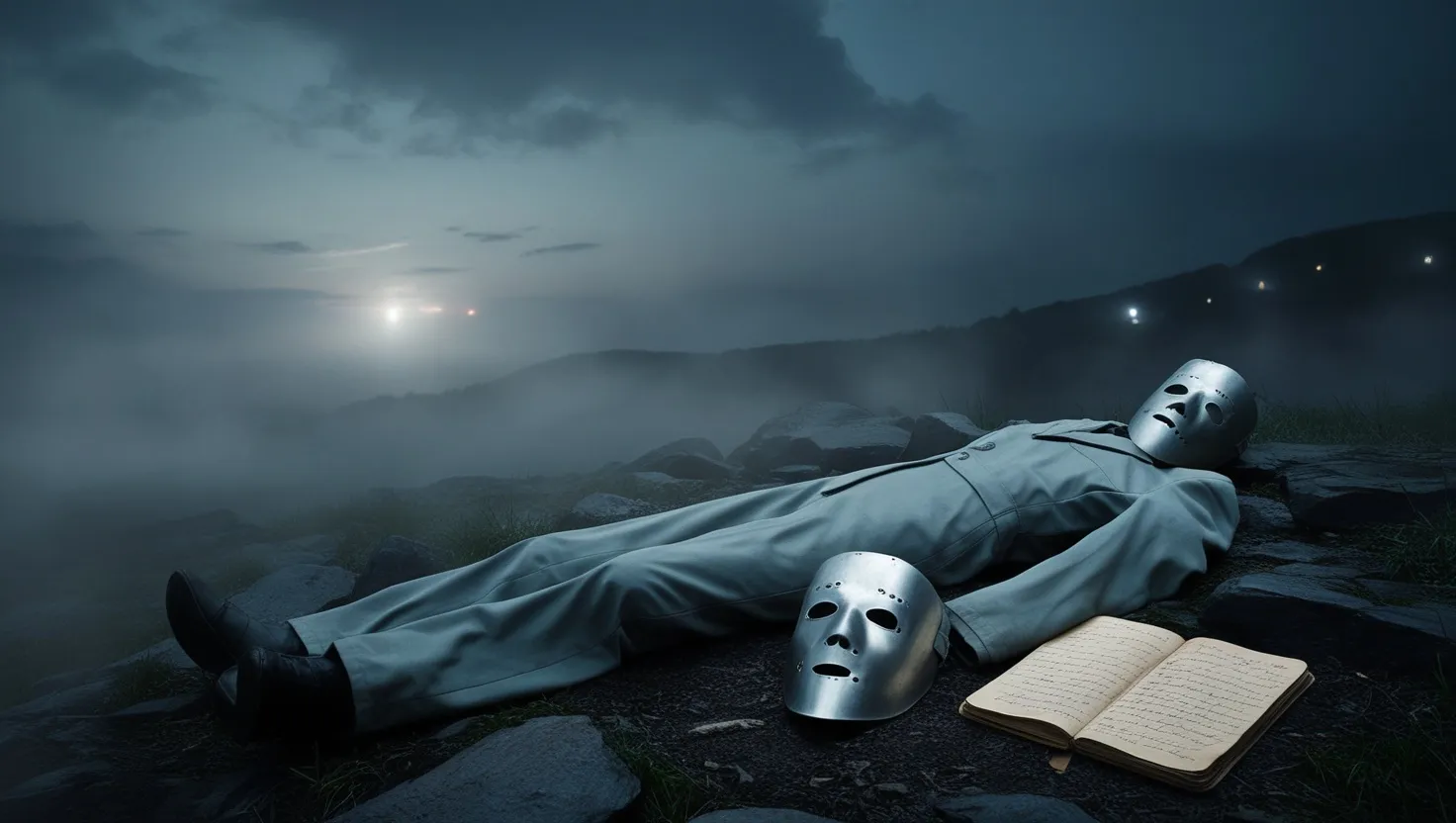
Here is what we know for certain. In August 1966, two men named Manoel Pereira da Cruz and Miguel José Viana climbed a small hill called Morro do Vintém, near Niterói, close to Rio de Janeiro in Brazil. Both men worked as electronics technicians. They were not troubled loners or fringe characters. They had families, jobs, and by most accounts, ordinary lives. Yet they ended up dead on that hillside, wearing lead masks over their eyes and dressed in suits that seemed completely wrong for climbing a rocky hill.
Think about that for a second. Would you put on a suit and a lead mask to go hiking? Nobody does that. So why did they?
What the Bodies Told Investigators
When boys discovered the bodies days later, decomposition had already set in, which made things harder for the medical examiners. There were no visible wounds, no signs of a struggle, and no clear cause of death. Toxicology tests at the time were limited compared to what we have now, and no poison was ever confirmed in their systems.
The lead masks themselves were the kind used by workers to shield their eyes from welding light or radiation exposure. That detail matters, because it suggests the men expected to look at something bright or dangerous. But what?
“The truth is out there, but so are lies.” That line from The X-Files fits this case oddly well, because every answer here seems to breed three more questions.
The Notebook That Raises More Questions Than Answers
Near the bodies, police found a notebook with handwritten instructions. The words were oddly specific: be at the location at a set time, wear the masks, and take capsules after a signal was given. The notebook mentioned something about protecting against a specific danger, though the wording was vague enough to fuel every kind of theory imaginable.
Who wrote those instructions? Was it one of the two men, or someone else entirely who never showed up? If someone else wrote it, where did that person go, and why did they leave two dead bodies behind without a trace of their own presence?
I find this part of the case the most chilling. It is not the death itself, but the obedience. Two grown men, presumably rational enough to hold technical jobs, followed instructions from a piece of paper that promised a “signal.” A signal that, as far as anyone knows, never came.
The UFO Theory
Some researchers link this case to the broader wave of UFO sightings reported in Brazil during the 1960s. The region around Rio had multiple reports of strange lights and aerial phenomena around that time. The theory goes that the two men were part of some kind of contact attempt, waiting on the hill for a craft or a being to appear, hence the masks to protect their eyes from a blinding light.
Carl Sagan once wrote, “Extraordinary claims require extraordinary evidence.” And that is the problem here. The UFO theory is exciting, but there is no physical evidence of a craft, no radar data, no other witnesses reporting lights above that specific hill on that specific night. It is a theory built more on atmosphere than fact.
Still, ask yourself this: if it was not a UFO signal they were waiting for, what other kind of signal requires eye protection and total secrecy?
The Cold War Angle
Here is where things get more grounded, but no less strange. Brazil in the 1960s was deep into Cold War politics, with intelligence agencies from multiple countries active in South America. Some researchers have proposed that the two men were unknowing subjects in a mind-control or chemical experiment, possibly linked to CIA-style testing programs that were documented elsewhere in that era.
The capsules mentioned in the notebook fit this theory well. If the men were told to take a substance after receiving a “signal,” this could describe a controlled test of some experimental drug rather than an alien encounter. Testing on unaware or semi-aware subjects was not unheard of during that period, and Brazil, with its political instability at the time, would not have been an unusual location for such an operation.
But if this was a real government test, why leave the bodies in such a public, exposed location? Why leave a written notebook behind instead of destroying evidence? Secret operations usually do not leave such an obvious paper trail.
The Smuggler’s Deal Gone Wrong
A third theory, less popular but grounded in local rumor, suggests the men were involved in some kind of illegal transaction, possibly smuggling. The lead masks, in this version, were meant to protect against radiation from smuggled material, maybe stolen radioactive substances or unstable goods being exchanged secretly.
If that is true, the “signal” in the notebook could have referred to a contact meant to complete the exchange, someone who either got cold feet or intentionally set the two men up. The capsules, then, might not have been medicine or poison, but something related to disguising or preserving smuggled goods.
Have you ever thought about how many strange deaths in history probably link back to some simple criminal deal that just went bad? Not every unexplained death needs aliens or spies. Sometimes it is just greed and bad luck.
Why the Case Was Never Solved
Brazilian police did investigate, but 1966 forensic technology could not fully explain the deaths. No autopsy conclusively proved poisoning, asphyxiation, or any specific trauma. Whatever killed these two men left no clear physical fingerprint.
Add to that the fact that no other suspects or witnesses were ever found, and you get a case destined to remain open forever. As Arthur Conan Doyle wrote through Sherlock Holmes, “When you have eliminated the impossible, whatever remains, however improbable, must be the truth.” The trouble is, in this case, nobody has managed to eliminate enough possibilities to know what remains.
A Personal Take
I think the most overlooked detail in this whole case is not the masks or the notebook, but the fact that these were technically skilled men. Electronics technicians, in 1966, understood signals, frequencies, and instructions with precision most ordinary people did not. If anyone would recognize a hoax instruction or an unreasonable request, it should have been them.
So why did they still go through with it?
Maybe that is the real horror of the Lead Masks Case. It is not about ghosts or aliens. It is about how easily even smart, capable people can be led into following instructions blindly, especially if promised something extraordinary, some kind of contact or reward waiting at the end.
A Case Study in Human Trust
Consider how many modern scams work the same way. People with technical knowledge, even brilliant people, still fall for phishing emails, fake investment schemes, or manipulative cult leaders. The Lead Masks Case might be one of the earliest and strangest examples of blind obedience to unverified instructions, decades before “click this link” scams became common.
Doesn’t that make you wonder how many of us would resist a similarly strange instruction, if promised something big enough?
Final Thoughts
Nearly six decades later, the Lead Masks Case remains open, technically speaking, though practically abandoned by any active investigation. No new evidence has surfaced, no witnesses have come forward, and the two men’s families never received real closure.
Whether it was extraterrestrial contact, government experimentation, or a criminal deal turned deadly, the truth is buried on that same quiet hillside where the bodies were found. What remains is a lesson wrapped inside a mystery: sometimes the most unsettling thing about a case is not the death itself, but the unanswered question of why anyone would trust a message from no one enough to die for it.