The Secret Nuclear Test Governments Still Won't Officially Acknowledge 45 Years Later
Uncover the truth behind the 1979 Vela Incident — a mysterious nuclear double-flash detected over the Indian Ocean that the U.S. government called inconclusive. Read the full story.
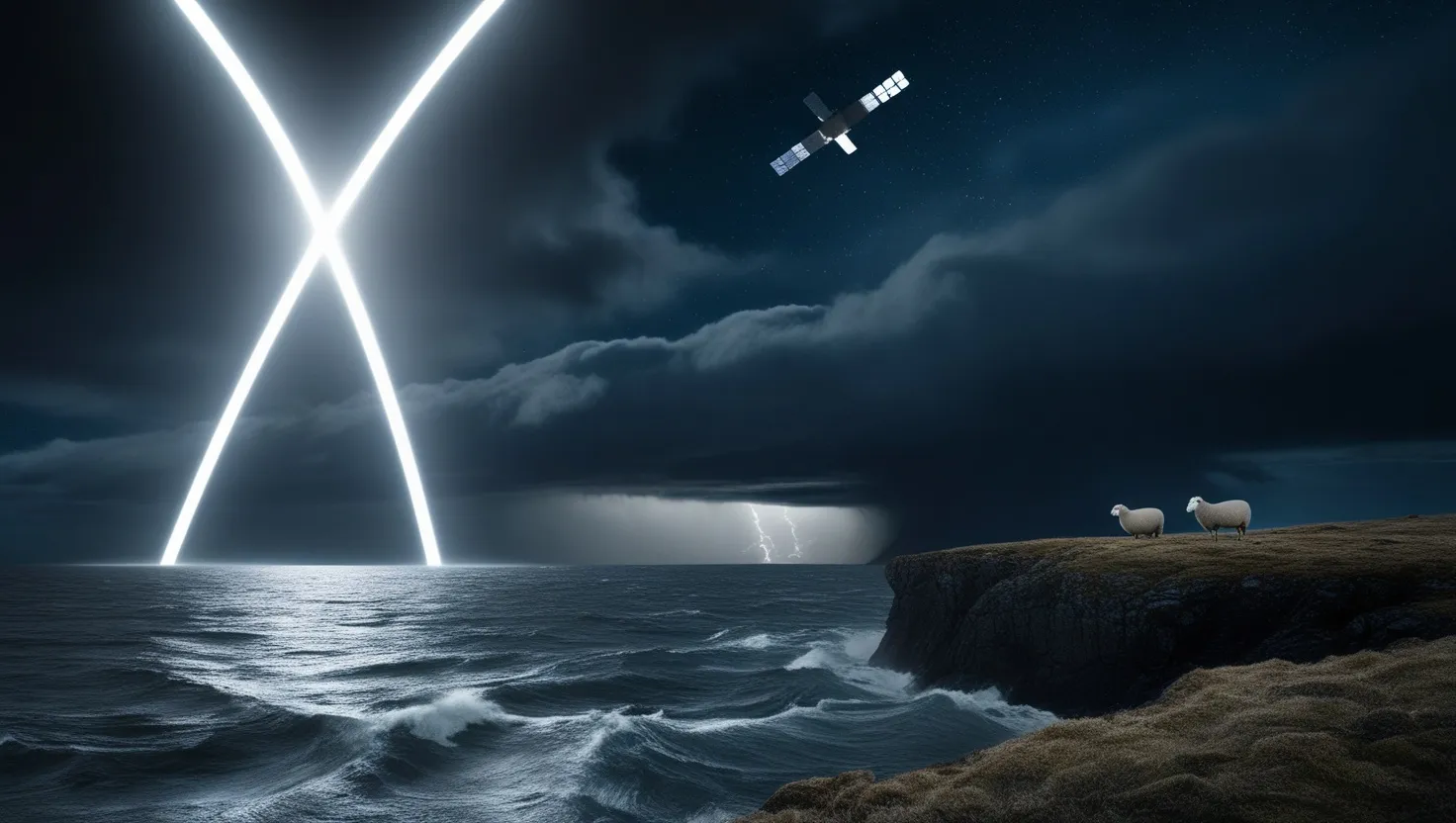
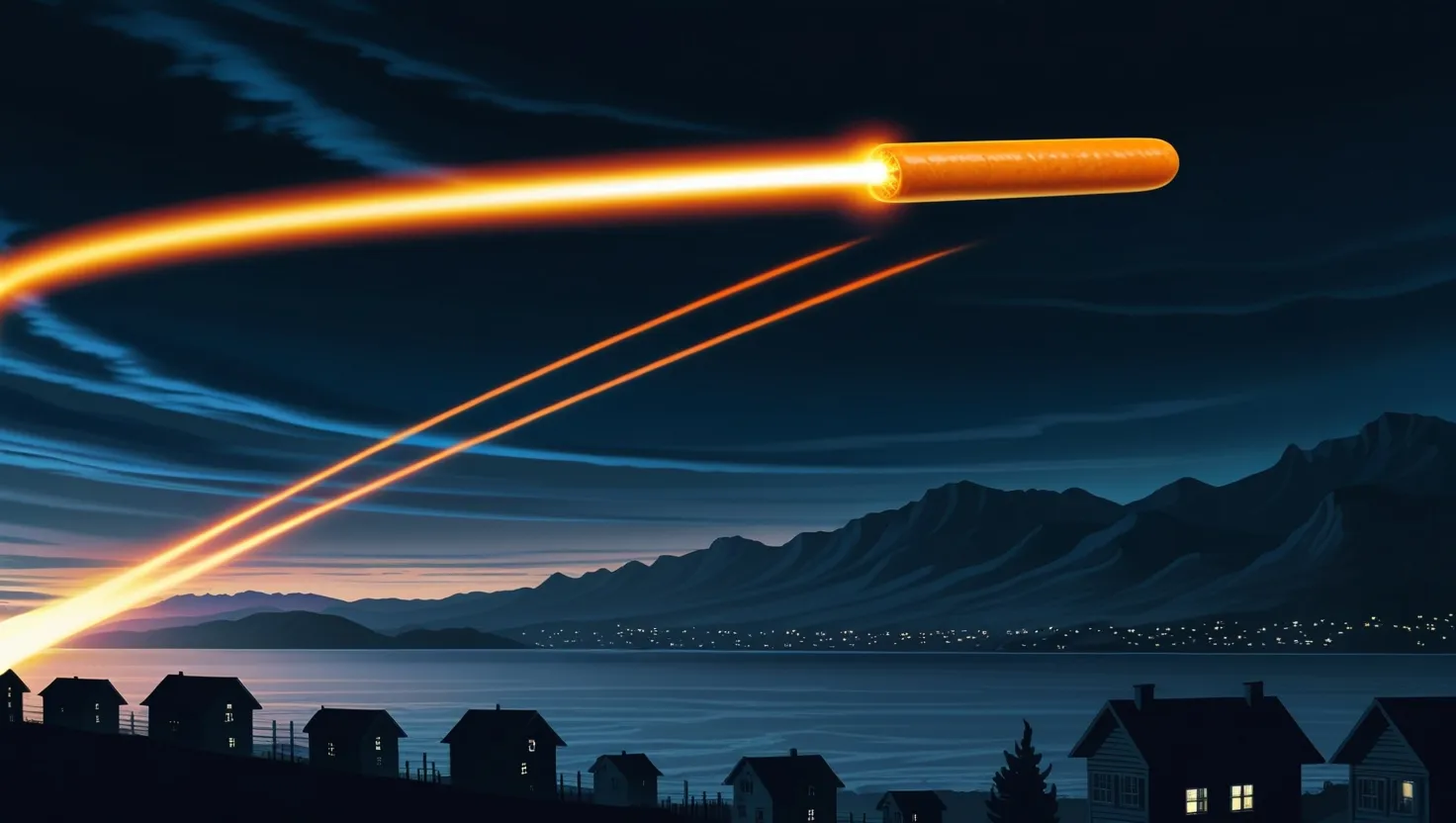
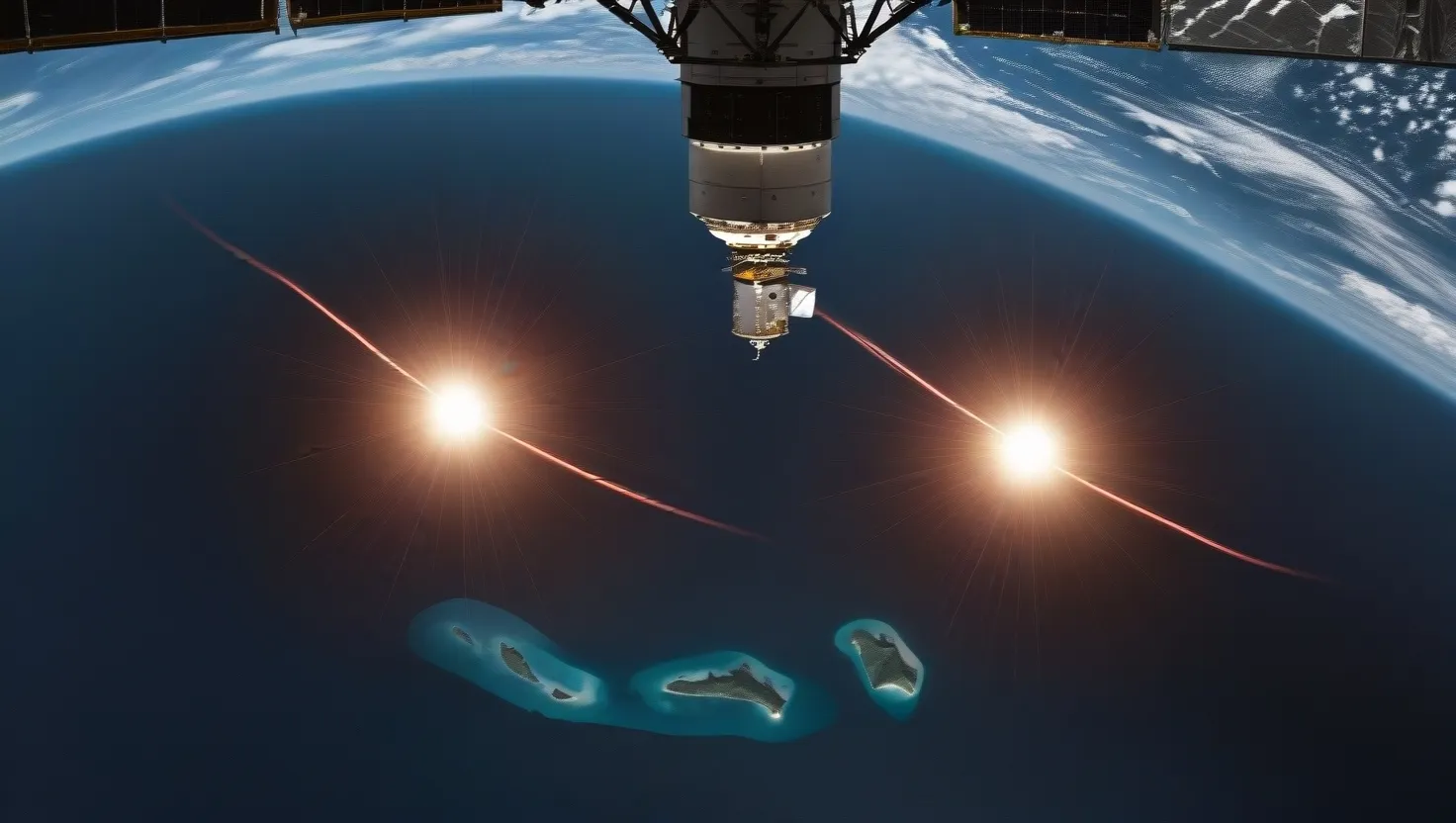
The morning of September 22, 1979 started like any other for the team monitoring America’s network of Vela satellites. These satellites, positioned high above the Earth, had one job: watch for the distinctive double flash of light that a nuclear weapon produces when it detonates. They had done this job reliably for years, catching tests from the Soviet Union, China, France, and India. Nobody expected anything unusual that day. Then, at 00:53 Greenwich Mean Time, one of the older Vela satellites — designated Vela 6911 — picked up exactly what it was designed to detect. Two quick pulses of intense light, separated by a fraction of a second. The signature was clean, precise, and textbook.
And then the United States government said it probably did not happen.
Think of a nuclear explosion like a camera flash. First there is a blinding burst of light, then a brief dimming as the fireball expands and cools, and then a second, longer brightening as the fireball grows again. This double-flash pattern is so specific to nuclear detonations that physicists call it the “Vela signature.” The Vela satellite network was built entirely around detecting this pattern. In its operational history, the satellite had correctly identified every confirmed nuclear test it had an opportunity to observe.
So when Vela 6911 sent back a perfect double-flash signal over the southern Indian Ocean, the logical conclusion was simple: someone had tested a nuclear bomb.
“The most dangerous thing in the world is not the bomb itself. It is the silence that follows it.” — Günter Grass
The Carter administration had a problem. If a nuclear test had occurred and they acknowledged it, they were legally and diplomatically obligated to act. The Non-Proliferation Treaty had clear language. There would be sanctions, investigations, confrontations. The question was not just what happened. The question was who did it — and what acknowledging it would cost.
The location itself tells a story. The flash appeared near the Prince Edward Islands, a remote stretch of South African territory sitting roughly halfway between Antarctica and Madagascar. Almost nobody lives there. Almost nobody goes there. The surrounding ocean is brutal, the weather is punishing, and the islands themselves are about as far from global attention as you can get. That is exactly the kind of place you would choose if you wanted to test something you were not supposed to test.
Ask yourself this: if you wanted to conduct a secret nuclear test, where would you do it? You would want somewhere isolated, far from seismic monitoring stations, with no civilian air traffic and no shipping lanes. The southern Indian Ocean, near the Prince Edward Islands, checks every single one of those boxes.
The official explanation that emerged from the Carter administration’s investigation was that a micrometeoroid had hit the Vela satellite, creating a sensor malfunction that mimicked the appearance of a nuclear double-flash. On its face, this sounds plausible. Satellites do get hit by space debris. Sensors do malfunction.
But scientists who studied the raw data from the satellite pointed out a significant problem with this explanation. The bhangmeter readings — the instruments on the satellite specifically designed to detect nuclear flashes — showed a signal that matched a nuclear detonation with a yield of between two and three kilotons. Micrometeoroids do not produce readings like that. They produce short, chaotic spikes. The Vela 6911 signal was clean and symmetrical. It looked, in every measurable way, like a small nuclear bomb.
“In politics, nothing happens by accident. If it happened, you can bet it was planned that way.” — Franklin D. Roosevelt
The panel convened by the Carter administration, led by physicist Jack Ruina, concluded that the signal was probably not a nuclear explosion. But several members of that same panel disagreed. The divided conclusion was quietly buried. The public was told the mystery remained unsolved. That word — unsolved — became the official position, and it has stayed there ever since.
Here is where the story gets genuinely strange. If the event was just a satellite glitch, you would expect the supporting data from other monitoring systems to show nothing unusual. Instead, it showed quite a lot.
Hydroacoustic monitoring stations, which listen for underwater sound waves, picked up anomalous signals in the south Indian Ocean region around the same time. Seismic stations in South Africa and on remote islands recorded waves that some analysts described as consistent with a low-yield underwater explosion. These are not satellite instruments. These are completely independent systems, and they were detecting something.
Then came the sheep.
Australian researchers, conducting routine monitoring of atmospheric radioactivity, tested the thyroids of sheep in South Australia and found elevated levels of iodine-131. This particular isotope is a direct product of nuclear fission. It does not occur naturally. It has a short half-life of about eight days, which meant the contamination had happened recently. The timing lined up with the September 22 event. This is not the kind of evidence you can dismiss as a sensor glitch. Sheep thyroids do not malfunction.
So who did it? The two names that consistently appear in serious discussions of this event are South Africa and Israel — and the leading theory is that both were involved.
South Africa had, at this point in history, a secret nuclear weapons program that it would not publicly acknowledge until 1993. The apartheid government was building bombs, quietly and determinedly, and they needed to test them. They also had access to the Prince Edward Islands, which fell within their territorial waters. They had both the motive and the geography.
Israel is the other half of this equation. Israel has never admitted to having nuclear weapons, but it is widely understood to have had them since the late 1960s. Israel had the technical expertise that South Africa’s program may have lacked. The two countries had a quietly close military relationship during this period, built on mutual isolation — South Africa was being boycotted over apartheid, Israel was surrounded by hostile neighbors, and both were effectively shut out of the Western defense establishment.
The theory that emerged from intelligence analysts is that this was a joint South African-Israeli test. South Africa provided the location and possibly the device. Israel provided the technical knowledge. Both benefited from the result. And both had every reason to keep quiet afterward.
“Governments lie. Not occasionally, not in exceptional circumstances. Routinely, as a matter of policy.” — Howard Zinn
Why would the Carter administration cover this up? Think about the political situation in 1979. Carter was dealing with the Iranian hostage crisis. The Soviet invasion of Afghanistan was weeks away. His relationship with Israel was already strained over the Camp David Accords. Confronting Israel over a secret nuclear test would have been politically catastrophic. South Africa was another complexity entirely — the administration had been pushing for pressure on apartheid, but any formal accusation of a nuclear test would have required concrete action, congressional hearings, and international confrontation.
The easiest path was the one they took. Declare the evidence inconclusive. Quietly collect the real information. Quietly communicate to the parties involved that the United States knew what had happened. And then move on.
Here is the part that most people miss. The Comprehensive Nuclear-Test-Ban Treaty monitoring network, which was built largely because of incidents like this one, has since conducted retrospective analyses of the 1979 event. Several researchers working with modern signal-processing tools have revisited the original Vela data and concluded that the signal is more consistent with a nuclear test than with any natural or technical artifact.
The hydroacoustic data has also been reanalyzed. The signals detected by underwater listening stations are, according to some analysts, physically impossible to explain as random ocean noise. They fit a pattern of a shallow underwater explosion, possibly a test designed to minimize atmospheric fallout by detonating in water.
Think about what that means. Someone tested a nuclear weapon in the southern Indian Ocean, contained the explosion partly underwater to reduce detectable fallout, chose one of the most isolated spots on the planet, and did it during a period when American satellite coverage was limited by the age of the Vela satellite in question. This was not a reckless test. This was a carefully planned one.
“The truth is rarely pure and never simple.” — Oscar Wilde
The Vela Incident has never been officially resolved. No country has admitted to conducting a test on September 22, 1979. The United States government’s official position remains that the event’s origin is unknown. The scientists who believe it was a nuclear test have published their findings. The scientists who believe it was a micrometeoroid have published theirs. And the sheep thyroid data sits quietly in Australian archives, pointing at a conclusion that nobody in power has been willing to formally state.
What makes this story worth understanding is not just the mystery itself. It is what the mystery reveals about how nuclear policy actually works versus how governments say it works. The Non-Proliferation Treaty is built on verification and transparency. The Vela Incident shows what happens when verification succeeds and transparency becomes politically inconvenient. The satellite worked perfectly. The monitoring systems picked up the evidence. And the people in charge decided that what they knew was less important than what they needed not to know.