Most stories about strange lights in the sky either shout “aliens” or shrug and move on. I want to take you somewhere in between. Let’s walk slowly through the Shag Harbour crash as if we are sitting at a kitchen table, coffee in hand, and you keep stopping me to say, “Wait, explain that again in plain words.”
On the night of October 4, 1967, along the coast of Nova Scotia, people saw something in the sky that did not fit any simple box. Not a normal plane. Not a firework. Not a meteor burning across the sky. They saw lights moving low and steady, then slanting down toward the water at about a 45‑degree angle. Some heard a roar, some saw a flash, and more than one person watched those lights hit the water and leave bright foam on the surface.
Think about that for a second: if you saw that, what would you assume? Most witnesses thought the same thing: “A plane has gone down.” That tells us something important. They were not trying to see a flying saucer. They were trying to see a normal accident. They did what normal people do. They called the police. They alerted the coast guard. They went out in boats, ready to pull someone out of the water.
Here is where this case starts to feel strange in a very practical way. The official response was serious and fast. Royal Canadian Mounted Police, the Canadian Coast Guard, and later the Navy all took it as “a crash in progress.” Boats raced to the spot. Flares were fired. The area was swept again and again. Cold Atlantic water, dark night, searchlights, tired eyes. They were ready to find wreckage, bodies, seat cushions, luggage, something. That is what usually happens after any real crash.
They found yellow foam.
No bodies. No floating metal. No oil slick. No life jackets. No tail sticking out of the water. Just a strange layer of yellow foam and then, after some time, nothing at all. And on top of that, no civilian or military planes were reported missing. Imagine you are one of those searchers. You know what a crash scene looks like. This did not look like it.
The Canadian government later filed the event as “Unknown.” That single word is more powerful than it sounds. It was not “explained as a flare” or “most likely a meteor” or “misidentified aircraft.” It was simply left in the file as a thing that happened, with a real impact point and real witnesses, but no clear label.
So what could “Unknown” mean here? Let’s put aliens to the side for a moment and look at the time period. The date matters. October 4, 1967, was exactly ten years after Sputnik 1, the first artificial satellite, had gone into orbit. The Cold War was in full force. The United States and the Soviet Union were testing rockets, warheads, spy satellites, and re‑entry vehicles. Objects from space falling back into the ocean were not science fiction. They were routine test outcomes.
Many people, especially those who don’t like the alien angle, lean toward one idea: this was some sort of Soviet satellite or space capsule that came down in the wrong place. Maybe a spy device with cameras. Maybe a guidance test. Maybe something nuclear‑related. If that is true, then Shag Harbour is not a UFO case in the “little green men” sense. It is a Cold War intelligence story.
Now ask yourself this: if a Soviet spy satellite fell into shallow waters off the Canadian coast, what would the US and Canada want to do? They would want to get it. Quietly. Fast. Completely. No one would hold a press conference and say, “We have this great chance to steal Soviet hardware from the sea.” They would run a rescue operation in public, and a retrieval operation in private.
This is where the story shifts from just a crash to talk of a possible “recovery mission.” In the days after the impact, local fishermen and others reported something even stranger: a large object, long like a cigar, seen under the water, moving slowly. There were also reports of unmarked vessels in the area and the Royal Canadian Navy acting in ways that did not match a simple “we found nothing, let’s go home” story. A section of coastline was watched closely. Ships stayed longer than made sense if there was truly nothing to see. Why keep staying over an empty patch of seafloor?
Before we go further, let me pause and ask you: which sounds more believable to you so far?
Is it easier to picture: – A spaceman vehicle dives into the water and vanishes without a trace? Or – A secret Soviet or maybe even US device hits the water, stays mostly in one piece, and becomes the object of a quiet tug‑of‑war under the sea?
You do not need to be an expert to follow the basic physics. A normal plane is full of pieces. Wings, tail, seats, wiring. When it hits the water hard, it tends to break up and scatter debris. Some parts sink, but a lot of things float. When search teams find nothing at all, that means either (1) it was not a normal, fragile vehicle, or (2) it never really crashed in the usual sense.
Some elements of the witness reports line up with something more engineered and sealed. Four bright lights in a fixed pattern suggest a solid craft, not just a chunk of rock. Yellow foam on the water can match the kind of marker chemicals used in military tests or survival gear. A compact, pressurized satellite or capsule could hit, leak chemicals, and still hold together well enough to sink relatively intact.
We can also look at what did not happen. There was no official statement later saying, “We’ve determined this was a US test article,” or “Soviet space debris” or even “secret Canadian gear.” Nothing. Just a long silence and that stubborn word “Unknown” in the files. In a way, that silence is its own kind of answer. If the explanation was ordinary, it would have been easier to say so.
One of the strangest parts of the Shag Harbour story is what some researchers and locals claim happened after the first search ended. According to them, the object that hit the harbour did not just sink and stay put. Instead, they say it moved underwater along the coast for roughly 25 miles to an area near a submarine detection station.
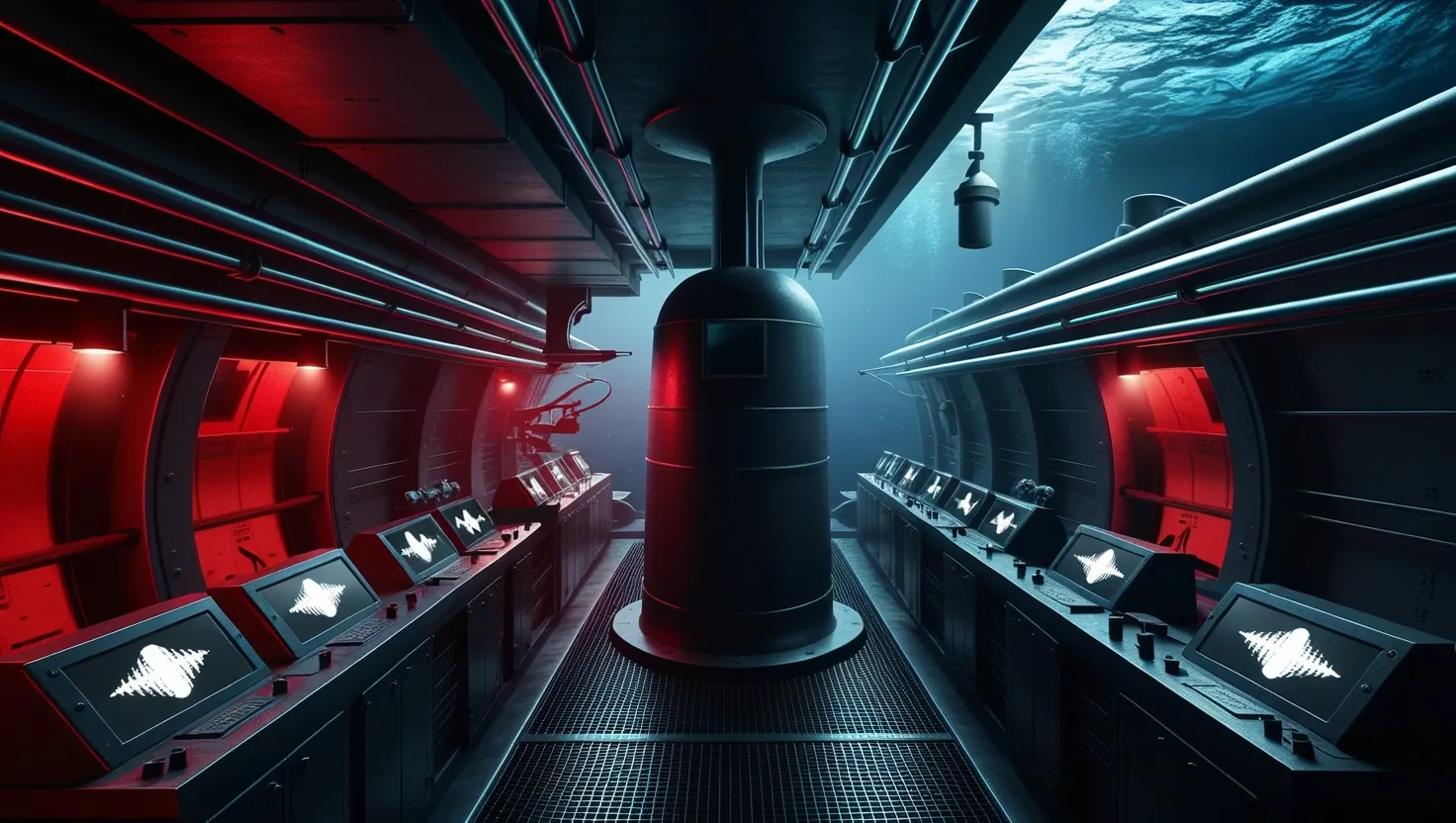
Think about how specific that is. This is not “it swam away like a sea monster.” It is “it went to a spot where underwater traffic was monitored by Cold War gear.” That is exactly the kind of place where you would expect military attention to focus. Some accounts even describe the object being tracked on sonar, with navy vessels positioned above it.
Then comes an even more curious claim: that a second object arrived under the water, as if to assist the first. From there, the story turns into something almost like a slow‑motion standoff. The navy watches from above, maybe planning a salvage attempt, while these two unknown underwater bodies sit at the bottom.
To get a sense of the mood of that era, it helps to remember that both sides in the Cold War were willing to spend huge money and effort to grab enemy hardware from deep water. Later, in 1968, the CIA ran a giant mission using the ship Glomar Explorer to try to lift a sunken Soviet submarine off the ocean floor. That operation shows two important things: first, that underwater retrieval of foreign craft was very real and technically possible; second, that such missions were kept secret for years.
Here is a famous quote that fits this kind of secrecy:
“In wartime, truth is so precious that she should always be attended by a bodyguard of lies.”
— Winston Churchill
If you replace “wartime” with “Cold War,” you get a fair picture of how governments treated sensitive events. A public story about a fruitless search on the surface can easily hide a classified story about a successful recovery below.
Now, maybe you are wondering: if all of that happened, why don’t we have a smoking gun by now? Why no clear photo, no retired admiral saying “yes, we pulled a Soviet capsule from Shag Harbour”?
This is where human nature enters the picture. Many ex‑military and intelligence people sign secrecy agreements. Their pensions, reputations, even their freedom can be at risk if they talk too openly. Locals might hear rumours, see movements of ships, talk to divers in a casual way, and then pass pieces of the story along. Over time, bits of truth can mix with guesses and exaggerations.
So how do we think clearly through that sort of fog? Let me suggest a simple way to reason:
- There was a real event. Multiple witnesses, official logs, and a serious search all agree: something fell into, or at least into the surface of, Shag Harbour.
- It was not a normal reported aircraft. No missing plane fits the time and place.
- There was foam and light, but no ordinary wreckage.
- The event happened in a Cold War context where secret space and missile hardware was constantly flying and sometimes falling.
From this, two broad explanations remain on the table.
One is the Soviet satellite or capsule idea. In this view, we have a human‑made object, probably from orbit, coming down at the wrong spot. It needs to be retrieved before the other side can reach it. The “rescue” of a supposed plane crash serves as cover for an underwater grab. Once the thing is hauled up, everyone involved keeps quiet. The public is left with a blank labeled “Unknown.”
The other broad explanation is that the object was not from any known country at the time. In that case, all the same steps might still happen: rapid military response, silence, no open admission. The difference is that not even the people running the show would fully know what they were dealing with. That makes the case more eerie but also harder to analyze, because we have no technology or program to tie it to.
Let me ask you something very basic: which type of “unknown” makes you more uncomfortable?
– The unknown that is just someone else’s secret machine? – Or the unknown that does not match anyone’s declared technology at all?
Many people prefer the first type because it keeps the world tidy. Superpowers test things. Some of them crash. Navy teams fish them out. File closed. From that point of view, Shag Harbour is not “woo‑woo” at all. It is closer to a spy story than a sci‑fi story.
But we should also look at a subtle point: even if it was a human device, it was being kept secret from you. And that raises a question about how much we, as ordinary citizens, are allowed to know about major events that happen in our own waters and skies.
Here is another quote worth thinking about:
“The very word ‘secrecy’ is repugnant in a free and open society.”
— John F. Kennedy
If you live in a democracy, you are told that the state works “for” you. Yet cases like Shag Harbour remind us that there are layers of reality that may be hidden not only from enemies, but from the public itself. You and I are left guessing decades later about what really lay on that seafloor.
Now, I want to be clear and simple with you. We do not have proof that a Soviet satellite crashed there. We do not have proof that an alien craft waited under those waters. What we have is a cluster of solid facts, wrapped in layers of rumour, memory, and missing pieces.
So what do we do with a case like this, if we want to stay sane and honest?
First, we respect witness observations without worshiping them. People in Shag Harbour saw real lights, heard real sounds, and smelled real foam. They may be wrong about what it was, but they are not all confused about whether something happened.
Second, we put the event into its real historical frame. This was not a peaceful, random year. This was the peak of secret tests and satellite games. If you ignore that, you miss the most reasonable non‑fantasy explanations.
Third, we accept that “I don’t know” is sometimes the most accurate answer. That does not mean “nothing interesting happened.” It means the world is messy, archives are closed, and motives are mixed. Real mysteries often look less like a movie climax and more like that one page in a file folder stamped “Unknown” with nothing filled in below.
Let me turn the question back to you as we close this walk‑through. Next time you hear about a strange case like Shag Harbour, will you jump straight to “aliens,” or will you ask, “What would the intelligence agencies of that era have wanted from this event?”
And maybe a tougher question: if you found out tomorrow that Shag Harbour really was a secret joint US‑Canadian mission to grab a Soviet object from the sea, would you feel relief because “it was only humans,” or would you still be bothered that such a major operation was quietly hidden behind a story of a search that failed?
In the end, Shag Harbour stands as a rare thing: a well‑documented, officially admitted mystery that sits right at the border of two worlds—one of strange lights in the dark, and one of very earthly men in uniforms, working the phones, sending ships, and saying as little as possible. Whatever fell into those waters that October night, it left behind more than yellow foam. It left a question mark that refuses to sink.