7 Mysterious Caves That Break the Laws of Physics and Baffle Scientists
Discover 8 mysterious caves that defy science and challenge everything you know about geology. From toxic ecosystems to singing rocks, explore Earth's strangest underground secrets today.
Imagine you and I, hunched over chipped mugs in a dim café filled with the hiss of the espresso machine, talking about caves—not any old caves, but those that don’t follow anyone’s rules. The sort of places that flip geology on its head and make you rethink what you know about the world below our feet. Ready for some stories that’ll have you questioning the ground you walk on?
First off, let’s talk about Movile Cave in Romania. I wish I could show you a video of people in full hazmat suits just trying to peek inside. Here’s the twist: this cave has been sealed from the outside world for millions of years, with an atmosphere so toxic that one breath would make you collapse. No oxygen worth speaking of, just a wild cocktail of hydrogen sulfide and carbon dioxide. Yet, inside? There’s an entire ecosystem living purely off chemosynthesis, not sunlight. Imagine little white worms and blind snails, none of which should logically exist here. “Life will find a way,” Jeff Goldblum once quipped in Jurassic Park. Movile Cave just shrugs and says, “Hold my beer.”
The real kicker—isn’t it wild to think life could thrive where the air would kill you faster than a snakebite? Sometimes I wonder: If we sent a probe down there, what would we find hiding in the cracks that we haven’t even guessed at yet? Imagine if somewhere in that soup of stinking air, there’s a molecule we’ve never seen before, rewriting what we think possible.
We travel to Vietnam next, to a cave so massive you could park a city block inside it: Son Doong. But it’s not just the size that makes it weird. Here’s where your brain starts stuttering—inside Son Doong, you get clouds. Real clouds—inside the earth. More than fog, I’m talking about actual weather systems. Sometimes, it rains in the cave, complete with wind. Picture standing in the gloom, watching a thunderhead form above you, knowing there’s a forest growing way underground. It messes with your sense of what’s up and what’s down, doesn’t it? How is a cave acting like its own planet? Sometimes I wonder if, on another world, they’d call Son Doong a small sky.
Do you ever think about how the world sometimes bends around rules we thought were ironclad? Like: gravity goes this way, rain falls that way. Then a place like this makes you realize, “Maybe nature doesn’t care about the rules as much as we do.”
Malaysia’s Lubang Nasib Bagus—otherwise known as Deer Cave—brings another mystery, but this one is all about sound. The cave is famous for these deep, echoing booms that roll through the chambers for minutes at a time. You stand there in the dark and it’s like the earth itself is grumbling. Yet, get this: no earthquakes, no storms, nothing outside causing it. Seismographs say “all quiet.” So what’s causing the cave to hum? Is it air squeezed through hidden chambers, or something else entirely? Makes me think about those old stories of mountains rumbling as a warning—only here, you can measure the vibrations, but still can’t explain them. What would you do if you were alone in the dark and the rocks started singing back at you?
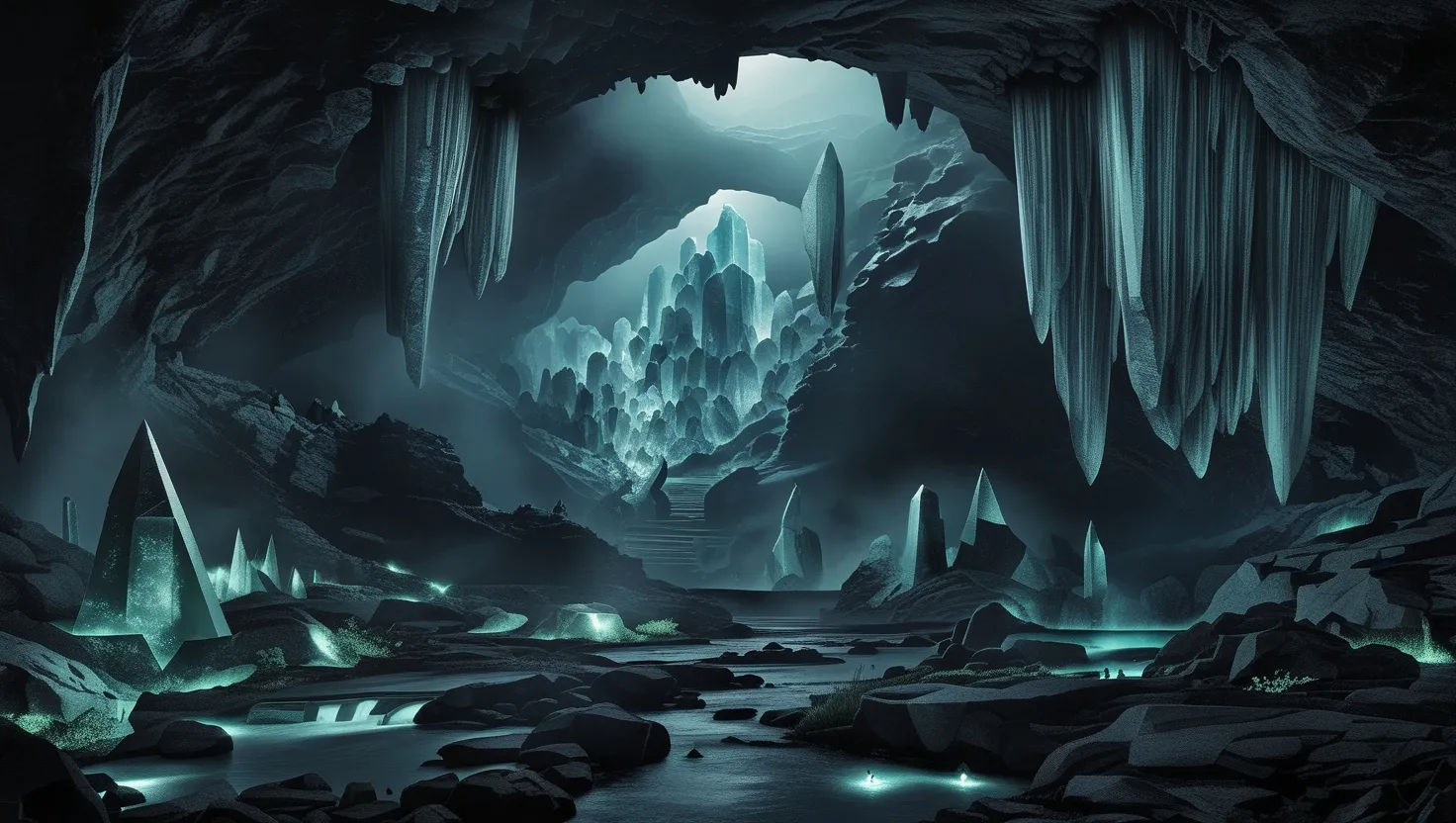
Mexico’s Naica Crystal Cave will blow your mind on two counts. First: the crystals. These aren’t your garden variety quartz points—they are so enormous, you’d need a ladder just to climb one. Go further, and it gets weirder. The cave is full of heat and radiation. By all existing logic, nothing should be able to survive in there, especially microbes. Yet, ancient microscopic life—some isolated inside the crystals for tens of thousands of years—has been found living on little more than minerals and radiation. Sometimes I pause and ask myself: Is there anywhere life can’t worm its way into? If tiny life stubbornly sticks it out inside a radioactive oven, what does that say about our own limits?
Now, imagine exploring the world’s deepest cave, Krubera in Georgia. Okay, you’ve got your helmet, your ropes—you head downward. Then, out of nowhere, your compass spins like a roulette wheel. Magnetic anomalies that don’t track with any known rock formations get stronger the deeper you go. You stop and flip your compass—north is gone. You can feel adrenaline. How would you keep your bearings if up, down, left, and right all became a suggestion? Geologists who’ve studied the site are left scratching their heads, unable to map a logical explanation. I sometimes think, is the earth’s core whispering secrets we haven’t learned how to hear yet?
Let’s hit the Scottish coast for a change of mood. Fingal’s Cave on the Isle of Staffa isn’t just a feast for the eyes with its weird geometric columns, it’s a concert hall built by the ocean. The wind and tides play inside the cavern, producing musical tones so precise they can be measured by frequency. If you listen closely, the pitch can shift—dropping or rising—even when the sea looks calm. No big storms, no obvious changes, just new music every day. If you think about it, what’s the physical law that makes such distinct notes here and nowhere else? Sometimes I wonder, if nature can make a building so perfectly tuned, what else are we missing by not paying closer attention? “Not all music is made by hands,” someone wise once said. Fingal’s Cave proves it.
Finally, let’s step into the darkness of Carlsbad Caverns in New Mexico. The guides here used to tell tourists that the stillness in these chambers is absolute. Then came the shock: heavy stones—too big for bats or humans to casually move—started shifting on the cave floor, leaving distinct trails in the sediment. There’s no flooding, no seismic activity, no rodents pushing rocks for fun. Just silent, inexplicable movement. Sometimes dozens of pounds, stones gliding across the floor as if pushed by a ghostly hand. If you came face-to-face with that, would your first thought be: “Physics… or something else?” Every time scientists come up with a theory, new data contradicts it. There’s something beautifully unsatisfying about a question that keeps fighting your answers.
I can’t help but think, why do some places resist being figured out? Maybe these caves—these rule-breakers and secret-keepers—remind us just how much is still left to be discovered. They’re the geological equivalent of that friend who always shows up with the best stories and just enough mystery to stay interesting.
So when was the last time you found yourself questioning the “how” of things, not just the “what”? Next time you find yourself in a cave—whether it’s a tourist crowd or just your imagination—listen for the echoes, watch for the glimmers of something you can’t quite name, and remember: sometimes the strangest stories are the ones written in stone and darkness, long before there was anyone around to read them. And if you ever hear singing in the rocks or see stones that walk by themselves—just know, you heard it here first.