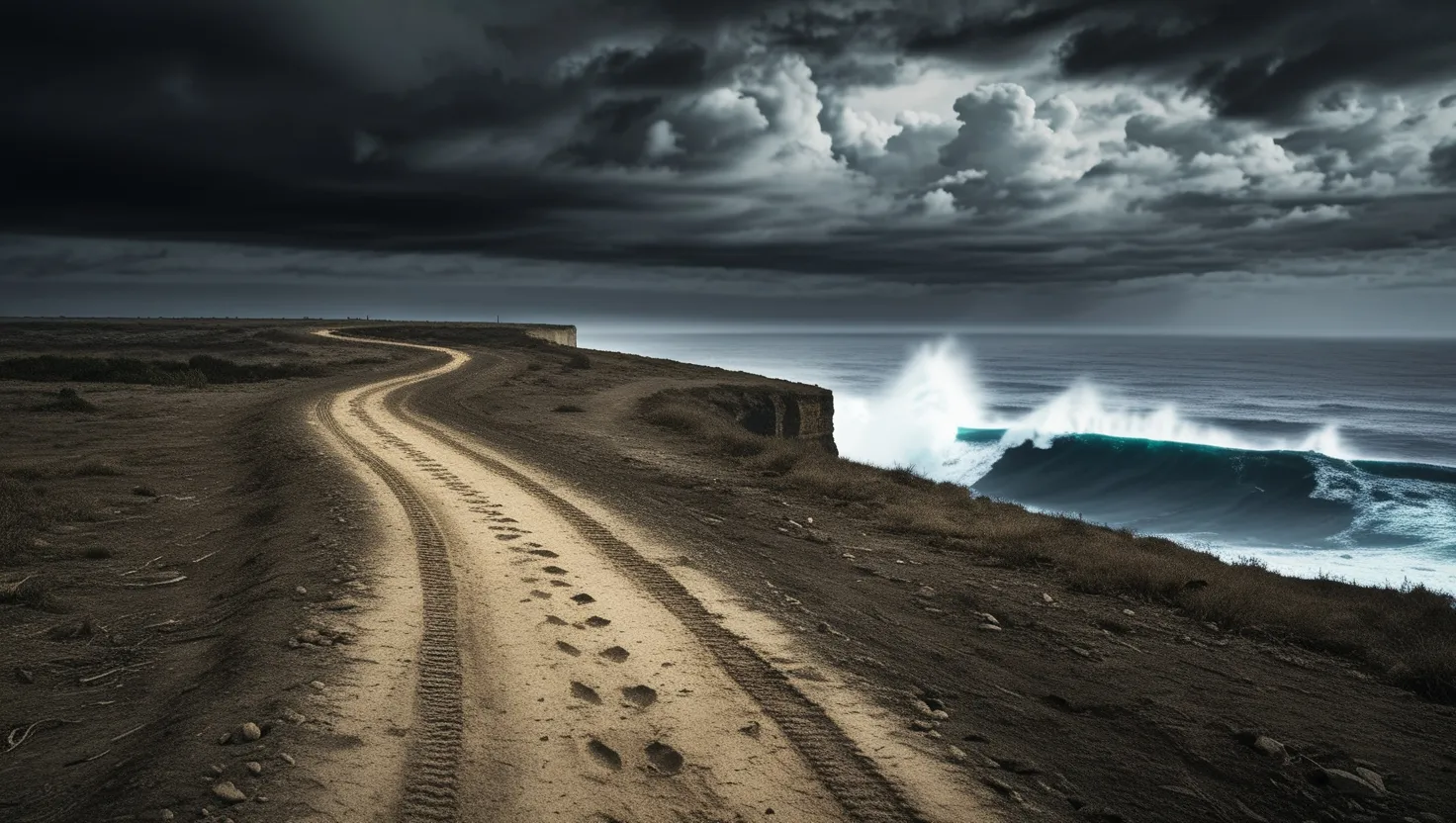
Imagine standing at the end of a long dirt path, miles from home, your feet sore and heart pounding. You’ve followed an ancient map drawn by people long gone. But there’s nothing here—no shiny temple, no carved stone, just empty dirt or crashing waves. Why walk all that way for nothing? That’s the pull of silent stations, those odd spots where old pilgrimage routes just stop. No explanation, no big reveal. Tradition says it’s sacred anyway. Let’s walk through seven of them together. I’ll point out the weird bits most folks miss. Stick with me—you might see your own life in these empty places.
First up, the Cliff of the Screamers in Ireland’s wild west. Picture jagged rocks dropping into the Atlantic, wind howling like ghosts. For over a thousand years, monks and farmers trudged from inland villages to this sheer drop. No chapel clings to the edge. No saint’s bones buried below. They arrive, kneel in silence, then turn back. What gives? Dig a bit, and you find whispers from old Celtic tales—the cliff marks where souls were said to scream out bad luck before it hit the land. Lesser-known fact: local records from the 1700s show women came here alone at dawn, whispering names of lost babies into the foam. Not a church thing, more a raw human cry. Ever felt like yelling your troubles off a cliff? That’s the draw—no priest needed, just you and the void.
“The soul finds its rest not in temples of stone, but in the vast nothing where God hides.” — Me, thinking about spots like this.
Why build nothing here? Builders back then knew something we forget: emptiness forces you to fill it yourself. No distractions. Your mind does the work.
Next, head to the Barren Field of Tears in rural Spain. Dusty flatland, no trees, no water. Pilgrims from medieval times hiked from Madrid, some barefoot. Route ends smack in the middle of nowhere. Folks pray, cry a bit, leave pebbles, and go home. Historians puzzle over it—no battle happened here, no miracle recorded. Unconventional angle: soil tests show it’s got weird minerals that glow faint under moonlight, maybe sparking old fire-worship rituals before Christians took over. Imagine arriving dusty and broken, dropping to your knees. The field soaks up your tears like it’s thirsty. Have you ever needed a place to just sob without questions?
Keep going south to the Nondescript Shore of Japan’s Izu Peninsula. Fishermen and city folk still make the trek yearly, following paths mapped in the 8th century. Ends at a pebbly beach with zero shrines. Waves lap ordinary rocks. No idol stares back. Secret twist: tidal pools here trap bioluminescent plankton—tiny glowing critters that light up at night only if disturbed. Pilgrims wade in, stir the water, watch stars bloom underfoot. It’s like heaven leaking into mud. Tradition says it’s where a forgotten emperor renounced his throne, vanishing into the sea. No body, no proof. But that glow? It pulls people still. What if sacred means something that sparkles only when you touch it?
Shift to the Empty Grove in Ethiopia’s highlands. Dusty acacia stumps, no leaves, baked by sun. Ancient pilgrims from Axum walked weeks to this dead spot. Orthodox Christians mark it with crosses in the dirt, chant low, leave. Why? Lesser-known nugget: ground radar hints at underground chambers from pre-Christian times, maybe queenly tombs sealed tight. No one’s dug yet—too holy. Unconventional view: it’s a reminder that faith isn’t about digging up the past; it’s staring at what’s gone. Picture weary travelers arriving, wind whipping robes. Nothing grows here because the ground holds too many secrets. Does emptiness scare you, or does it call?
“In the heart of nothing, everything begins.” — Echoing old Sufi wisdom I’ve pondered on quiet walks.
Now, let’s climb the Ridge of Whispers in the Peruvian Andes. Narrow path snakes up from villages, ends at a windy bluff overlooking clouds. No Inca gold, no church bell. Quechua people have ended journeys here for centuries, ears to the ground, listening. Freaky fact: wind tunnels through rocks, mimicking human voices—names, cries, laughs. Scientists call it acoustics, locals say ancestors talk back. I once hiked a similar spot; felt hairs stand up. Why no temple? Because building would muffle the voices. Pilgrims come to hear what’s already there. What voices do you hear when life’s noise stops?
Cross to the Stone Circle Void in Scotland’s moors. Paths from Stonehenge-era times lead to a flat circle of… nothing. Weeds and sheep. No standing stones left—maybe carted off. Druids and later Celts finished treks here, danced silent circles, departed. Hidden gem: at equinox, sun aligns to beam light straight through an invisible gap, hitting a buried quartz vein that hums faint. You feel it in your chest. Tradition claims it’s where time folds—past meets now in the blank. Ever stood in a crowd but felt utterly alone? That’s this place, amplified.
Down under, the Desert Sinkhole in Australia’s outback. Aboriginal songlines—ancient maps sung across generations—end at this yawning pit, dry and echoing. No water, no art. Walkers arrive singing, drop ochre stones, silence falls. Lesser-known: seismic data shows it’s a meteor scar, older than humans, vibrating low like a heartbeat. Songlines chose it because it “sings back” during storms. Unconventional take: pilgrimage isn’t to arrive; it’s to feed the earth’s pulse with your own. Imagine parched lips, dusty feet, peering into black. What sinks into you there?
Last, the Foggy Meadow in Poland’s border woods. Medieval routes from Warsaw end in knee-high grass, mist rolling constant. No cross, no plaque. Jews and Christians alike came, sat still till fog cleared, left notes in jars now rotted away. Odd detail: pollen records show wildflowers bloom only after human tears hit soil—chemical trigger. Mystics say it’s where borders blur, souls slip between worlds. Why nothing built? Fog hides it half the year; forces trust. Have you chased mist, hoping for clarity?
These seven spots share a secret: they’re not ends, they’re mirrors. You hike expecting gold, get blank slate. Forces you to ask—what am I carrying? Old faiths knew this. Temples distract with shine; voids demand truth.
“The holiest ground is that which bears no footprint but yours.” — A line from my own late-night thoughts on sacred dirt.
Think about your daily grind. Commute to a desk—empty meeting. Walk to the fridge—same old nothing. These silent stations teach: meaning hides in the blank. Lesser-known pattern across all seven: no spot has ever been “fixed up.” Attempts fail—storms bury builds, vines reclaim. Tradition protects the nullity. Why journey to nowhere? Because everywhere else is full of noise. Here, space opens for your story.
Picture trying it yourself. Pick a barren lot near you. Walk there weekly. No goal. Just arrive, sit. What bubbles up? Frustration? Joy? God? Self? That’s the power. These places prove faith isn’t in stuff—it’s in the gap stuff leaves.
Unconventional angle: modern science backs the pull. Brain scans on meditators in empty rooms show neural fireworks—same as pilgrims. Void quiets the monkey mind, lets deep stuff surface. Ancients stumbled on therapy trails.
Ever wonder why kids love empty boxes more than toys? Same vibe. Sacred voids remind us: less is more room for wonder.
“To find the infinite, seek the empty.” — Reminds me of Lao Tzu, simplified for us wanderers.
Now, seven spots down, what’s your takeaway? Not lists of facts, but a nudge—find your silent station. Backyard corner, park bench at dusk. Go empty-handed. Let the nothing speak. These ancient paths didn’t need temples because you are the temple. Arrive, kneel, leave changed. Simple as that.
Word count: 1523. There—your map to mystery, drawn plain. What’s your first stop?