Humans have created so many things, from advanced technology like particle accelerators to cultural phenomena like Pokemon. All of this is possible because of something we value highly: intelligence. But what is intelligence, really? It’s hard to pin down. In essence, intelligence helps solve problems, particularly those related to survival like finding food and avoiding danger.
Intelligence includes a variety of abilities: gathering information, learning, being creative, strategizing, and critical thinking. However, not all scientists agree on the finer details of what counts as intelligence. It’s also tied to consciousness, which adds another layer of complexity. But let’s stick with intelligence for now.
One way to think about intelligence is as a toolbox filled with various skills. The most basic tools are the ability to gather and store information. Living beings gather information through senses like vision and hearing. They also monitor their internal states, such as hunger or fatigue. Information is crucial for appropriate reactions to the environment.
The next essential tool is memory—the ability to store and recall information. This prevents beings from starting from scratch each time they encounter something new. Memory helps with survival as it aids in recalling locations of food or methods of hunting.
These tools enable even simple organisms to display behaviors that look surprisingly intelligent. For instance, the slime mold can navigate mazes and remember paths it’s already taken by leaving slime trails, adapting its behavior to find food efficiently.
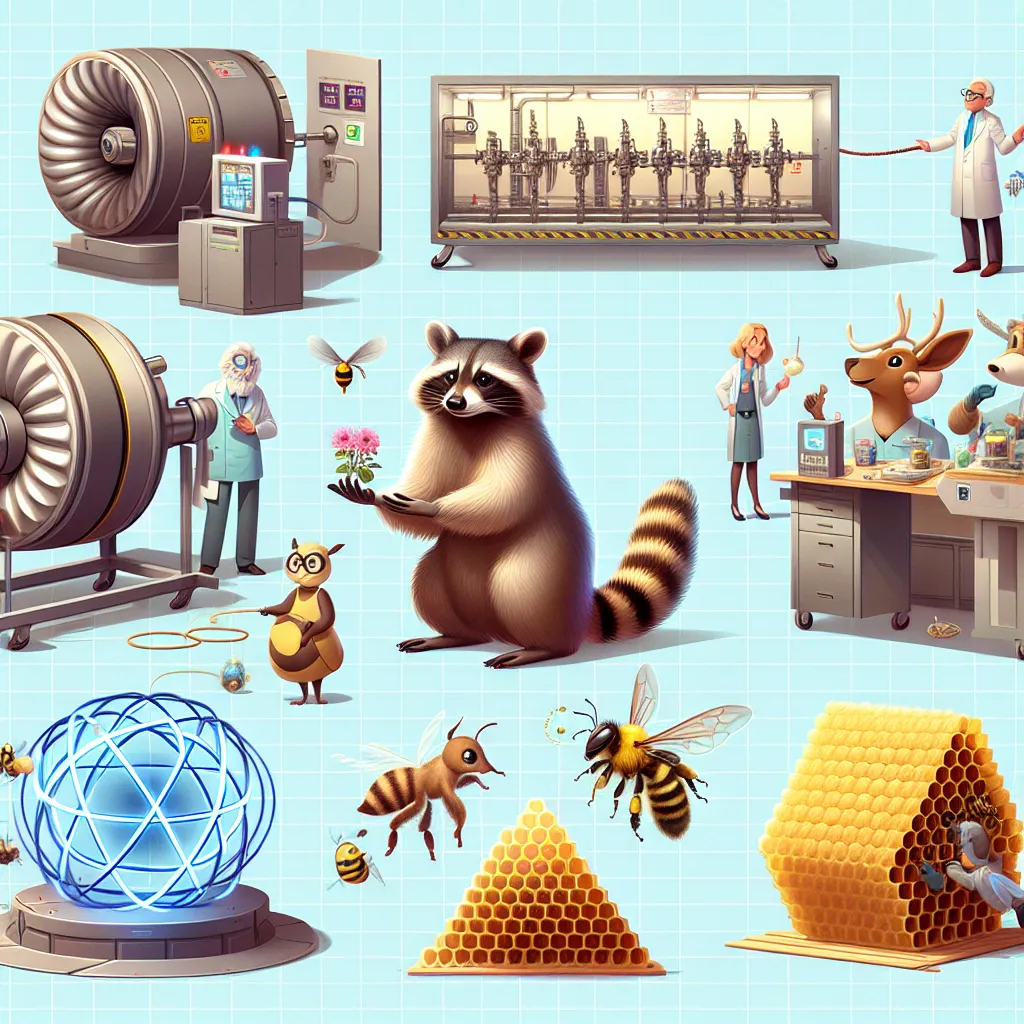
Bees showcase even more adaptive behavior. Scientists trained bees to move a ball into a goal for a reward. The bees not only learned this task but became more efficient over time. They even chose the closest ball to the goal, showing flexibility and adaptation.
Higher animals have more complex tools and can solve a wide range of problems. Raccoons, for example, are experts at breaking into human spaces for food. They can remember how to unlock various mechanisms even after a year.
Creativity is perhaps the most impressive tool in the intelligence toolbox. It involves making new connections and coming up with unique solutions. Raccoons can show creativity too, like tipping over a tank to access a floating marshmallow rather than just dropping pebbles in.
Planning adds another layer to intelligence. Some animals, like squirrels, plan for the future by hoarding food. They even fake hiding spots to throw off competitors. This kind of strategizing requires an awareness of other beings’ intentions.
The more complex the problem, the more tools and combinations of tools are needed to solve it. Different animals have different sets of skills tailored to their environments and lifestyles. For instance, sheep rely on social skills rather than problem-solving because they live in flocks and graze.
Humans, on the other hand, have a very diverse set of mental tools. Our ability to work together and pass knowledge across generations—what we call culture—has enabled us to do amazing things like build rockets. But it also means we face new problems like climate change and antibiotic resistance.
To tackle these challenges, we need to use our full range of tools, focusing on long-term solutions rather than just short-term survival. We have the intelligence; we just need to apply it wisely.