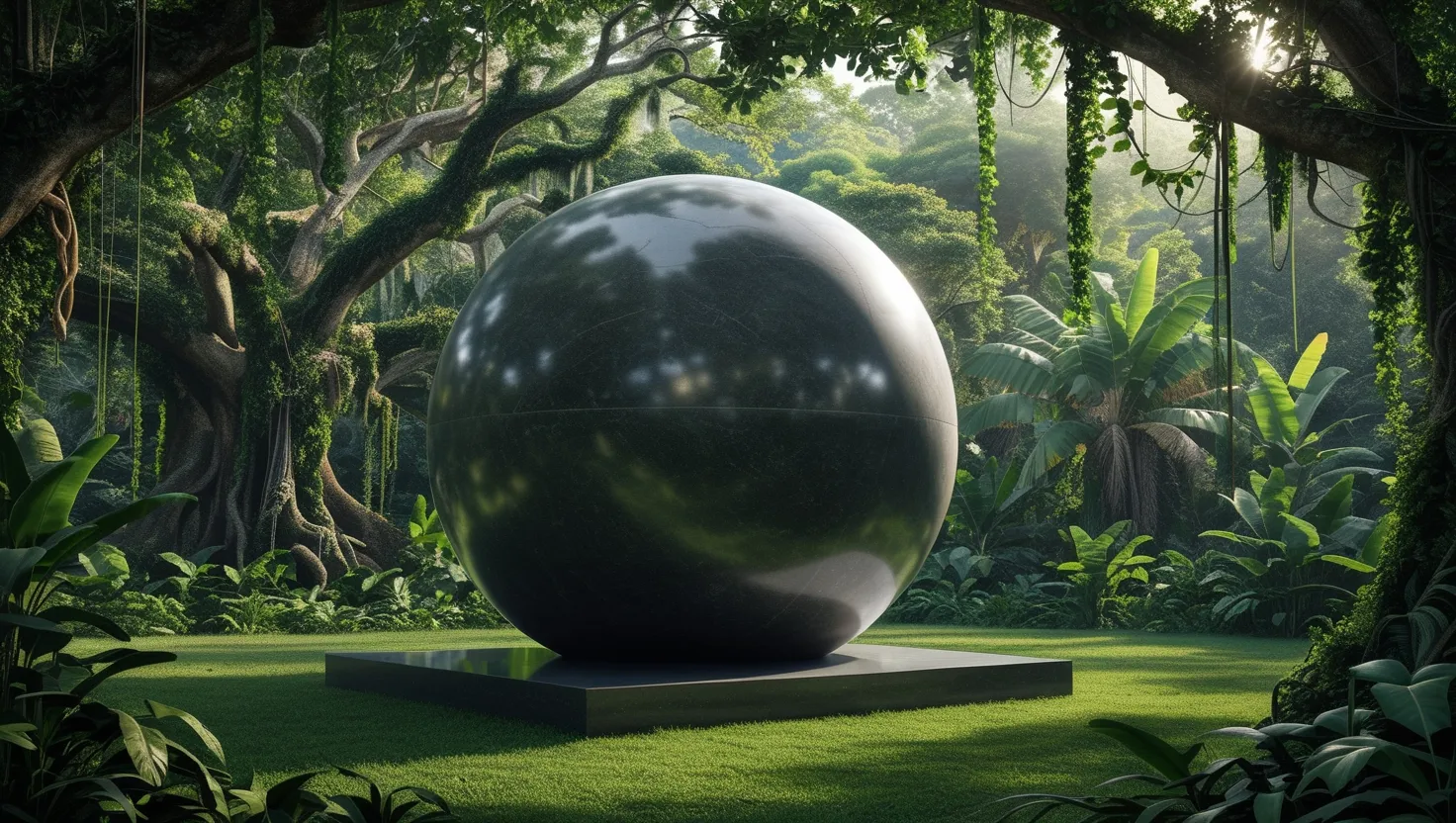
Imagine walking through a thick jungle in Costa Rica. You push aside vines and leaves. Suddenly, you spot it—a huge stone ball, perfectly round, sitting there like it rolled right out of a dream. Some of these balls weigh more than 16 tons. That’s heavier than ten elephants. And they’re not just big. They’re almost perfectly smooth, like someone used a giant machine to shape them. But here’s the crazy part: the people who made them had no metal tools. No wheels. No beasts of burden to drag them. Who were these folks, and why did they pour so much sweat into making these stone spheres?
Let me take you back. Picture yourself as one of the Diquís people, living around 600 to 1000 AD in southern Costa Rica, right by the Diquís Delta on the Pacific coast. Your group calls these balls “Las Bolas.” Over 300 have popped up so far, from tiny ones you could hold in your hand to monsters over six feet across. They’re made from tough rocks like gabbro, hauled from miles away. How? You and your team peck at boulders with harder stones. You hammer them into rough shapes. Then you grind and polish with sand and water until they gleam. It takes months, maybe years, for the big ones. Teams of dozens work together. But why bother? That’s the question that keeps me up at night.
Think about it. What if you lived in a village where the chief’s house sat on a raised mound? Archaeologists found spheres lined up perfectly around those spots. Not randomly tossed. Arranged with care. Does that mean the balls showed who was boss? Like, “This is my turf. Don’t mess with it.” Or maybe they marked graves, symbols of power for the dead. One site, Finca 6, has paved paths, burial mounds, and balls all in one place. UNESCO calls it a world treasure now. But back then, these weren’t just decorations. They screamed status.
“These monumental sculptures were prestige objects that marked the landscape around the ancient Diquís communities for residents and visitors alike to behold with awe.” That’s how experts sum it up. Pretty spot on, right?
Now, let’s get weird. Ever wonder if these spheres mapped the sky? Some line up with stars or planets. Roll them on flat ground, and they could mimic orbits. The delta was a perfect plain for that—no hills to mess it up. Imagine rolling a ball under the night sky, watching it trace Venus or the sun. Was it a game? A ritual? Or a way to track seasons for planting? No two sites have the same setup. Each village tweaked the pattern. That’s not random. That’s smart planning.
But hold on. You might say, “Wait, couldn’t nature make them?” Nope. River rocks get roundish, sure. But not this perfect. Not this big. And tests show hammer marks from stone tools. The Diquís picked specific boulders and worked them down. They even combined chunks of rock for bigger ones. Crazy skill without fancy tech. How did they measure perfect roundness? Maybe vines as strings, or eyes trained over generations. Picture yourself sighting along a stick, turning the stone bit by bit. Trial and error, but flawless results.
Fast forward to the 1930s. You’re a worker for the United Fruit Company. Bosses tell you to clear jungle for banana farms. Bulldozers rumble. You uncover dozens of these balls, buried under dirt for centuries. Excitement hits. But instead of protecting them, workers dynamite some, hunting for gold legends. Others get rolled away or cracked. By the time experts arrive, many are wrecked. That loss hurts. We can’t study their exact spots anymore. Frustrating, isn’t it?
“The spheres were pushed aside with bulldozers and heavy equipment, damaging some spheres. Workmen began to drill holes into the spheres and blow them open with sticks of dynamite.” Ouch. What a mess.
Let me share a lesser-known twist. Not all spheres stayed on the mainland. Some turned up on Isla del Caño, an island offshore. How’d they get there? Canoes? Rafts loaded with tons of rock across choppy water? That screams serious organization. Trade networks? Ceremonial gifts? The Diquís weren’t alone—they linked with other groups in the Isthmo-Colombian area. Think Panama vibes, but with mega balls. And get this: smaller spheres, golf-ball size, show up near Bronze Age spots elsewhere, like Santorini. Coincidence? Or did the idea of perfect stones spread far?
What if the spheres had a sound purpose? Drums? Roll one, and it might hum or thump based on size. Or games—races on the delta plains. Kids playing with minis, chiefs with giants. Social glue. But the Diquís vanished after Spaniards hit in the 1500s. No myths survived like Maya tales. Their stories died. That’s why we guess. No writing. Just stones whispering secrets.
Try this: Stand a sphere on its… well, it doesn’t have a bottom. They’re balanced anywhere. Perfect geometry. Math whizzes say the largest deviates less than a centimeter from true round. Without rulers? They eyeballed ratios, maybe using body parts or shadows. Unconventional angle: What if spheres taught geometry to kids? Hands-on learning. Shape a small one, learn curves, then scale up. Genius education.
Ever visited Finca 6? Walk the paths today. Balls sit restored, mossy but proud. Batambal, El Silencio, Grijalba-2—other sites nearby. Each tells a chiefdom story: mounds for leaders, paved plazas for gatherings, balls as anchors. From 500 to 1500 AD, these folks built complex societies. No pyramids like Maya, but flat, powerful layouts. Spheres dotted the scene, maybe signaling “village here” from afar. Travelers spot one, know it’s safe—or sacred.
“Over 300 huge, stone spheres have been found… their purpose, age and importance is debated to this day.” Still true.
Here’s a fresh take: Spheres as memory keepers. No paper, so carve history in stone. Each size or line-up recalls a chief, a battle, a good harvest. Roll it to a spot, tell the tale. Oral history boosted by touchable art. Or healing? Place one on a sick person, roll it over aches? Folklore hints at magic rocks elsewhere. Possible?
Dig deeper. Stone sources are igneous, volcano-born. Costa Rica’s fiery past supplied them. Hauling gabbro over rivers, hills—no wheels, remember? Human chains. Women, kids, everyone pitching in. That builds community. Spheres weren’t solo projects. They glued society.
Question for you: If you made a giant ball, what would it mean to your family? Power? Play? Prayer? The Diquís invested huge effort. Biggest one: 16 tons. That’s 32,000 pounds. To move it half a mile? Hundreds pushing, levers from wood, wet mud for slides. Sweat equity on steroids.
Lost knowledge hurts. Dating’s tricky—sediment layers say 600-1000 AD, but moved balls confuse it. Diquís faded post-conquest. Diseases, fights. Their world gone. But spheres endure. UNESCO protects four sites now. Tourists gawk. Locals guard.
Unconventional view: Spheres as protest. Against flat world? No, they knew roundness. Or anti-chaos symbols in a wild jungle. Perfect circles tame nature. Control freaks? Fun thought.
“Scientists have studied the sediment layers… earliest were made around the year 600 CE and the newest ones date to the year 1,000 CE.” Time capsules.
Imagine rituals. Full moon, chiefs roll spheres in patterns. Drums beat, fires blaze. Balls glow in firelight. Stars align above. Spiritual tech. Or status games: Bigger ball, bigger ego. Weddings? Roll one to seal deals.
Lesser-known fact: Some spheres have flat spots or grooves. Not all perfect. Intentional? Seats? Handles? Or repairs? Shows they weren’t gods—just skilled humans tweaking designs.
Today, copycats pop up. But originals stun. Visit, touch one. Feel the polish from ancient hands. Chills.
What pulls you to these spheres? Mystery? Skill? Me, it’s the effort. People with rocks beating rocks into perfection. No shortcuts. Pure grit.
Another angle: Eco-message. Stones from afar, placed forever. Sustainable art? They lasted 1,500 years. Modern lesson: Build to last.
“The construction… more complex than grabbing a mallet and a huge group of workers… hammering existing natural boulders… then shaping and finishing them with sand.” Hard yakka.
Spheres scatter now, museums hold some. Met has one. But originals call from jungle. Diquís speak through them. Listen close.
Picture ending a long day. You polish the final curve. Step back. It’s round. Perfect. Pride swells. That’s human spark—create beauty from brute stone.
So, next time you see a ball—sports or whatever—think Diquís. They redefined round. What’s your theory? Roll with it.
(Word count: 1523)