Could Prosperity Be The Catalyst For Humanity's Next Big Leap?
From Farm Fields to Space Fields: How Human Progress Transformed Our World
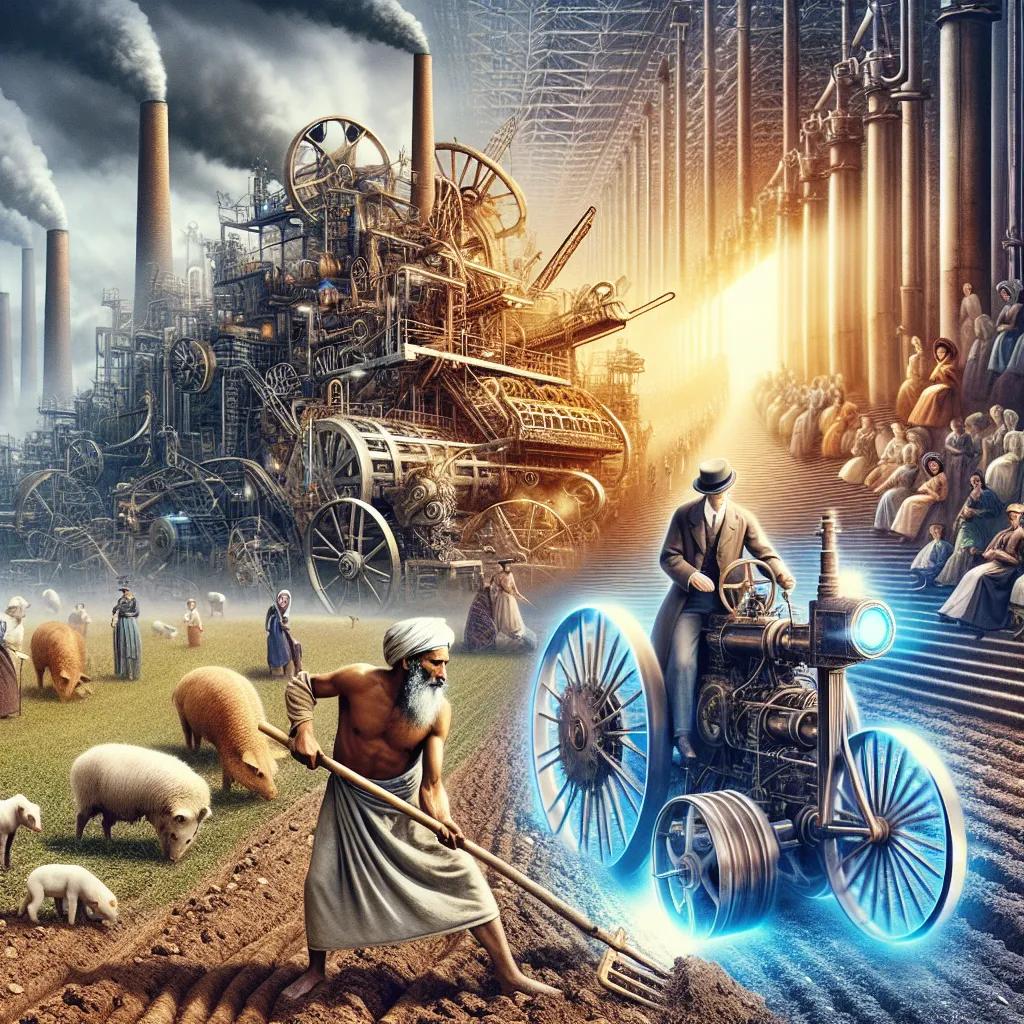
For most of human history, people primarily worked on farms, and the total production of the global economy came almost exclusively from agriculture. Because farmland is limited, this economic output was pretty stagnant year after year. The world seemed like a zero-sum game where one person’s gain was another’s loss. To get more, people often resorted to conquering or stealing from their neighbors. Economic inequality was rampant, with some enjoying abundance while others scraped by on leftovers.
Then came the Industrial Revolution, flipping the world on its head. With new machinery, improved crops, and better fertilizers, agricultural production soared. But it wasn’t just food production that improved; every industrial sector experienced massive growth. For example, between 1700 and 1870, iron production in Britain multiplied 137 times. This era led to a surge in economic output like never before, shifting us from a zero-sum game to a positive-sum game. Now, the pie was not only bigger, but it also kept growing every year, allowing more people to enjoy a larger share simultaneously.
This massive shift brought about by continuous innovation revolutionized our world. Antibiotics fight infections, power plants provide energy, cell phones keep us connected, and planes make travel affordable. Today’s technological advancements seem normal, but this leap from stagnation to growth was unprecedented in human history.
What made this transformation possible? Innovation. It’s about finding better solutions to existing problems and discovering fixes for issues we didn’t even know we had. As we progress, our needs and desires evolve. Someone from Norway 250 years ago might have wanted good shoes, while 150 years ago, a bicycle was a dream. Seventy years ago, a car would have been desirable, followed by cheap air travel more recently. With every advancement, we see further possibilities for improvement.
In this new positive-sum world, it’s in everyone’s best interest for all humans to prosper. When more people are well-off, the demand for new ideas rises, fueling even more innovation. More people contributing means more brilliant solutions. For instance, a poor farmer in a developing country might produce little of global interest, but if his children receive a good education, they might become scientists advancing valuable research.
Consider the fight against cancer. If instead of a billion people, four or seven billion could afford cancer treatments, the scale of investment in medical research would skyrocket, potentially leading to breakthroughs much faster. More prosperous regions mean more avenues for innovation, possibly offering solutions to challenges sooner.
The heart of the matter is this: the more people desire what you desire, the better your chances of getting it. In a positive-sum world, your piece of the pie grows as more people become prosperous and contribute. If billions in Africa and Asia had their own advanced space programs, the progress in space travel would benefit everyone. Similarly, more global investment in medical research could directly impact your health and longevity.
So, working towards a better world isn’t just altruistic; it’s also in your self-interest. The faster we help uplift everyone, the sooner we all benefit. It’s a win-win situation worth striving for.