Did Aliens Visit South America 2,000 Years Ago?
Serpent Guardians and Flying Machines: Unraveling Ancient Mysteries in San Augustine
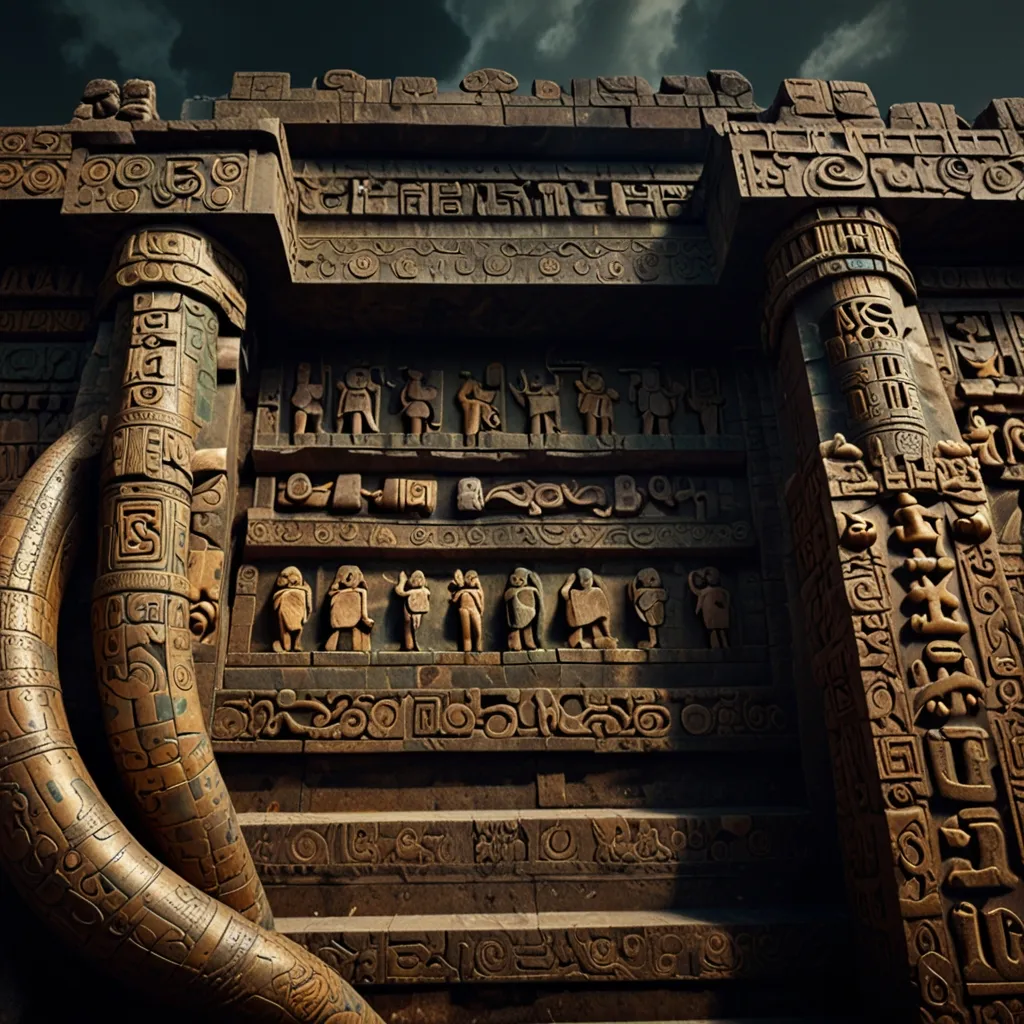
In the heart of South America, at the San Augustine Archaeological Park in Colombia, an intriguing exploration unfolds. Here, ancient astronaut theorist David Childress and Hindu expert Praveen Mohan have teamed up to uncover what they think is evidence of Hindu influence in the area that dates back over 2,000 years. This fact alone sparks curiosity and excitement for what’s to come.
Picture this: a dome adorned with a central deity and flanked by two doorkeepers. But wait, there’s something peculiar about these sentries. They aren’t human. They don’t even look humanoid. Instead, they resemble Nagas - the serpentine, shape-shifting entities of Hindu mythology. The detailed serpentine heads, the scales on their bodies, even the characteristic hood of a cobra – all point to a startling discovery. But here’s the twist: cobras don’t exist in the Americas. So, how did these depictions find their way here?
The connection deepens. Similar motifs are prevalent in Southeast Asian art and architecture. Take, for example, a temple in Thailand guarded by Naga statues, with ribbed stomachs and tails that mirror the ones found in San Augustine. The resemblance is striking, suggesting more than a coincidental artistic overlap.
But let’s take this a step further. These serpentine figures aren’t just any snakes; they are Feathered Serpents, akin to Quetzalcoatl, the Mesoamerican god famously depicted on the Temple of El Castillo at Chichen Itza. The ancient astronaut theory kicks into high gear here. It suggests that the depictions of Quetzalcoatl aren’t of a mere flying snake, as mainstream archaeologists propose, but of an astronaut. The humanoid face seen emerging from the serpent’s mouth is believed to be an ancient depiction of a helmeted spaceman, much like the vimanas described in Hindu texts like the Mahabharata.
Vimanas, for the uninitiated, are advanced flying machines mentioned in Sanskrit epics. They’re described as the vehicles of gods who descended from the sky. The Mahabharata details several types of vimanas, some with tail fins, which Praveen Mohan discusses. He references the Shakuna Vimana with its winged design and contrasts it with other vimanas that were either disc-shaped or tubular, much like modern interpretations of spaceships.
Now, here’s a bit that might blow your mind. In the Gold Museum in Bogotá, Colombia, you can find ancient gold figurines that bear an uncanny resemblance to these vimanas. These aren’t just random artifacts; they’re detailed models that seem to mirror the technology described in ancient texts. Looking at these gold airplanes, one can’t help but wonder about their origins and the advanced concepts they suggest.
The story takes another turn in 1890 along the Magdalena River in Colombia when tomb robbers stumbled upon a grave site estimated to be 1,500 years old. Inside, they discovered hundreds of gold figurines. Among them were numerous objects that seemed to defy natural forms, including pieces that resembled modern-day airplanes. Unlike birds whose wings are located at shoulder height, these figurines had wings attached at the bottom – a design unheard of in the animal kingdom.
In 1996, further intrigue was added when two engineers decided to test these ancient designs. They scaled up a couple of these artifacts, added propellers, and launched them into the sky. And guess what? They flew. This experiment adds fuel to the fire, opening up more questions about the technological capabilities of ancient civilizations and whether they held secret knowledge that’s been lost to time.
This provocative blend of archaeology, mythology, and speculative theory leaves us with more questions than answers. Are these parallels between ancient South American and Hindu iconography mere coincidences? Or do they point towards a shared ancient narrative, one of advanced beings and technologies crossing oceans and continents long before conventional history suggests?
The debate continues. Mainstream archaeologists and ancient astronaut theorists are often at odds, each side fervently defending their interpretations. But beyond the academic squabbles lies a sense of wonder and curiosity. What if there’s some truth to these theories? What if ancient civilizations were indeed visited by advanced beings from the stars, sharing their knowledge and leaving traces that we’re only beginning to understand?
The serpent motifs, the vimanas, the gold artifacts – they all hint at a past far more complex and interconnected than we might have imagined. Whether you lean towards the rational explanations of mainstream archaeology or find yourself swayed by the tantalizing possibilities of ancient astronaut theories, there’s no denying the allure of the mysteries etched in the stones and artifacts of San Augustine and beyond.
As more discoveries are made and technologies advance, perhaps we’ll get closer to unraveling these ancient enigmas. Until then, the stories of serpent gods, flying machines, and golden airplanes serve as a captivating reminder of humanity’s eternal quest to understand our origins and our place in the cosmos. So keep exploring, keep questioning, and most importantly, keep that sense of wonder alive. The past might just have a few more secrets to reveal.