Did Giants Once Rule Malta Beyond Legend and Stone?
Unraveling the Stone Tapestry of Malta’s Gigantic Legends
In 1985, Dr. Anton Muid, a pediatrician on the island of Gozo in Malta, got a panicked call from his contractor. The contractor was clearing land for a new clinic when workers unearthed bones that seemed to belong to a ten-foot human skeleton. At first, Dr. Muid dismissed the possibility, but then he remembered the legends.
Many thousands of years ago, the Maltese islands were filled with eerie legends. The famous tale is that of the giant Sansa, who appeared after a large fiery object crashed onto the island. Sansa, claiming to be from a race called the Nephilim, earned the locals’ trust by protecting them from raiders and pirates, building megalithic temples from enormous limestone blocks. These blocks still stand today and are known as the Gigantia temples.
Fast forward to the 1600s, historian John Abela documented these structures and collected artifacts, including giant human bones that hinted at a prehistoric race of giants. Later, significant discoveries would rock the archaeological world further.
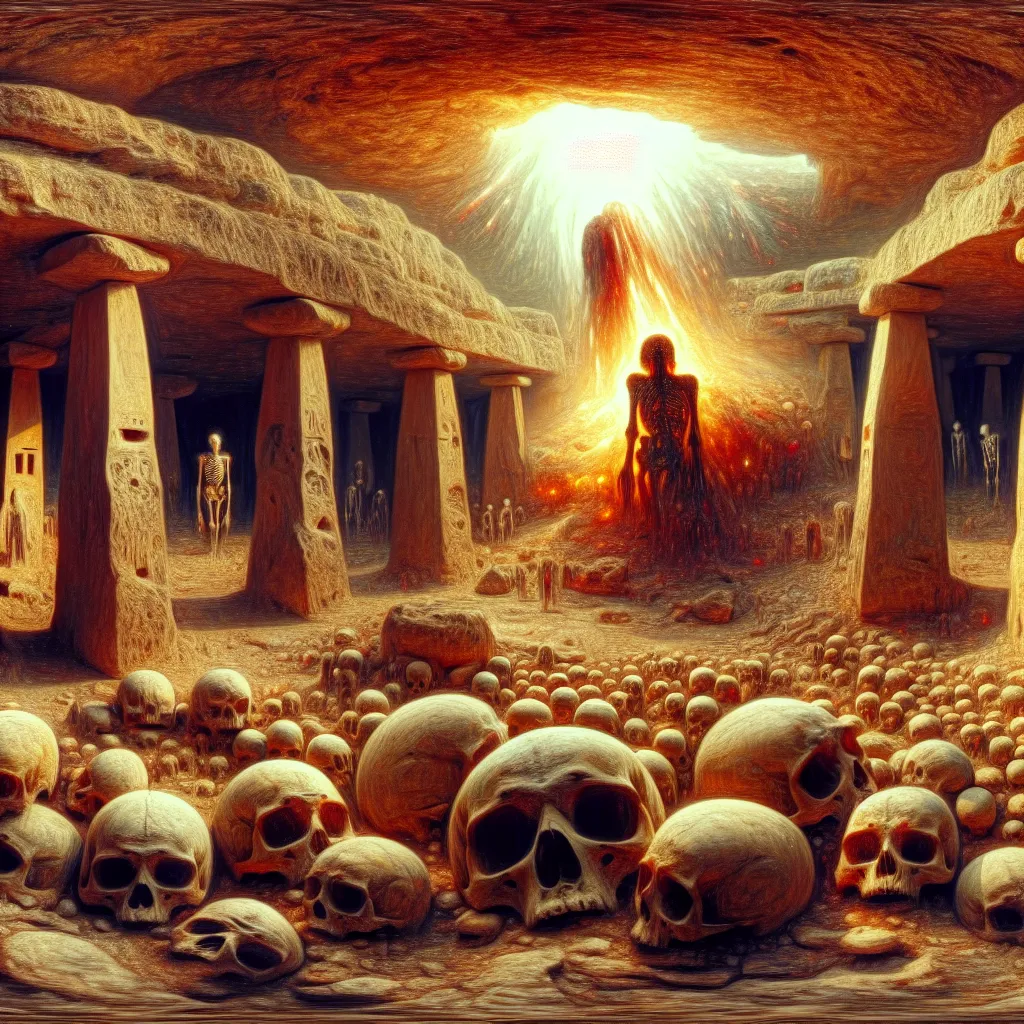
In 1915, a new temple was found, boasting giant statues and structures made from massive stones. Then came the hypogeum discovery in 1902, an underground labyrinth with countless bones, many of which were extraordinarily long-headed, resembling alien shapes.
Giants play into the deeper myths, too. According to the Book of Enoch, the Nephilim are mentioned as warriors large and strong. These beings were said to be the offspring of angels and humans, causing havoc and triggering the Great Flood meant to destroy them.
In modern times, legends still spark curiosity. National Geographic once reported on 33,000 people sacrificed by a cult in Malta and strange disappearances within the hypogeum. One story, that of Lois Jessup, detailed her terrifying encounter with what she believed were giants in the hypogeum. But many consider these yarns to be just that: stories.
The temples on Malta have baffled archaeologists for years. Carbon dating shows they were built around 3600 BC, though some speculate they could be much older, aligning perfectly with celestial events from over 12,000 years ago.
So, while remnants of an ancient giant race still stir the imagination, tangible proof remains elusive. What truly stands as a testament to ancient ingenuity are the temples themselves—massive, precise, and shrouded in mystery.
Thank you for exploring this intriguing piece of Maltese history.