Did Nikola Tesla Accidentally Cause One of History's Largest Explosions?
Tesla’s Skyward Ambitions and the Mysteries of Siberian Catastrophes
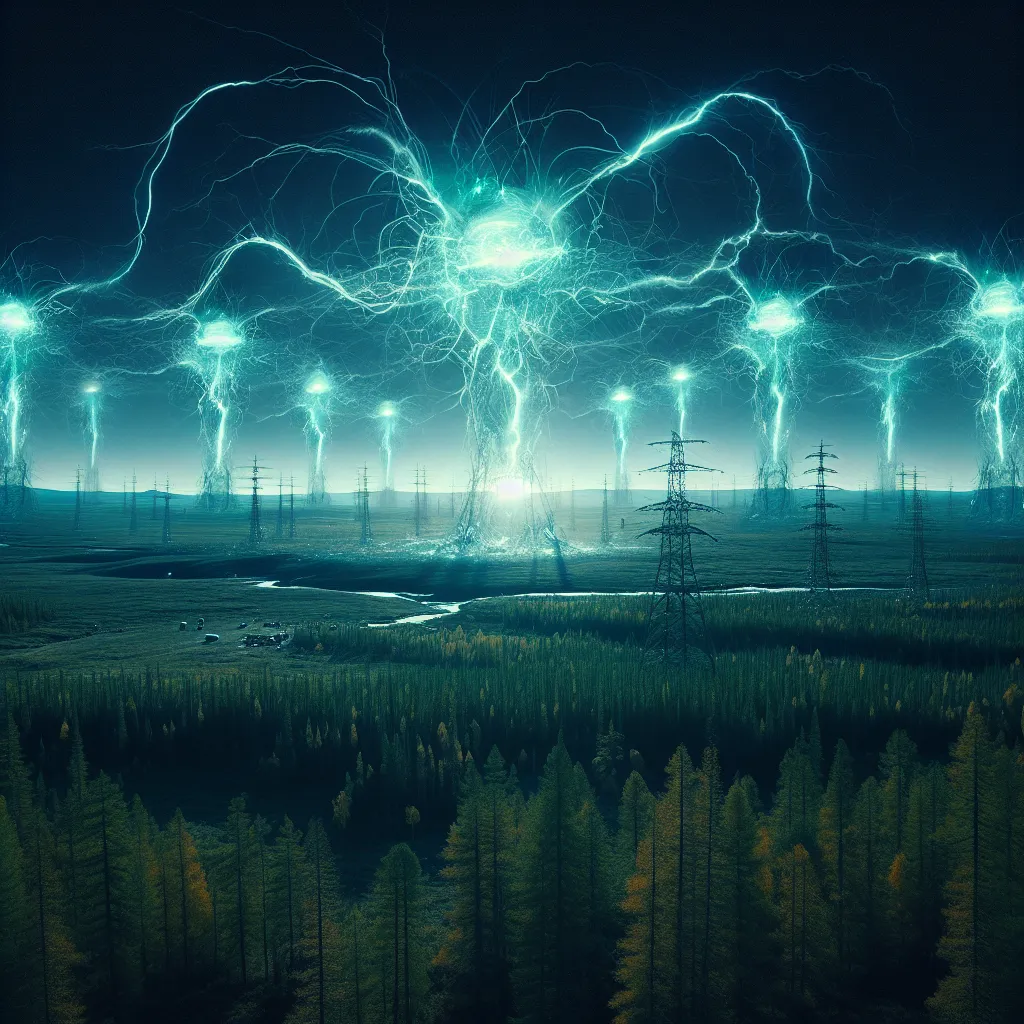
On June 30, 1908, a colossal explosion rocked the remote Tunguska region in Siberia, flattening 80 million trees across 800 square miles. The blast vaporized every plant, animal, and insect within its range, and the shockwave was felt as far away as England. It seemed like a comet impact, yet no crater or debris was ever found. Scientists still can’t explain what happened.
At that exact moment, Nikola Tesla was conducting one of his most ambitious experiments. Tesla began transmitting massive amounts of electricity through the atmosphere at his Wardencliff Tower in Long Island, New York. After firing millions of volts into the sky, Tesla’s equipment readings caused him to utter a worried “uh-oh.”
Known for his revolutionary work in electricity and engineering, Tesla’s name often brings the “Tesla Death Ray” to mind. Tesla envisaged a weapon that could destroy armies from a distance by transmitting concentrated beams of electricity. While this may sound like something from a science fiction novel, Tesla’s work in high-frequency electricity convinced him that such a weapon could be a real deterrent to war. He believed that if every nation had the power to annihilate the others, there would be no more wars.
The idea provoked significant concern amongst military and political circles, leading to efforts to stymie Tesla’s progress. They cut off his funding and blocked his patents, but Tesla moved forward. He reportedly succeeded in building this weapon just months before the Tunguska incident.
Admiral Robert Peary’s North Pole expedition around the same time intertwined with Tesla’s ambitions. Tesla created a radio receiver in 1904 to help Peary navigate through the Arctic, but his grand plan was much bigger. Tesla decided to use Peary’s journey to showcase his invention’s awesome power, intending to light up the sky with wireless energy. However, something went disastrously wrong.
Instead of creating a dazzling display, Tesla’s weapon emitted a massive burst of energy, a thousand times more powerful than an atomic bomb. This unintended power surge overshot its target, reaching Siberia, and resulting in the Tunguska event.
Years later, our understanding of cosmic hazards expanded. In 2013, the Chelyabinsk meteor entered the Earth’s atmosphere, causing significant damage without any warning. This event indicated that celestial impacts occur more frequently than we’d like to believe.
NASA is actively working to prevent future collisions through projects like the DART mission, which successfully altered a small asteroid’s orbit in 2022. Despite these advances, many near-Earth asteroids aren’t tracked, posing a constant threat.
Tesla’s death ray remains a historical enigma. Whether his experiment caused the Tunguska event is still under debate. However, his legacy in energy transmission and electric engineering remains unchallenged. Most of the modern conveniences we take for granted—from smartphones to electric cars—trace back to his groundbreaking work. As Tesla envisioned, the wonders of yesterday have indeed become today’s common occurrences.
The story of the Tunguska event and Tesla’s ambitious experiments reminds us of both the remarkable potential and the possible dangers of scientific innovation. It bears testament to the fact that the pursuit of knowledge often walks hand in hand with unforeseen risks. The key, as Tesla might argue, is to make sure those risks lead us to a safer and more prosperous future. Let’s use the power of technology wisely and remember the lessons of history.
[Note: Edited to remove any sponsor-related content as requested.]