mysteries

How Many Moons Could Dance in Earth's Sky?

Imagining a Sky With Multiple Moons: A Dance of Giants in Earth's Orbit
How Many Moons Could Dance in Earth's Sky?

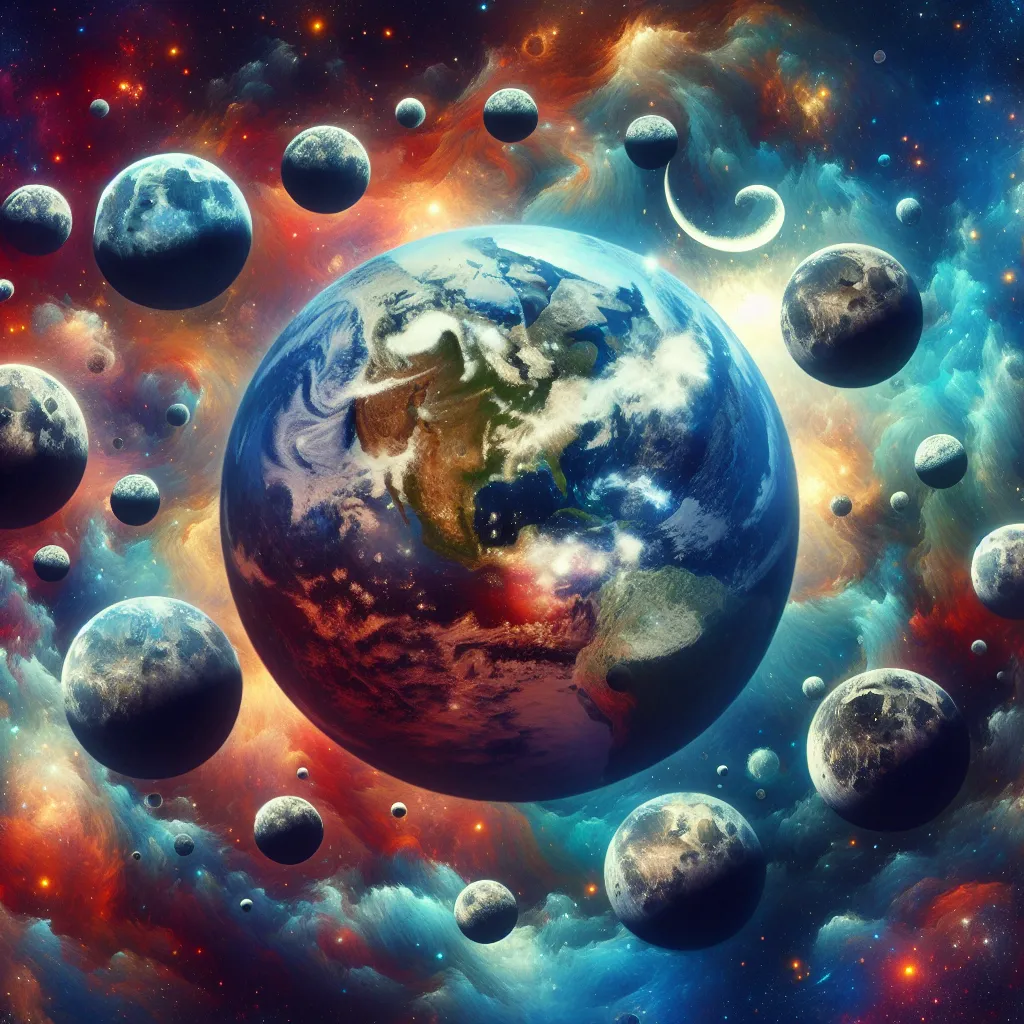
Ever wondered how many moons Earth could actually handle? It’s a fascinating thought experiment. The main consideration here is space - any moon needs a clean orbit. We have to consider two things: it can’t be too far away, or it won’t stay in a stable orbit around us, and it can’t be too close either, because Earth’s gravitational pull would just break it into pieces.

These outer and inner boundaries define a “moon zone,” a donut-shaped area around Earth where additional moons could potentially exist. Each moon needs its own “personal submoon zone,” much like runners on an Olympic track needing their own lanes. These zones shouldn’t overlap to prevent any mutual influences.

The size of a moon also matters. The bigger the moon, the more space it needs. Simulations suggest that Earth could host up to seven moons the size of the dwarf planet Ceres, four Pluto-sized moons, or three moons the size of our current one.

If we had multiple moons, things on Earth would change. Tides could be more intense, and we might have different calendar systems. But imagine the view—on some nights our sky could boast three bright moons, casting stunning shadows on each other. Now, wouldn’t that be a sight to behold?

Similar Posts
Blog Image
5 Mysterious Mass Animal Deaths That Baffled Scientists

Explore 5 mysterious mass animal deaths that baffled scientists. Uncover the causes behind these haunting events and their ecological impact. Learn why understanding these incidents is crucial for conservation.

Blog Image
Why Are People Afraid to Visit This Haunted Battlefield at Night?

Gettysburg, a haunted Civil War battleground, attracts history buffs and ghost hunters alike. Its eerie atmosphere, paranormal hotspots, and tragic past create a chilling experience, especially at night.

Blog Image
Ocean Giants: Myths or Marvels? Uncovering the Truth Behind Sea Legends

Oceanic giants like megalodons, Greenland sharks, and bowhead whales captivate our imagination. These creatures, known for their size and longevity, blur the line between science and folklore. Their unique adaptations to deep-sea environments offer insights into aging and disease resistance, potentially benefiting human health research. The ocean remains a mysterious frontier, inspiring continued exploration and scientific discovery.

Blog Image
Is Your EU Vote More Powerful Than You Think?

Navigating Europe's Democratic Maze: Shaping the Future of the EU Together

Blog Image
7 Ancient Technologies That Still Baffle Modern Scientists: Lost Secrets Revealed

Discover 7 ancient technologies that defy modern understanding. From Damascus steel to the Antikythera mechanism, explore engineering marvels that challenge our view of history. Learn how the past shapes future innovation.

Blog Image
Who Wrote the Letters that Terrorized Circleville?

When Secrets Turn Sinister: Circleville's Two-Decade Descent into Fear