Will the Louvre Jewels Ever Be Found? What Past Heists Show
More than a year on, only the crown is back. We traced how crown-jewel thefts since 1792 ended, from Paris to Dresden, and what brought some loot home.
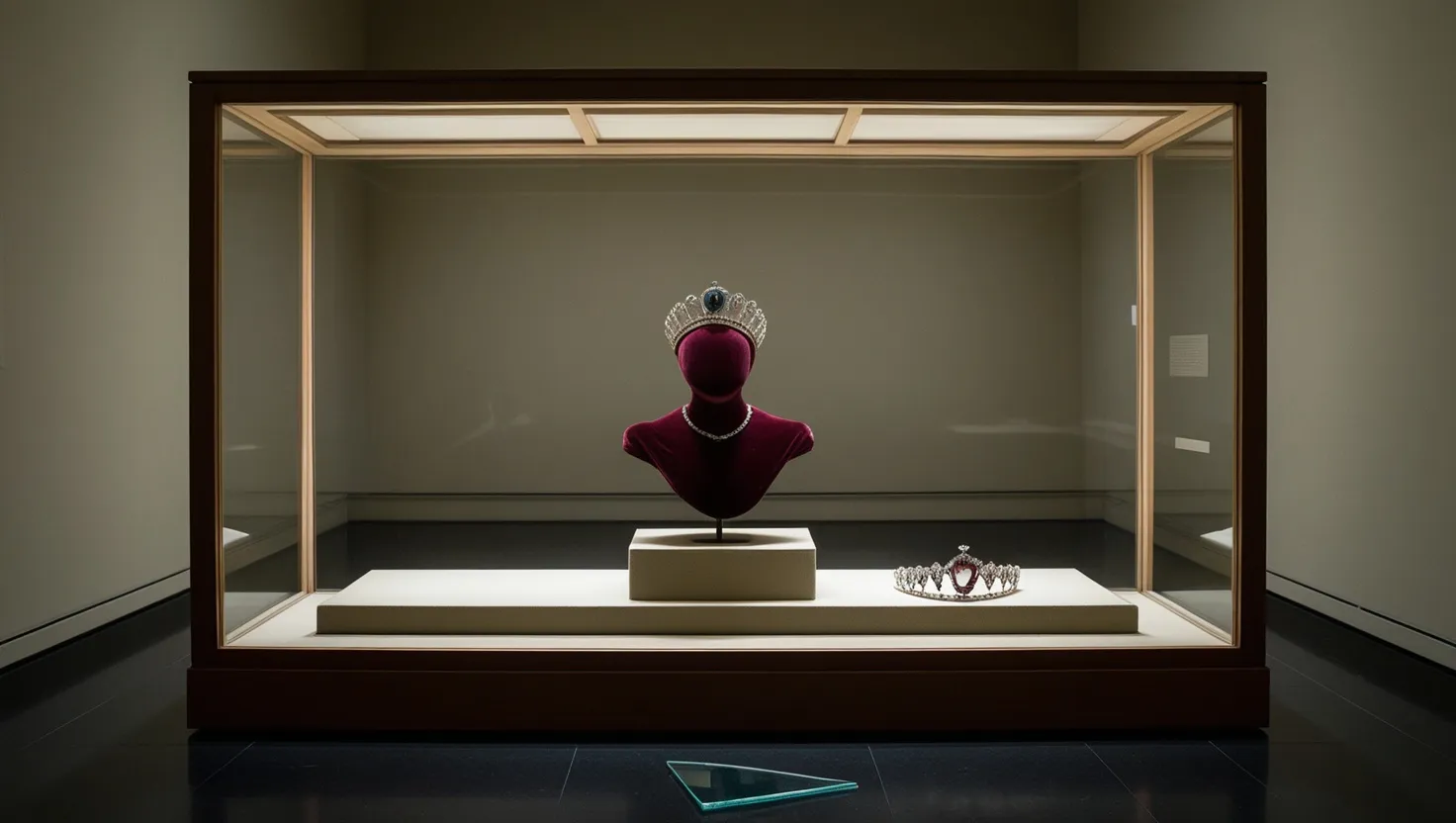
On the first morning, nobody noticed anything wrong. The seal on the door of the Garde-Meuble, the royal storehouse in Paris, was intact. It was September 1792, the city was in revolution, and over about five nights men slipped in and out with most of the French Crown Jewels.
One of the stones they carried off is on public display today. You can go and look at it. It just has a different name, a different shape, and a story that took more than two centuries to untangle.
Hold that thought, because the same country lost its crown jewels again. On Sunday 19 October 2025, shortly after opening, thieves broke into the Galerie d’Apollon at the Louvre. They were gone in a few minutes. More than a year later, almost everything they took is still missing.
So the question people keep typing into search bars is a fair one: will the Louvre jewels ever be found? Nobody can tell you that, and I won’t pretend to. What I can do is lay out what happened to other stolen crown jewels and royal treasures, what brought some of them home, and what that record does and doesn’t say about Paris.
What was taken, and what came back
The French Ministry of Culture’s list, as reported by Sortiraparis, names eight pieces. There’s a diadem, a sapphire necklace and a single sapphire earring from the Marie-Amélie and Hortense set. There’s the emerald necklace and pair of earrings of Empress Marie-Louise, and a reliquary brooch. And there’s Empress Eugénie’s diadem and her large corsage bow brooch.
There was a ninth object, and it’s the strangest detail in the case. Eugénie’s crown was dropped in the street during the getaway. It was found damaged.
I love this detail. A crew organised enough to get in and out of the Louvre in minutes, and somebody fumbles an imperial crown on the pavement.
That crown is the only piece recovered.
Everything else is still gone. The Paris prosecutor, Laure Beccuau, put the haul at €88 million in October 2025. Remember that number. It’s almost exactly what one German state said it lost in the case that most resembles this one.
The arrests came fairly quickly. By late October 2025, Beccuau said two suspects had partly admitted taking part, and by the end of November a fourth person had been charged. They are charged, not convicted. In France the case is still with investigating judges, and I couldn’t find any trial date. Anyone telling you a trial is just around the corner is guessing.
Then the trail goes cold.
In July 2026, Le Monde reported the account given by two of the suspects. They say a man who ordered the job promised them €15,000 to €20,000 and collected the loot in an underground car park in Aubervilliers, on the northern edge of Paris. According to Le Petit Journal, one said he handed over “seven or eight pieces in a bag.” Seven or eight. He apparently wasn’t counting. Investigators don’t accept the story, and this mystery buyer is, for now, only an allegation.
By the one-year mark, AFP reported that searches of homes, cellars and garages had found nothing, and that police appeared to have run out of leads. Le Petit Journal put the gap more precisely in October 2026: nobody has identified the fences, the people who would turn stolen goods into cash. The jewels sit on Interpol’s database of stolen works of art. The gallery itself reopened in July 2026, minus some of its sparkle.
The last time France lost its crown jewels
Back to 1792, because it’s the best case study we have, and it ends three different ways.
The Regent diamond came back. The record of the National Convention for 10 December 1793 notes its recovery, roughly 14 months after the theft. Two of the thieves were caught. They weren’t the ones who had taken the Regent. The stone turned up through searching, not through anyone bargaining for a lighter sentence.
The second ending belongs to a thief called Cadet Guillot Lordonner. According to National Geographic, he carried the Golden Fleece insignia to London, with two great stones set in it: a red spinel called the Côte de Bretagne and a huge blue diamond known as the French Blue. Then he hit the problem every jewel thief since has hit. He couldn’t sell it. He ended up in debtors’ prison, and the Côte de Bretagne eventually made its way back to France. It’s in the Louvre now. Of all the places to end up.
The third ending is the one I promised you. The French Blue vanished. In 1812 a 45.52-carat blue diamond appeared in the hands of a London dealer named Daniel Eliason. By 1839 it belonged to a collector called Henry Philip Hope, and it’s been the Hope Diamond ever since.
People suspected for a long time that the Hope was the French Blue, cut smaller so nobody would recognise it. Proof took two centuries. In 2005 Jeffrey Post of the Smithsonian and his colleagues used computer modelling to conclude that the Hope is the French Blue, recut. Then in 2007 a lead cast of the old stone turned up in Paris’s natural history museum, with a label reading “belonging to Mr. Hoppe of London.”
So one revolution-era theft gives us all three outcomes. A stone found by searching. A stone that came back because its thief couldn’t sell it. And a stone that got away by becoming something else.
Hiding a famous diamond
This is the fear behind every “lost forever” headline about the Louvre: the gems get prised out of their settings, recut, and quietly sold. A diamond expert quoted by AFP made the point that recut stones can slip back into legitimate supply fairly easily. That’s the French Blue route, sped up.
The Hope story cuts both ways, though. Yes, a recut stone escaped for nearly two centuries. But it was finally identified because the old stone’s shape had been recorded, and someone had kept a cast. Famous historic jewels are documented in ways ordinary diamonds aren’t. That doesn’t make them easy to trace once recut. It does mean the trail never goes completely cold, and I think the people declaring the Louvre pieces gone for good underrate how long a paper trail lasts when the object once belonged to an empress.
And breaking a piece up is expensive in a way thieves often regret. Much of what makes Eugénie’s diadem worth a fortune is that it is Eugénie’s diadem: the design, the history, the name. Take out the stones and you’re selling loose gems on a crooked market. Reports on the 2015 Hatton Garden raid in London suggested the raiders expected only a fraction of market value for what they took.
Beccuau understood this when she spoke in October 2025. “These jewels are now, of course, unsellable,” she said. In the same breath she added that there was still time to give them back. Read that as strategy, not a plea. She was telling whoever held the jewels that their market value had just collapsed, and that their bargaining value hadn’t.
The ones that came home
That bargaining value is the thread running through the modern recoveries. Three cases stand out.
Seven years ago tomorrow, on 25 November 2019, thieves broke into the Green Vault in Dresden, one of the great treasure rooms of Europe. Six men went on trial in January 2022. Then the trial turned into a negotiation. In mid-December 2022 police announced that 31 pieces had been recovered in Berlin, and four defendants struck a deal with the court: confessions and the return of loot in exchange for capped sentences. In May 2023 five men, members of a Berlin crime family, were sentenced to between four years four months and six years three months. One was acquitted. Saxony claimed about €89 million in losses, a whisker more than Beccuau’s figure for Paris.
The pieces came back with barely visible damage and went on display again in August 2024. Not everything returned, though. A diamond necklace of Queen Amalie Auguste, a large bow, and an epaulette holding the diamond known as the Saxon White are still missing.
In Sweden, the timeline was faster and much odder. On 31 July 2018, thieves took two crowns and an orb, the funeral regalia of 17th-century monarchs, from Strängnäs Cathedral and escaped across the lakes in an open motorboat. A 22-year-old was arrested within days, traced partly by blood left on the display case. Then, on the night of 5 February 2019, the regalia turned up in a rubbish bin in Åkersberga, a suburb of Stockholm. Royal treasure, next to the household rubbish. The court gave him four and a half years on 22 February, and a second man was later convicted of helping.
The newest case is the one that makes people hopeful about Paris. On the night of 24–25 January 2025, thieves blew their way into the Drents Museum in Assen, in the Netherlands, and took the golden Coțofenești helmet, a Romanian national treasure, plus three Dacian gold bracelets. The Dutch art detective Arthur Brand and the police worked their contacts to persuade the robbers that handing the helmet back would earn them leniency.
It worked.
On 2 April 2026, the helmet and two of the bracelets were handed over in the Old Council Chamber of the Province of Drenthe. The Dutch Prosecution Service said the return was a condition of agreements with the defence. The trial opened 12 days later, and on 5 June 2026 three men got 47 months each. The third bracelet is still missing.
Think of the loot in these cases as a pawn ticket with a deadline. It’s only worth something to the person holding it while they still have something to trade it for. Once the sentence is handed down, the ticket’s expired.
The ones that never did
Now the other side of the ledger, which gets far less attention.
On 6 July 1907, the Irish Crown Jewels were found to be missing from the Bedford Tower at Dublin Castle. They were valued at £33,000 at the time. Sir Arthur Vicars, the official personally responsible for them, lost his post the following year. Nobody was ever tried. The jewels have never been seen again, 119 years and counting. They’ve joined the long list of treasures that simply vanished from history.
On 27 March 2017, thieves took the Big Maple Leaf, a 100 kg gold coin, from the Bode Museum in Berlin. This was a separate case from Dresden, though people often blur the two. It had everything the hopeful theory needs: suspects, a trial that opened in January 2019, and three convictions, reportedly in 2020. The coin never came back. Police believe it was cut up and sold, which is a belief, not proof.
Hatton Garden in 2015 ended the same way, as far as the reporting goes. There were convictions, and by most accounts about two-thirds of the loot was never recovered.
And the Louvre’s own most famous theft fits neither group neatly. The Mona Lisa was stolen in August 1911 and came back in December 1913, after Vincenzo Peruggia wrote to a Florence art dealer, Alfredo Geri, under a false name and tried to sell it. No plea deal. Just a man who discovered, like Lordonner, that you can’t quietly sell something everyone in the world recognises.
The trial theory, tested
You’ll hear one theory a lot about the Louvre: stolen jewels tend to come back around the time of the trial. I find it tidy enough to be tempting, which is exactly why I wanted to test it against the cases above.
It fits Drents, where the return was a written condition of a deal, 12 days before the trial. It fits Dresden, where the recovery came about ten and a half months into the trial as part of a plea arrangement. It fits Strängnäs loosely: the regalia turned up 17 days before the verdict, but nothing I’ve seen ties that to a deal.
It misses the Big Maple Leaf and Hatton Garden, where trials happened and the loot stayed gone. It misses Dublin, where there was never a trial. And it misses the Regent and the Mona Lisa, which came back through searching and a botched sale.
That’s three loose fits and four misses, from a handful of cases picked because they made the news. It isn’t a pattern.
What the three hits share is something narrower. In each one, the people holding the loot, or the people who knew where it was, were already in the hands of prosecutors. The trial didn’t make the jewels come back. The deal did, and a deal is only possible with the right person on the other side of the table.
This is where the Louvre case gets uncomfortable, and where I part company with the optimists. If the suspects’ own story is true, and investigators doubt it, they handed the bag over in a car park and have no idea where it went. A deal only helps if the person you’re dealing with can actually hand the jewels back.
Brand’s view, as he told AFP, is that cases like this often break when a single suspect decides to talk in exchange for leniency. That may be right. He also has an interest in being the man who brings treasures home. I’d keep both in mind. Interpol’s Corrado Catesi was more cautious: stolen objects “can take from three months to 40 years to be recovered.”
What to watch
I can’t tell you if the diadems and emeralds will turn up. Nobody can, whatever their certainty about Antwerp cutting rooms. The past cases tell you what to watch for instead. If prosecutors identify whoever collected that bag, the Drents and Dresden route opens up. If they don’t, the more relevant precedents are Dublin, the Big Maple Leaf and the French Blue.
There’s a reason we keep watching cases like this, the same reason people still search for objects lost centuries ago. A missing treasure is a story with no last page.
Remember what the French Blue did, too. It left Paris in 1792, surfaced in London twenty years later wearing a new shape, and hid in plain sight for nearly two centuries before an old lead cast gave it away. If the Louvre’s jewels have been recut, the answer might be sitting in a display case somewhere, under a name nobody has thought to question.