The Chauvet-Pont d’Arc cave in southern France is a mesmerizing window into our distant past. Hidden away in the rolling hills, this ancient site houses some of the oldest known artworks created by human hands, dating back a mind-boggling 37,000 years. It’s like stepping into a time machine and seeing the world through the eyes of our ancestors.
Imagine stumbling upon this cave, as the original discoverers did in 1994. The walls come alive with intricate drawings of animals - majestic lions, powerful horses, and woolly mammoths. But it’s not just the animals that catch your eye. There’s something else, something more mysterious and potentially groundbreaking.
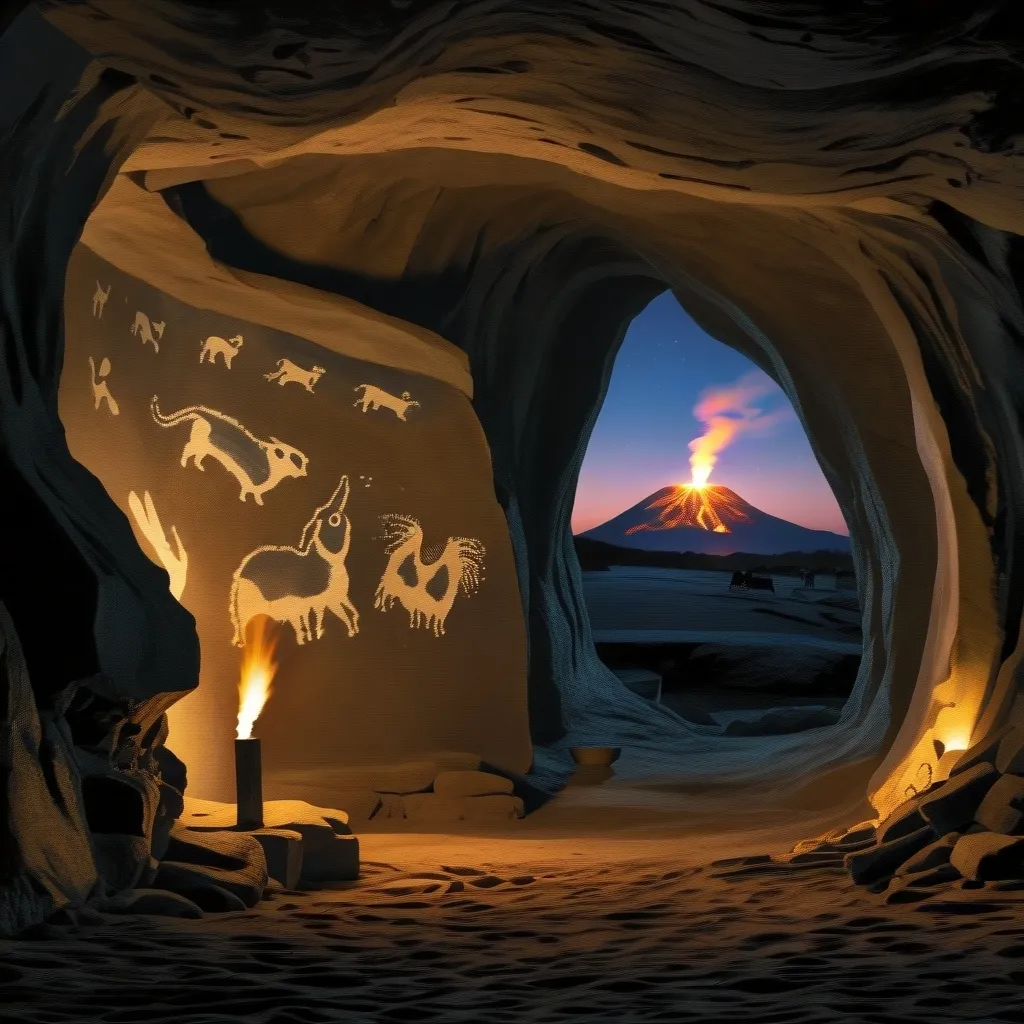
In one of the inner galleries, you’ll find these intriguing spray-shaped images. Now, here’s where it gets really interesting. Some researchers believe these could be the earliest known depictions of a volcanic eruption. Can you imagine? Our ancestors, tens of thousands of years ago, possibly recording a major geological event through art.
To understand why this theory is so exciting, we need to take a little field trip. Just 35 kilometers from the Chauvet cave lies the Bas-Vivarais volcanic field. This area is dotted with over a dozen extinct volcanoes that were very much alive between 19,000 and 43,000 years ago. These weren’t your run-of-the-mill eruptions either. We’re talking about “strombolian” eruptions - spectacular events with lava shooting hundreds of meters into the sky and flowing down the slopes.
Picture yourself standing on a hill near the Chauvet cave on a clear night. Look north, and you’d see the Bas-Vivarais volcanoes glowing in the distance, nature’s own fireworks display lighting up the sky. The rumble of the eruptions would’ve been a constant reminder of the Earth’s raw power.
Researchers like Sebastien Nomade from the University of Paris-Saclay have been piecing together this ancient puzzle. By analyzing rock samples from the volcanic centers, they’ve been able to date the eruptions and line them up with the time humans were known to be hanging out in the Chauvet cave. It’s like geological detective work!
The charcoal used in some of the cave paintings has been dated to between 34,000 and 36,000 years ago. That lines up perfectly with the volcanic activity in the area. While we can’t say for sure that the spray-shaped images are definitely volcanoes, the evidence is pretty compelling. It’s the most plausible explanation we’ve got.
Now, let’s talk about the artwork itself. The Chauvet cave isn’t just any old cave with a few scribbles on the wall. This place is an ancient art gallery that puts some modern museums to shame. The level of detail and skill in these paintings is mind-blowing, especially when you consider how old they are.
One of the coolest things about the Chauvet cave is that it wasn’t just used by one group of humans. There were actually two distinct populations that left their mark here, separated by a gap that’s potentially longer than all of recorded human civilization. The earlier bunch left behind those detailed animal drawings, while the later group seems to have added their own touches, including those mysterious spray-shaped images.
Walking through the cave (if you’re lucky enough to get access - it’s heavily restricted to preserve the artwork), you can almost feel the presence of those ancient artists. Their hands tracing the outlines of animals on the walls, leaving behind a legacy that would last for tens of thousands of years. The red handprints scattered throughout the cave are particularly moving - a direct connection to our ancestors across the vast expanse of time.
These paintings are more than just pretty pictures. They’re a window into the lives and experiences of our ancient ancestors. Depictions of natural events in rock art are pretty rare, which makes the Chauvet cave paintings even more special if they do indeed show a volcanic eruption. It makes you wonder what other secrets might be hidden in rock art around the world, just waiting to be discovered and interpreted.
The significance of the Chauvet cave goes beyond just the artwork. It tells us about the creativity, resilience, and observational skills of early humans. These weren’t just cavemen grunting and hunting. They were artists, scientists, and storytellers in their own right.
Think about it. These people were living in a world we can barely imagine - a landscape dominated by ice age megafauna, with volcanoes erupting nearby. And yet, they found the time and inspiration to create art. Not just any art, but art that has survived for tens of thousands of years and still has the power to move us today.
The Chauvet cave reminds us of the deep history that underpins our modern world. It’s easy to get caught up in our daily lives and forget that we’re part of a much longer story. But when you look at those ancient paintings, you’re reminded that humans have been creating, observing, and recording their world for a very, very long time.
As we continue to study and explore these ancient artworks, we’re not just learning about the past. We’re also reflecting on our own place in the grand narrative of human history. The Chauvet cave, with its enigmatic paintings and its connection to the volcanic landscapes of southern France, is a powerful symbol of our shared human experience.
It’s a reminder that despite the passage of millennia, we’re still connected to those who came before us. We may have smartphones and space shuttles now, but we’re still driven by the same curiosity, creativity, and desire to understand our world that inspired those ancient artists.
The next time you’re doodling during a boring meeting or posting a picture on social media, remember the Chauvet cave. You’re part of a tradition of human expression that stretches back tens of thousands of years. Who knows? Maybe your creations will be puzzling archaeologists 37,000 years from now!
In the end, the Chauvet cave and its paintings stand as a testament to the enduring human spirit. They show us that even in the face of a harsh and unpredictable world, humans have always found ways to create beauty, to record their experiences, and to leave their mark on the world. And isn’t that something worth celebrating?
So the next time you hear about some new archaeological discovery or see an ancient piece of art, take a moment to really think about it. Try to put yourself in the shoes (or bare feet) of those ancient humans. What were they thinking? What inspired them? What were they trying to communicate?
The Chauvet cave may be tens of thousands of years old, but its message is timeless. It speaks to our shared humanity, our creativity, and our endless fascination with the world around us. And that’s pretty amazing, don’t you think?