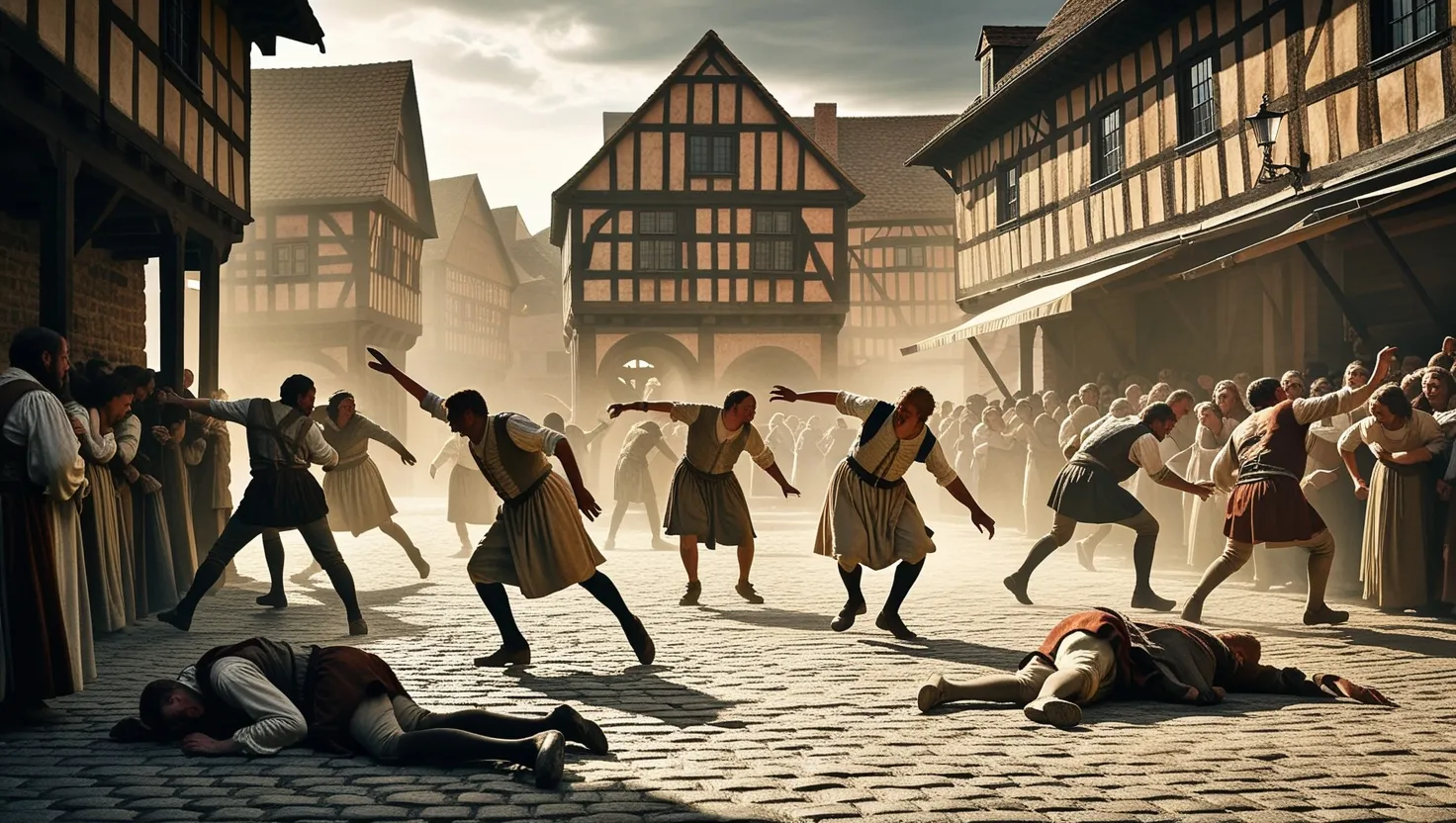
Imagine this: it’s a hot July day in 1518, and I’m walking the dusty streets of Strasbourg. Suddenly, one woman, Frau Troffea, starts dancing right there in the middle of the road. She doesn’t stop. Not for hours. Not for days. What would you do if you saw that? Keep walking, or stare?
She kicked off something wild. Within a week, dozens joined her. By the end of the month, over 400 people—men, women, even some kids—were dancing non-stop. Feet pounding the cobblestones, day and night. No music at first, just their own frantic steps. Sweat pouring, hearts racing. Some dropped from exhaustion, strokes, or heart attacks. The city turned into one giant, deadly dance floor.
Think about it. These weren’t party people. They were regular folks—bakers, weavers, farmers—gripped by a force they couldn’t fight. Their legs moved against their will, like puppets on invisible strings. Hunger? They ignored it. Sleep? Forget it. Pain? It kept them going somehow.
The city bosses panicked. Get this: doctors said it was “hot blood” boiling inside them. Their fix? More dancing! They cleared out halls, built wooden stages in the market square, and hired pipers and drummers. “Dance it out,” they told everyone. Picture professional dancers herded in to show the way. It made things worse. The crowd swelled. Bodies collapsed faster.
“Many hundreds in Strassburg began to dance and hop, women and men, in the public market, in alleys and streets, day and night; and many of them ate nothing until at last the sickness left them.”
That’s from an old poem they wrote back then. Chilling, right? It wasn’t joy. It was torment.
Now, let’s rewind a bit. Strasbourg wasn’t paradise that summer. Famine bit hard—rye crops failed year after year. People starved. Disease spread like whispers. Syphilis hit town, a new horror from the wars. Taxes crushed the poor. Floods ruined what little they had. Everyone lived on edge, scared of the next bad day.
Have you ever felt stress so deep it twists your body? Like your stomach knots up, or your hands shake? Multiply that by a whole city. That’s the soil this plague grew in.
Authorities flipped scripts when dancing didn’t cure itself. They blamed Saint Vitus, a holy guy who supposedly punished sinners with twitchy feet. Priests loaded dancers into wagons, drove them 30 miles to his shrine. There, they got red shoes splashed with holy water, crosses painted on them, incense everywhere. Some “healed” and came back raving about miracles. The rest? The dancing faded by September. But how many died? Rumors say 15 a day at the peak. Hundreds total? No one knows for sure—no body count in the records.
This wasn’t new. Dig into history, and you find dancing fits popping up across Europe for centuries. Back in 1374, along the Rhine River, folks leaped like frogs during floods and famine. Smaller outbreaks in places like Aachen or Liege. Always the poor, always in tough times. Why Strasbourg blew up biggest? Location helped. It sat on trade routes, news—and panic—spread fast.
Let’s talk lesser-known bits. Frau Troffea? Some say her daughter joined first, or maybe it was just “a woman.” Records mix it up. And the music ban later? City council outlawed it, thinking tunes fueled the fire. Too late. Dancers already hummed their own mad rhythms.
Ergot poisoning gets blamed a lot. It’s a mold on wet rye bread, full of stuff like LSD. Makes you hallucinate, convulse, feel bugs crawling on your skin. Burning feet? Check. Twitches? Sure. But sustained dancing for days? Ergot hits hard and fast—gangrene, seizures, not rhythmic steps. Victims puked and dropped, didn’t groove. Plus, why only dancers, not the whole bread-eating town? Doesn’t fit perfect.
What if it was both? Stress plus a tiny dose of ergot, sparking the first twitch. Then minds took over. Ever seen a yawn spread in a room? Same idea, but deadly. Mass psychogenic illness—that’s the fancy term. Your brain, under crazy pressure, tricks your body into “sick.” Stress hormones flood. One person breaks, others copy without thinking. In 1518, fear of curse or hot blood made it explode.
John Waller, a guy who studied this deep, points to the poor districts. They knew old dancing plague tales from grandparents. “If grandma hopped to St. Vitus, maybe I will too.” Belief fueled it. Paracelsus, a doctor who visited later, called it a “disease from the stars” mixed with bad air. Weird, but he saw the mind-body link early.
“In the year 1518 AD… there occurred among men a remarkable and terrible disease called St Vitus’ dance, in which men in their madness began to dance day and night until finally they fell down unconscious and succumbed to death.”
Old chronicle words. Hits you, doesn’t it?
Try this on: what if culture primed them? Medieval folks danced for everything—weddings, plagues, saints’ days. Feet were how they prayed sometimes. Extreme stress flipped it to horror. Today, we’d call it a breakdown. Back then, no shrinks. Just saints and blood-letting.
Unconventional angle: gender stuff. Most dancers? Women. Weary moms, stressed from hunger, kids, endless work. Their bodies screamed what mouths couldn’t. Men joined later, but ladies led. Makes you wonder—do women hold stress different in crises?
Another twist: no kids danced much. Adults only. Why? Kids bounce back from hunger better. Or maybe they weren’t as locked in adult fears—taxes, syphilis, hellfire sermons.
Fast-forward. Similar stuff happens now, subtler. Think twitching teens in schools, or laughing fits in factories. Le Roy, New York, 2011—girls shook uncontrollably. Stress from bullying, toxins? Echoes of 1518. Or those TikTok challenges gone wrong—mass copycat dances till hurt.
Question for you: could it happen here, today? Scroll social media, see trends explode. One viral twitch, and boom—city sidewalks full of hoppers. Our stress? Bills, screens, endless news. Feet might not move, but minds glitch same way.
Physicians back then tried herbs, cold baths. Failed. Modern take? Antipsychotics, therapy for the crowd. But prevention? Fix the roots—feed people, ease fears. Strasbourg’s plague shows society breaks together.
Lesser-known fact: after it ended, they burned some dancers’ clothes, fearing curse lingered. Superstition ruled. And the shrine trips? Wagons rattled with thrashing bodies, priests chanting. Like a medieval exorcism rave.
Imagine being a musician hired to play. Pumping drums while folks die at your feet. Moral dilemma? They did it for pay, or fear of joining.
Paracelsus obsessed over it years later. He thought pegging—bad humors from feet—caused it. Bizarre surgery idea. Shows even smart guys grasped wrong.
What about animals? No reports of dancing dogs or horses. Humans only. Brain stuff, wired for mimicry.
Today, neurologists eye it for chorea—diseases like Huntington’s, but mass scale? No. It’s social brain at work. Mirror neurons fire: see dance, you dance.
“The more citizens this unusual plague afflicted, the more desperate the privy council became to control it.”
From old notes. Leaders fumbling, just like us in pandemics.
Unique insight: this plague birthed “choreomania”—dance madness study. Influenced Freud on crowds. Even inspired art—ballets about cursed feet.
Ever feel your body betray you? Leg bounce when nervous? Scale it up. 1518 proves minds can hijack muscles en masse.
Final oddity: it stopped cold. No gradual fade. Like a spell lifted. St. Vitus forgive them? Or harvest time—full bellies calmed nerves? Mystery lingers.
So, next time stress hits, shake a leg—mindfully. Don’t want Strasbourg 2.0. What do you think started it? Frau’s bad bread, or broken dreams? Tell me.
(Word count: 1523)