The Hessdalen Lights: Norway's Real Unexplained Phenomenon That Scientists Can't Solve
Discover the Hessdalen Lights — Norway's unexplained glowing orbs baffling scientists for decades. Explore the theories, the research, and the mystery. Read the full story.
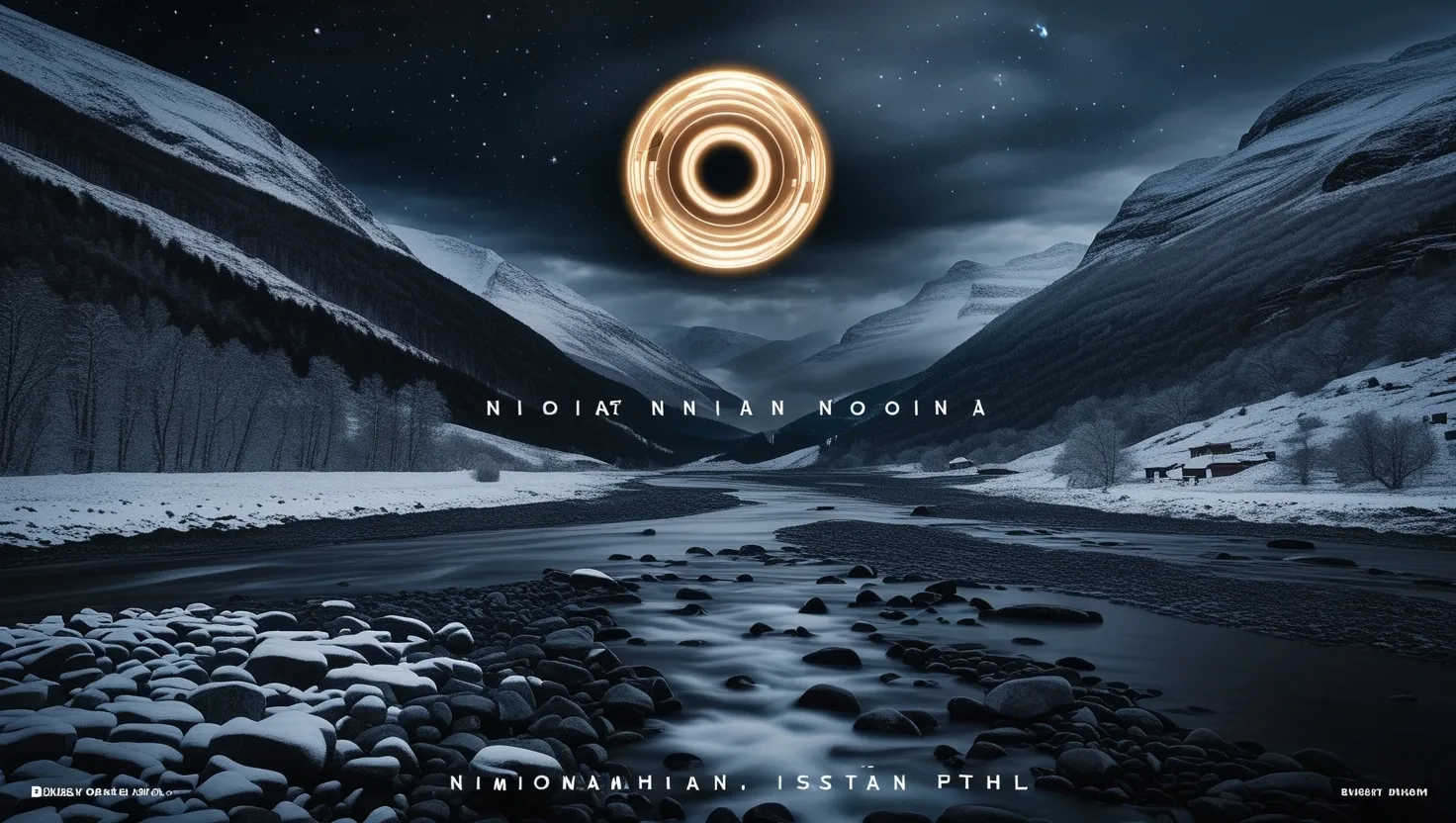
There is a valley in Norway where the darkness never quite wins. Nestled between the ridges of central Norway, Hessdalen is not particularly famous. It has no grand monuments, no famous history, no busy roads. It is a quiet stretch of land with a river that freezes in winter and a few hundred people who go about their days like people anywhere else. Except for one thing. Almost every night, something glows.
The locals have a name for it. The Hessdalen Lights. And they have been watching these lights for longer than most of us have been alive.
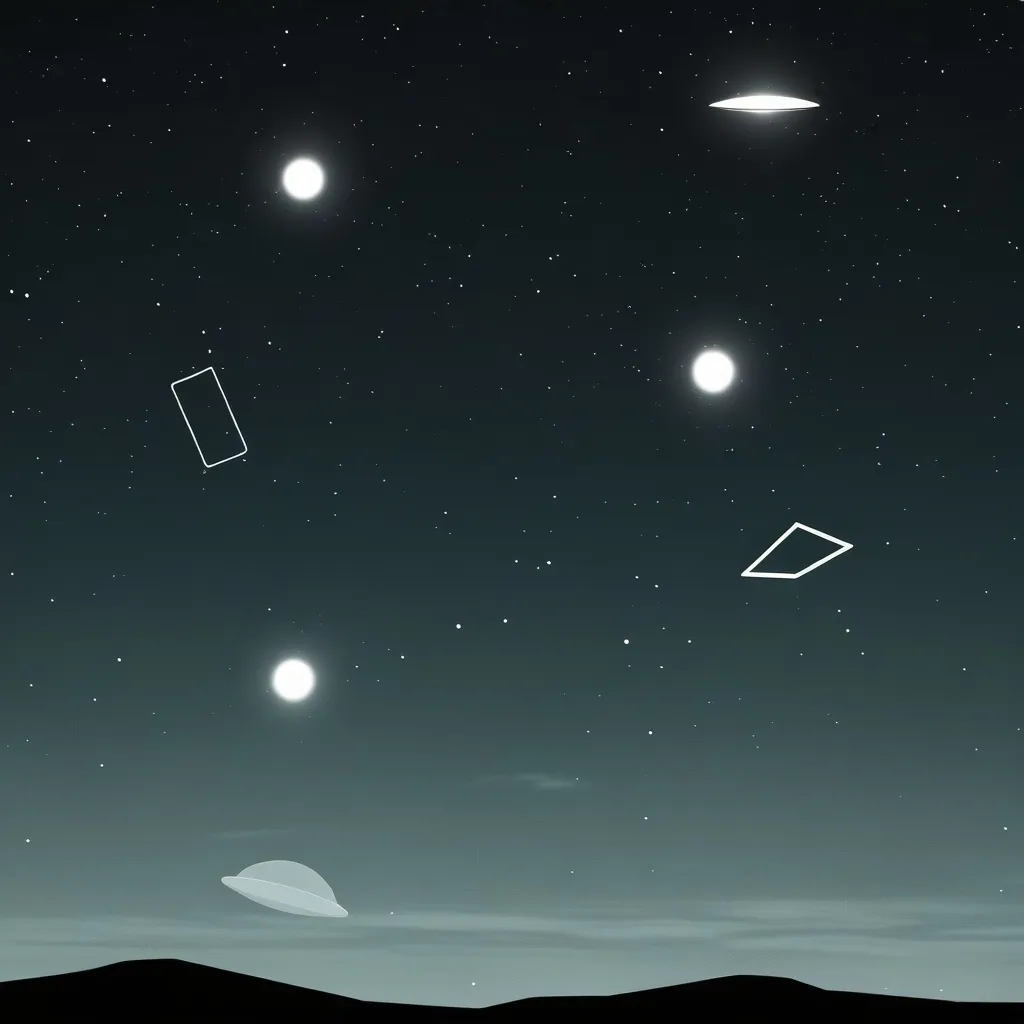
Think of it this way. Imagine you look out your window every night and see a slow-moving ball of white or yellow or red light drifting over the hills. It does not flicker like a fire. It does not move like a plane. It pulses. It changes shape. Sometimes it splits in two, like a cell dividing. Then it disappears, and the next night it comes back. Would you be curious? Of course you would. Now imagine this has been happening for decades, and the world’s scientists still cannot tell you what it is.
That is exactly where we are with Hessdalen.
“The most beautiful thing we can experience is the mysterious. It is the source of all true art and science.” — Albert Einstein
The lights were being talked about by locals as far back as the early twentieth century, but the real surge of sightings happened between 1981 and 1984, when hundreds of observations were reported in a very short period. People were seeing these lights almost daily, sometimes multiple times in a single night. At their peak, locals were reporting them up to twenty times per week. That is not a rumour. That is not a mass hallucination. That kind of frequency demands attention.
So scientists showed up.
In 1984, a group of researchers launched Project Hessdalen, a volunteer-led scientific effort to actually measure what was going on. They set up cameras, radar systems, magnetometers, and spectrum analysers across the valley. What they found was strange enough to make anyone pause. The lights showed up on radar. They registered on photographic film. They produced measurable electromagnetic fields. They were physically real in every sense that science cares about.
Here is where it gets interesting. The spectral analysis of the lights — basically, a breakdown of what elements are present when the light appears — showed traces of silicon, iron, and iron oxide. Those are not gases. Those are minerals. Something is burning, or reacting, or doing something that involves solid matter suspended in the air. But what? And how? And why does it keep coming back to the same valley?
Ask yourself this: when was the last time you heard of a natural phenomenon that scientists could measure but still could not explain after forty years of trying?
One of the more convincing theories has to do with the ground itself. The Hessdalen valley sits on a geology that is genuinely unusual. The bedrock is rich in copper and zinc on one side, and the river running through carries sulfurous water. Some researchers have proposed that this creates something like a giant natural battery — two different conductive materials separated by a mildly acidic liquid. When that kind of setup exists underground, it can push electrical charges upward into the atmosphere and ionise the air above. Ionised air can glow. Think of a neon sign. Same basic idea, just happening outdoors, spontaneously, driven by the earth itself.
Another theory involves piezoelectricity. Quartz crystals, which are buried in significant quantities beneath the valley, generate an electric charge when they are squeezed or stressed — such as when tectonic pressure shifts. The idea is that the movement of rock deep underground creates a surge of electrical energy that travels upward and produces a visible plasma in the air. Plasma is the fourth state of matter, if you remember your school physics. It is what the sun is made of. It is what happens when a gas gets so energised that its electrons start flying loose. It glows.
“Nature is not only stranger than we suppose, but stranger than we can suppose.” — J.B.S. Haldane
But here is the part that makes scientists genuinely uncomfortable. The lights do not always behave like simple atmospheric phenomena. They appear to react. When researchers have tried to approach the lights on foot or by car, the lights have moved away. When a researcher once flashed a torch in a pattern at one of the orbs, the light reportedly flashed back in the same pattern. That kind of detail is not in every report, and not every scientist takes it seriously, but it keeps appearing in the record often enough to be unsettling.
Does that mean the lights are intelligent? Not necessarily. Plasma can behave in ways that look purposeful simply because it follows electromagnetic field lines, and human beings are walking electromagnetic fields themselves. A plasma orb might drift away from an approaching person not because it is aware, but because the person’s own body generates a field that repels it. That is a much less exciting explanation, but it is probably closer to the truth.
A permanent automated research station was installed in Hessdalen in 1998. It runs continuously, taking pictures and measurements around the clock without anyone needing to be present. The data it collects feeds into university research programmes in Italy and Norway. Yes, Italy — the University of Ostfold in Norway and researchers from the Italian CNR have both contributed serious scientific work to this mystery. This is not fringe science conducted by enthusiasts in tin hats. This is peer-reviewed, instrument-based research published in legitimate journals.
And the conclusion of all that research? Something is definitely there. We are not sure what it is.
What do you think is harder to accept — that something unexplained exists, or that science has not yet found the explanation?
One detail that rarely makes it into popular accounts of Hessdalen is that the valley experienced significant mining activity for most of the nineteenth and early twentieth centuries. The mines closed in 1944, but the earth was left altered. Tunnels, shafts, disrupted rock layers, changed drainage patterns. Some researchers believe the mining activity may have accelerated whatever geochemical process is producing the lights, essentially opening pathways for electrical energy that would otherwise have stayed trapped underground. If that is true, then the Hessdalen Lights are, at least partly, a human-made phenomenon — an accidental side effect of industrial extraction in a remote Norwegian valley.
That reframing changes things somewhat. It moves the lights from the category of pure natural mystery into something more uncomfortable: a consequence. Something we may have triggered without knowing it, and which continues long after the miners packed up and left.
“We know very little, and yet it is astonishing that we know so much, and still more astonishing that so little knowledge can give us so much power.” — Bertrand Russell
The Hessdalen Lights have attracted their share of UFO enthusiasts, and honestly, who can blame them. A glowing orb that moves intelligently, cannot be approached, appears on radar, and has no accepted scientific explanation is exactly the kind of thing that makes people think of spacecraft. But the UFO framing has actually hurt the scientific study of Hessdalen more than it has helped. When a phenomenon gets associated with fringe belief, mainstream researchers stay away to protect their reputations. Funding dries up. Serious attention becomes harder to secure.
The scientists who have stayed with Hessdalen deserve credit for exactly that reason. They kept working on something that their colleagues probably raised eyebrows at, because the data was too good to ignore.
There is a lesson somewhere in that. Not every unexplained thing is supernatural. Not every mystery is a hoax. Some things are simply ahead of our current ability to explain them, sitting quietly in a Norwegian valley, glowing on and off while the rest of the world sleeps.
The lights were there last winter. They will likely be there this winter too. The automated cameras will keep recording. The scientists will keep analysing. And somewhere in Hessdalen, a local will step outside in the cold, see a slow-moving point of light drifting above the frozen river, and feel something that no instrument has yet managed to measure — that particular combination of wonder and unease that comes from standing in front of something real that you simply cannot understand.
That feeling, more than any theory, might be the most honest thing Hessdalen has to offer.