Unveiling Atlantis: Hidden Connections Between Ancient Legends, Extraterrestrial Visitors, and Antarctica's Secrets
The tale of Atlantis intertwines myths, ancient civilizations, and cosmic theories, suggesting forgotten histories and potential extraterrestrial connections beneath Earth's mysteries.
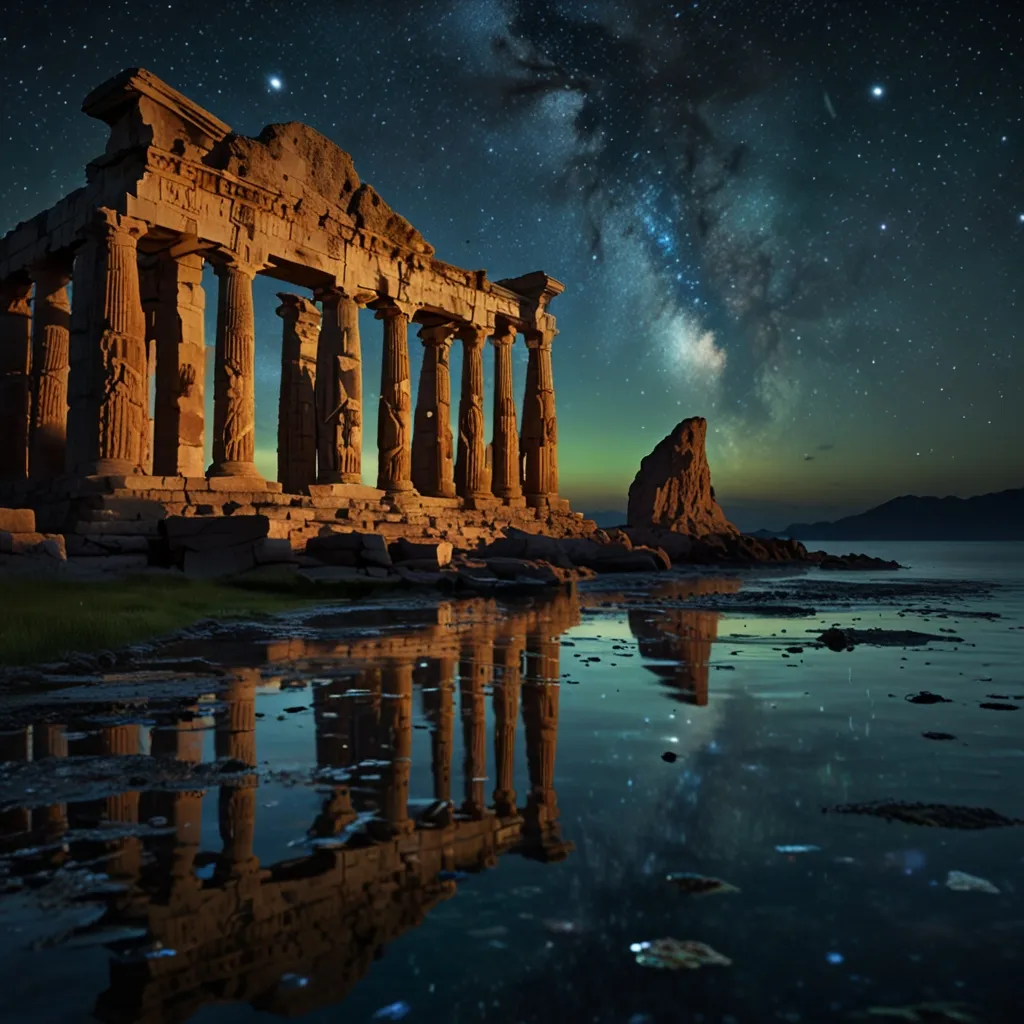
Imagine the Earth as a colossal puzzle, with pieces scattered across history, myth, and legend. Among those pieces sits the intriguing tale of an ancient civilization swallowed by fate—Atlantis. This story pulls us back to ancient texts, whispers of forgotten continents, and mysterious cosmic interactions that defy our current understanding.
Let’s start with Noah’s flood from the Bible’s Book of Genesis, a tale that many of us grew up with: a divine deluge that was supposed to cleanse the Earth of sin. This narrative isn’t unique to the Bible; echoes of a great flood resonate in traditions around the world, from the Epic of Gilgamesh in Mesopotamia to the Edfu creation texts of Egypt. These accounts suggest the existence of an advanced civilization before a cataclysmic flood—the anti-diluvian civilization, some say.
Taking a time-machine ride back, we meet Plato, the ancient Greek philosopher who spun stories about Atlantis in his dialogues, Timaeus and Critias, around 360 BC. According to Plato, Atlantis was no ordinary island. Governed by justice and power, it thrived under the mysterious, divine glow of a metal called orichalcum. This isn’t an ordinary tale—it hints at advanced technologies and societal structures implanted by gods, just as some of Plato’s contemporaries believed.
Now, here’s where it gets frosty! Fast forward to Antarctica, the icy expanse that some theorists claim might harbor the remnants of Atlantis beneath its glacier sheets. How’s that for cool? It’s speculated that this hidden realm could have once been home to a civilization with ties to extraterrestrial beings. These theories stretch the imagination and suggest that ancient civilizations, possibly tutored by cosmic visitors, aren’t just fairy tales.
Modern whispers from Antarctica suggest more is happening at the South Pole than meets the eye. Whistleblowers and conspiracy whispers hint at hidden bases and alien collaborations, forming a wild yet enticing narrative. It’s Antarctic X-Files, if you will, where these celestial secrets lie frozen.
Back with Plato, we marvel at the orichalcum—a mystical metal reportedly reflecting otherworldly brilliance. It was discovered in recent times, not as a fabled relic but an alloy of copper and zinc from a shipwreck off Sicily’s coast. Its existence opens the door to the idea that perhaps, just maybe, there was more truth to Plato’s Atlantis than mere allegory.
Let’s wander now to Native American legends, where tales of destruction and rebirth intertwine with those of Atlantis. The Hopi and other Pueblo Indian stories talk about worlds ending in water due to humanity’s fall from grace. It suddenly feels like everyone’s comparing catastrophe notes across centuries and continents. Remarkably, the Aztec lore of a lost city, Aztlan, with godly founders and watery surroundings, resonates surprisingly well with the Atlantis saga. Could they have shared the same cosmic architects?
Whisk across oceans to archaeological finds—Doggerland near the British Isles and Zealandia near New Zealand—offering tangible proof of submerged worlds. Imagine cities submerged beneath the Mediterranean or traces of civilization beyond the maps we know. These discoveries suggest mislaid history chapters waiting to be read.
Why the obsession with mythical lands? Simple. They tease us with the possibility that history didn’t start with our textbooks. Old tales from all corners of the world seem similar because, as ancient Civilization theorists suggest, they might refer to the same visitors from the stars. These stories might not be sailor’s yarns but relics of actual encounters, connecting civilizations with a common thread.
Dive beneath the Bahamas and you’ll find mysterious submerged structures. Are these remains of Atlantis? Edgar Cayce, a celebrated psychic, believed so, predicting that Atlantis would be rediscovered and offering intriguing prophecies about the Hall of Records—a sort of cosmic library—hidden away in places like Egypt and the Yucatan Peninsula. It’s like unearthing a celestial Google filled with humanity’s secret files.
Cayce envisioned Earth-altering events similar to those that wiped out ancient lands. He spoke of pole shifts and cataclysms that reset the Earth. Imagine history playing on repeat, humanity caught in a loop, until we learn from our mythologized past.
What if those ancient stories, once dismissed, hold truths waiting for modern interpretations? As digs and discoveries continue, we might uncover the missing links connecting us to these past people and perhaps—just maybe—get a glimpse of our extraterrestrial legacy. With every piece, a broader picture of Earth’s real past emerges, maybe sparing us from repeating Atlantis’s downfall.
Each revelation brings us closer to redefining ancient happenings, potentially flipping our understanding of history. As enthralling as it sounds, the question remains: Are we ready to embrace these mysteries and reshape what we know before time swallows them again? The clock ticks as we search for those secrets, wanting answers before they slip through the shadows of time once more.