What Mysteries Does Light Unveil About the Universe and Ourselves?
The Voyage of Cosmic Carriers and the Mystery of Nature's Speed Limits
Light serves as our connection to the universe. It’s how we can glimpse distant stars and trace back to the beginning of existence itself. But what exactly is light?
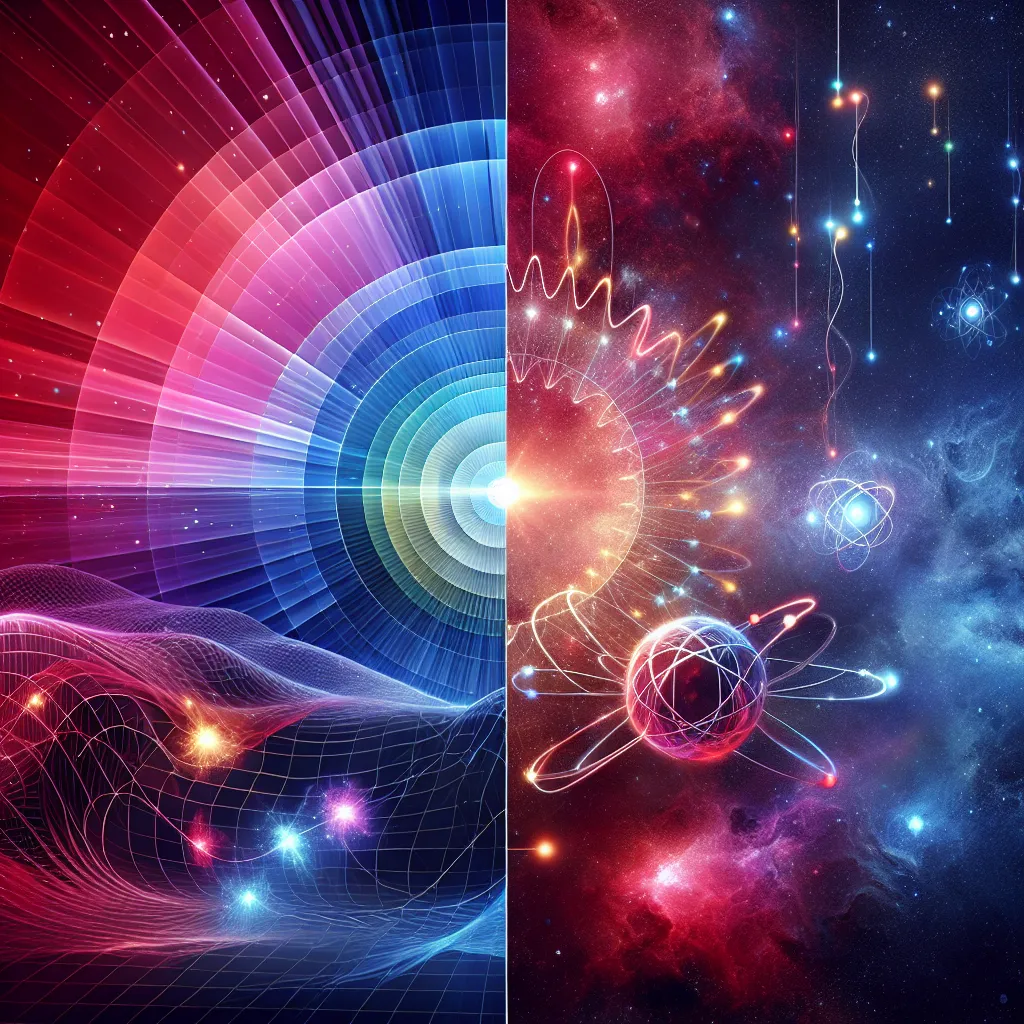
In simple terms, light is the smallest amount of energy that can be moved around. It’s made up of particles called photons, which don’t have a real size and can’t be split, only created or destroyed. Light also behaves both like a particle and a wave, which sounds complex but is integral to understanding its nature. When we talk about light, we usually mean visible light, which is just a small part of the electromagnetic spectrum.
This spectrum includes a wide range of wavelengths and frequencies. At one end, you have gamma rays with the smallest wavelengths—under ten picometers, which is incredibly tiny, even compared to a hydrogen atom. Visible light lies somewhere in the middle of the spectrum, with wavelengths between 400 and 700 nanometers. On the other end, radio waves can be up to 100 kilometers across. The largest known wavelengths can even stretch from 10,000 to 100,000 kilometers, way larger than Earth.
From a physics perspective, all these waves are the same. They all exhibit wave-particle duality and travel at the speed of light, but just at different frequencies. So, what makes visible light special? Well, absolutely nothing. It’s simply the part of the electromagnetic spectrum that our eyes evolved to detect. This isn’t a coincidence; visible light is the only type of electromagnetic radiation that propagates in water, where many early eyes developed millions of years ago.
Light is incredibly useful for gathering information about the world with almost no delay. This immediate interaction is crucial for survival. But where does light come from? Electromagnetic waves are created when atoms or molecules drop from a higher energy state to a lower one, emitting energy in the form of radiation. On a microscopic level, this happens when an excited electron within an atom drops to a lower energy state.
On a larger scale, the moving charge of an electron creates an oscillating magnetic field, which in turn creates an oscillating electric field perpendicular to it. These fields move through space, carrying energy and information about their origin.
So why is light the fastest thing in the universe? If you ask what the quickest way to travel through space is, the answer is the speed of light, which is almost 300 million meters per second in a vacuum. Any particle with no mass travels at this speed immediately upon creation. The light emitted from a candle, for example, travels at light speed the moment it’s created.
Why is the speed of light finite? We don’t really know. It’s simply how our universe is built. Light sits at the speed limit of the universe, traveling through space propelled by oscillating electric and magnetic fields.
There’s a lot more to explore about light—like traveling at its speed, time paradoxes, and quantum phenomena. But for now, let’s appreciate how lucky we are to have evolved eyes that can pick up these waves of information, helping us see the universe and better understand our place in it.