Why Do We Love Fear and Fascinatingly Freaky Creatures?
Human Thrill-Seekers Get Their Fix: Unmasking Terrifying Creatures That Fuel Our Craziest Fears
Hey there, ever thought about how weird humans are? We actually enjoy getting scared, unlike any other animal. You don’t see gazelles dressing up as cheetahs, right? There’s a solid psychological reason behind our love for fear.
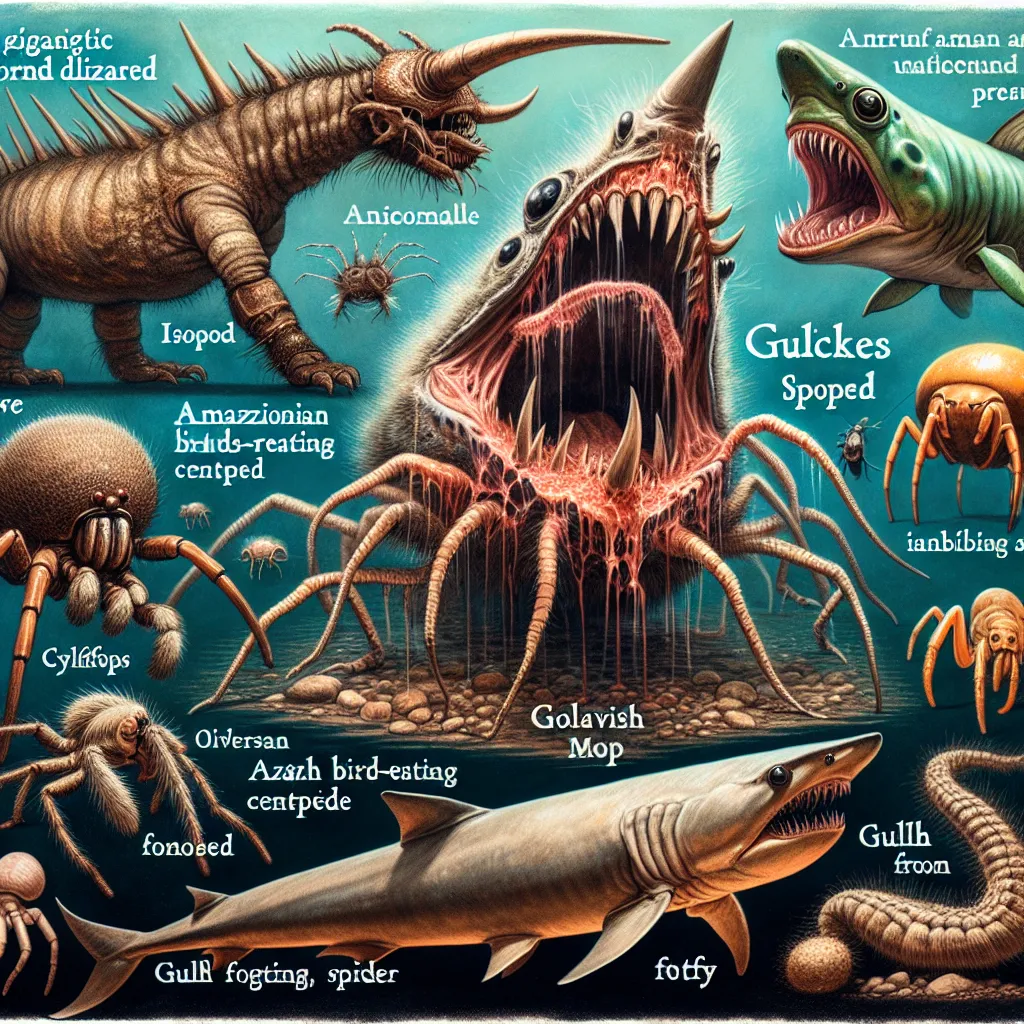
Speaking of weird, let’s dive into some of the most terrifying animals out there. First up, the giant horned lizard might just give you nightmares. This little creature looks harmless, but it’s a speed and strength beast. If it were scaled up to the size of a bull, it could generate 14,000 pounds of force. But what makes it truly freaky is its defense mechanism—it can shoot poisonous blood from its eyes! Imagine a stream of toxic blood splashing right in the face of its predator. Yikes!
Next up, the giant isopod is like a nightmare version of a woodlouse. These deep-sea scavengers munch on anything they find on the ocean floor. Some people in Asia even eat them, although I can’t imagine why anyone would want to.
The star-nosed mole, with its 25,000 sense receptors, can detect odor faster than you can blink. It’s like its face exploded into dozens of tiny noses, which is both fascinating and creepy. And it’s the world’s fastest-eating mammal, gobbling up its food in less than a quarter of a second.
Then there’s the Amazonian giant centipede, capable of taking down just about anything it encounters, even small mammals like mice and birds. And yes, it’s venomous. At least one person has died from its bite after finding one in a soda can. Talk about a surprise!
The cyclops shark is a bit of an oddball—a one-eyed monster found inside a pregnant shark. This is due to a condition called cyclopia, a rare disorder that sometimes affects even humans. It’s a chilling reminder that nature can be scarier than fiction.
The goblin shark looks like something straight out of a horror movie. Its jaws can shoot out of its mouth to snatch prey, making it one of the most terrifying deep-sea predators.
And let’s not forget the horror frog, or “Wolverine frog,” which breaks its own bones to create claws when threatened. Its tadpoles are just as terrifying, being carnivorous from day one.
The goliath bird eater is the largest spider in the world, and though it rarely eats birds, it’s big enough to go after animals like mice and snakes. It’s not just a spider; it’s a nightmare with eight legs.
But the botfly might just take the cake for the most horrifying. This creature lays eggs on a mosquito, which then bites a human, allowing the botfly larvae to burrow into your flesh. They grow inside you, and removing them is painful and nauseating. Some folks on YouTube seem to get a kick out of watching botfly removal videos. If you’re into that kind of thing, there are plenty online.
We had a ton of fun making this video, even if it meant facing some seriously creepy critters. Did we miss any terrifying animals? Let us know in the comments! If you enjoyed hanging out with us, please share this post with your friends and family.