mysteries

Why Doesn't River Water Taste Like the Ocean?

Salt's Journey: Rivers' Gift to the Ever-Tasting Sea

Why Doesn't River Water Taste Like the Ocean?

Have you ever wondered why the ocean is salty, but rivers aren’t? It may surprise you to learn that most of the salt in the sea comes from rivers. Here’s how it happens.

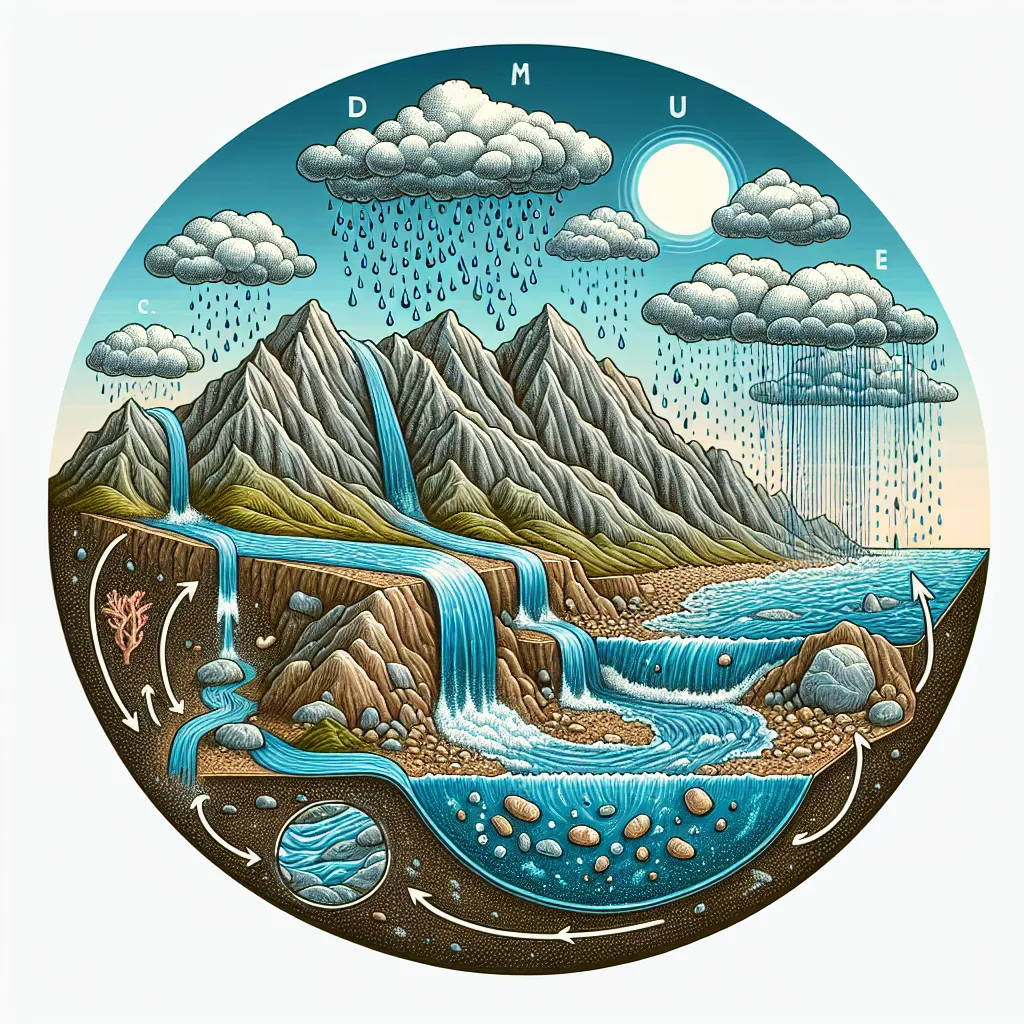
It all begins with ocean water setting off on a journey. Warm surface water evaporates and rises to form clouds. These clouds sometimes travel over land and rain down. As the raindrops fall, they absorb CO2 from the air, making them slightly acidic.

When rain hits the ground, these droplets start breaking down rocks and soil, washing out minerals in the form of ions. These ions then flow into rivers. The rivers carry these minerals to lakes or the ocean. Over time, the salts start to accumulate there.

When animals and plants consume the minerals, sodium and chloride ions are often left behind. These ions are what we know as salt. As rivers continue to dump salt into the ocean, the sea deposits some of it on the seafloor. This balance keeps the ocean’s salinity at a stable level of about 35 grams per liter on average.

The story is different for rivers. They don’t accumulate salt because they constantly move. They deliver minerals and small amounts of salt to larger bodies of water, like lakes and oceans. So, what goes into the river eventually flows out, keeping the river fresh and free from accumulating salt.

So next time you’re at the beach, you can impress your friends with the knowledge of why the ocean is salty and rivers are not.




Similar Posts
Blog Image
What’s Hiding in the Catacombs of Paris? Ghost Stories from Beneath!

Paris Catacombs: Eerie underground ossuary housing 6 million remains. Haunting journey through history, mortality, and urban legends. Popular tourist attraction offering unique, spine-chilling experience beneath bustling city streets.

Blog Image
Is the Earth’s Magnetic Field Flipping? The Dangers We Face!

Earth's magnetic field flip: a natural phenomenon where poles swap. Occurs gradually, weakens field temporarily. Impacts navigation, tech, and radiation protection. Life adapts. Not catastrophic, but requires preparation. Fascinating reminder of Earth's dynamic nature.

Blog Image
Lake Baikal's Mysterious Ice Circles: Scientists Still Can't Explain These Glowing Winter Phenomena

Discover the mystery of Lake Baikal's ice circles - perfect rings appearing on Siberia's frozen surface that baffle scientists. Explore theories from methane vents to bioluminescence. Read the full investigation.

Blog Image
Unraveling the Rh Negative Mystery: Bloodlines, Evolution, and Alien Connections?

The Basque people's high Rh negative blood prevalence raises intriguing origins and evolution theories, blending science, history, and imagination in unresolved mystery.

Blog Image
Did the CIA Hide Secrets to Our Prehistoric Doomsday?

When Earth's Secrets Rewrite The Story of Civilization

Blog Image
**Unexplained Atmospheric Phenomena: 7 Sky Mysteries That Baffle Scientists in 2024**

Discover unexplained atmospheric mysteries: ball lightning, blood rain, star jelly & anomalous clouds that baffle scientists. Explore sky phenomena textbooks can't explain yet.