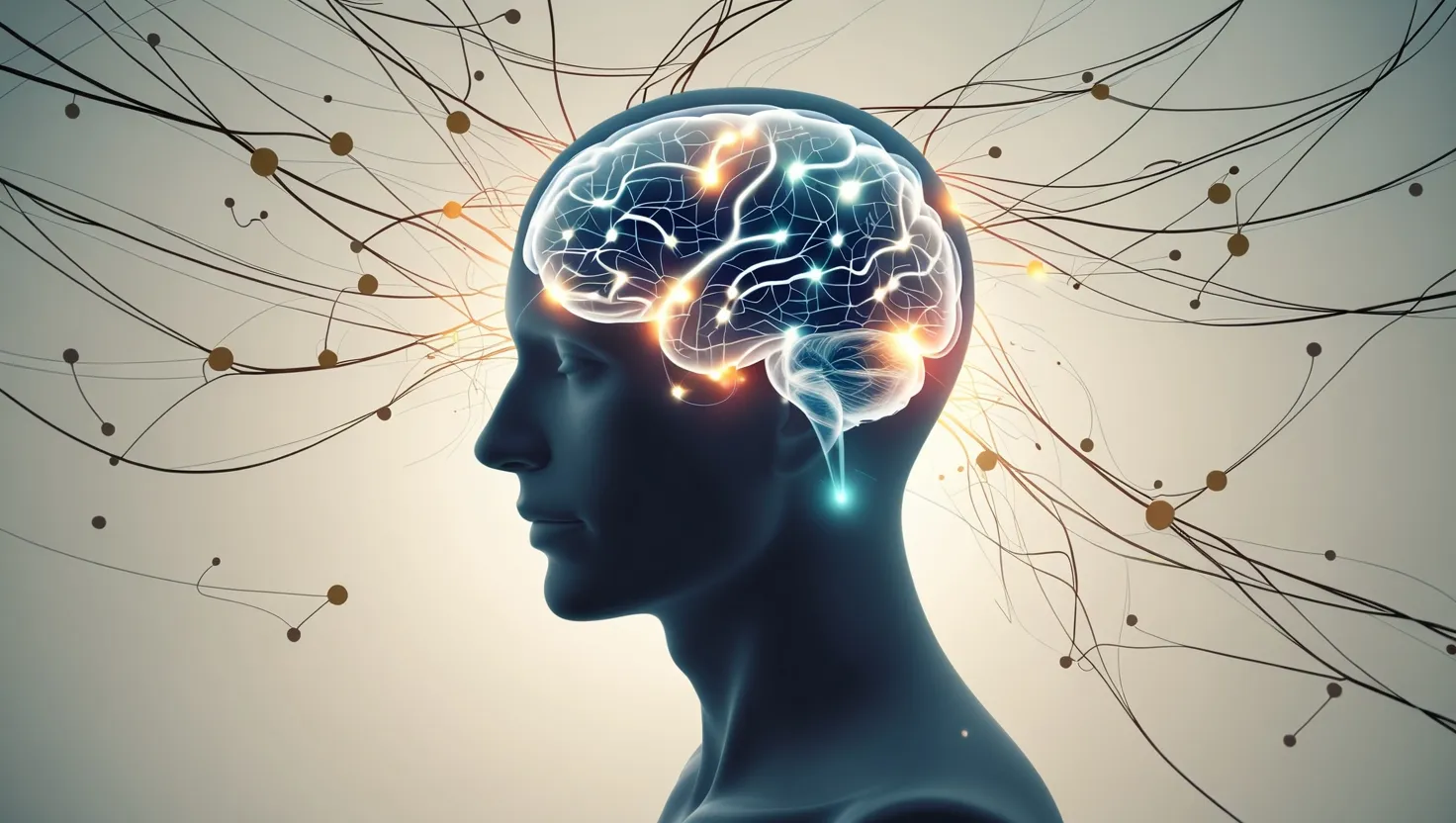
The first thing I want you to know is this: if you sometimes feel confused by your own thoughts, feelings, or habits, that’s not because you’re “dumb.” It’s because your brain is doing things that the best scientists on Earth still cannot fully explain.
Let’s walk through five of the biggest mysteries of the human brain together, step by step, in plain language. I’ll keep it simple, but I won’t treat you like a child. I’ll talk to you as if we’re sitting at a table with a whiteboard and a lot of curiosity.
Before we go into each mystery, let me ask you something: have you ever had a moment where you suddenly thought, “Why am I like this?” That question is really a brain question. And the honest answer, most of the time, is “We’re still figuring that out.”
“The brain is wider than the sky.”
— Emily Dickinson
I like this quote because it reminds us that the thing inside your skull is not just a lump of meat. It holds your entire world.
Let’s start with the one mystery that sits behind all the others: consciousness.
What is consciousness? In simple words, it’s the fact that you are aware. If I pinch you, you feel pain. You don’t just react like a machine; you experience it. You see the color red, you feel sadness, you enjoy music, you taste chocolate. Those “what it feels like” moments are called subjective experiences.
Here’s the strange part: we can see what your brain does when you feel or think. We can put you in a brain scanner, show you a picture of a dog, and see which areas light up. But knowing which neurons fire is not the same as explaining why it feels like seeing a dog, instead of just being an invisible calculation.
Imagine you’re looking at your phone. Under the screen are circuits, transistors, and tiny electric flows. Engineers know exactly how those parts move data around. But no one says the phone feels happy when the screen is bright or sad when the battery is low. Your brain also has electricity and circuits, but somehow, you feel.
Here’s a surprising, lesser-known thing: you are not conscious of most of what your brain does. Your brain is like a giant company where almost all the work happens in departments you never see. Your “conscious self” is more like a tiny manager who only sees the final reports.
Did you ever walk home, arrive at the door, and then realize you don’t remember half the route? Your legs moved, you avoided people, you crossed streets safely, but your “thinking mind” was somewhere else. Who did the walking? Your brain did, but mostly without your conscious involvement.
Another odd fact: your brain prepares actions before you feel you decided. In some experiments, scientists measure brain activity and can predict, a tiny moment before you think you chose, which button you will press. That doesn’t mean free will is fake, but it does mean your feeling of “I decided right now” is more of a story your brain tells, not a pure live control panel.
So I’ll ask you: if your brain can start preparing actions before you feel you chose, who is the “you” that claims the choice afterward?
“We are our brains.”
— Dick Swaab
That sentence sounds simple, but it hides a tough question: is that all we are, or is there something more? Science does not have a final answer.
Now let’s move to another puzzle: memory. Not just what you had for breakfast, but how your brain stores an entire life.
When you remember your childhood home, you might see the front door, smell the kitchen, feel the cold floor. Where is that house stored? There is no little video file with your old house sitting in one spot. Instead, many groups of neurons all over your brain fire together in a special pattern.
Here’s an image that helps: think of memory as a recipe, not a photo. Your brain doesn’t keep a frozen picture; it keeps instructions on how to rebuild the experience. When you remember, your brain is re-cooking the dish, not microwaving leftovers.
A lesser-known, slightly strange fact: every time you remember something, you risk changing it. Memory is not a “save and play” system. It’s more like “take the book off the shelf, rewrite some lines by accident, then put it back.” This is why two people can honestly believe different versions of the same event—and both can feel sure they’re right.
Have you ever argued with a friend or sibling about “what really happened,” and you both were convinced you remembered correctly? It’s very possible both your brains quietly edited the memory over time.
Also, your brain forgets on purpose. Forgetting is not just a failing; it’s a feature. If you remembered absolutely everything—the exact shape of every cloud you’ve ever seen—you wouldn’t be wiser; you’d be stuck. Your brain keeps what it guesses might matter and drops the rest.
Here’s another twist: some memories come with a body echo. Just thinking of a painful event can make your heart race or your stomach tighten. That’s because memory is not only stored in “thinking” areas. Emotional and body-related systems are wired into it. Remembering is a full-brain, sometimes full-body event.
So the mystery is not only “Where are memories stored?” but also “How does the brain decide what to keep, what to bend, and what to throw away?”
“Memory is the diary that we all carry about with us.”
— Oscar Wilde
The strange thing is: your diary keeps editing itself when you’re not looking.
Now let’s talk about neuroplasticity. I’ll keep the word, but simplify the idea. Neuroplasticity means the brain can change its own wiring. It can grow new connections, weaken old ones, and sometimes repurpose whole areas.
Think of a city at night, with roads and lights. Brain plasticity is like the city council constantly rebuilding roads based on which ones people use most. Busy roads get bigger, with more lanes. Quiet roads fade and crack.
Here’s something you might not know: losing part of the brain does not always mean losing that function forever. In some people who are very young, an entire half of the brain has been removed to treat severe epilepsy. Over time, the remaining half can take over many of the lost tasks. That sounds almost impossible, but it happens.
Another lesser-known angle: your habits are literally made of wiring. When you repeat a behavior—scrolling your phone at night, reaching for sugar when stressed, checking the door lock three times—the brain strengthens circuits for that behavior. The more often you use a circuit, the easier it fires. That’s why bad habits feel automatic: your brain built an express highway for them.
So ask yourself: which highways are you building right now, without meaning to?
The wild part is that plasticity works in both directions. You can build and you can weaken. When you stop using a circuit, it slowly fades. Learning a new skill, like a language or an instrument, adds new paths. Quitting a habit is like letting an old road break down and adding detours.
“Neurons that fire together wire together.”
— Donald Hebb
That short phrase captures a big rule: what you do repeatedly, you become. Not in a poetic way, but in an actual physical wiring way.
The mystery is not whether the brain can change—we know it can—but how far it can go, and why some changes are easy while others are brutally hard.
Next, let’s look at coordination. Right now, as you read this, billions of neurons in your head are sending signals. There is no single “boss neuron” in charge. There is no master conductor. Yet you see, understand, breathe, and maybe drink water, all at the same time.
How?
One helpful picture: think of a giant crowd doing a wave in a stadium. No one person controls the wave. Each person just reacts to neighbors. But together, a clean pattern moves across the whole stadium. Your brain does something similar. Small groups of neurons follow simple rules, and from that, complex overall behavior appears.
When you reach for a glass, many brain areas join in: some plan the movement, some control the hand, some track vision, some manage balance. You don’t feel any of that. You just “grab the glass.”
Here’s a surprising thing: your brain constantly predicts what will happen next, even in movement. When you throw a ball, your brain predicts the path and prepares muscles ahead of time. That’s why practice helps so much—the brain tunes its predictions.
Another odd detail: signals in the brain are not that fast compared to electronics. Yet your actions feel smooth and immediate. One explanation is that the brain cheats on time. It predicts just enough ahead so that by the time the signal arrives, the move feels instant.
Have you noticed that sometimes you move before you think, like pulling your hand away from a hot stove? That’s because some quick routes in your body handle things using spinal cords or lower brain areas, while your higher thinking regions “find out” slightly later and tell a story about what “you” did.
So who is in charge: the fast, low-level systems or the slow, thinking ones?
“The brain is a pattern-seeking machine.”
— David Eagleman
When millions of small pattern-hunters work at once, large-scale thinking and moving appear. But we still do not have a full theory that explains how those tiny steps build a whole, unified mind without a single central controller.
Lastly, let’s look at something many people still underestimate: other organs quietly shaping your thoughts.
You might have heard of the “gut feeling.” That’s not just a saying. Your gut has its own network of neurons, often called the “second brain.” It sends signals to your main brain through nerves and chemicals. These signals can affect mood and decision-making.
Here’s a simple example: when the bacteria in your gut change—because of food, stress, or illness—some people notice changes in anxiety or focus. That suggests your inner microbes may be part of your mental life.
Have you ever been extra irritable when hungry? That’s not just “being dramatic.” Hormones from your stomach and blood sugar levels talk to brain areas that handle self-control and mood. Your emotions partly ride on top of these body signals.
Your heart also matters. There are small patterns called heart rate variability—tiny changes in timing between heartbeats. These patterns are linked to how well you handle stress and how clearly you think under pressure. Some training methods teach people to breathe in certain ways to shift these heart patterns, which then feed back into the brain.
So I’ll ask you this: when you say “I feel bad,” are you describing a pure thought, or are you reporting a body state your brain is reading?
“The brain is embedded in a body, and the body is embedded in a world.”
— Francisco Varela
This idea is important: you are not a brain floating in a jar. Your thinking is shaped by your heartbeat, your breathing, your gut, your hormones, your immune system, the room temperature, the noise levels, even how safe or unsafe your surroundings feel.
One less obvious detail: when you’re sick, your immune system releases chemicals that can make you tired, less motivated, and more withdrawn. That “sick mood” is not just you being lazy; it’s your body adjusting your brain to encourage rest and avoid risk.
So the mystery here is not just the brain itself, but the whole conversation between organs. How much of your personality is “you,” and how much is your gut microbes, your hormone waves, your heart rhythms, and your past sleep?
We’ve walked through five big puzzles: why we are conscious at all, how our memories really work, how the brain reshapes itself, how it coordinates so many parts without a boss, and how other organs quietly steer our thoughts and choices.
Let me end by turning the focus back to you in a very practical way.
If your brain is mostly hidden from your own awareness…
If your memories are partly edited stories…
If your habits are pathways you grow by repetition…
If your thoughts depend on body signals you rarely notice…
Then here is a simple, honest question: what small thing could you change today that your future brain wiring will thank you for?
Maybe it’s five minutes of focused reading instead of five minutes of random scrolling. Maybe it’s one honest conversation instead of one more quiet worry. Maybe it’s drinking water before coffee. Maybe it’s going to bed 20 minutes earlier.
Those tiny acts may feel useless in the moment. But remember the rule: neurons that fire together wire together. Every small choice is a vote in your brain’s internal construction project.
Your brain is not a perfect machine. It is a messy, living work in progress. And so are you.