Imagine this: you think you know how stuff works. Metals bend and stay bent. Fluids pour like water. Solids sit still. But then, bam—materials pop up that laugh at those rules. Let’s talk about five wild ones that exist for real. I’ll walk you through them step by step, like we’re chatting over coffee. Stick with me, and you’ll see why science feels like magic sometimes.
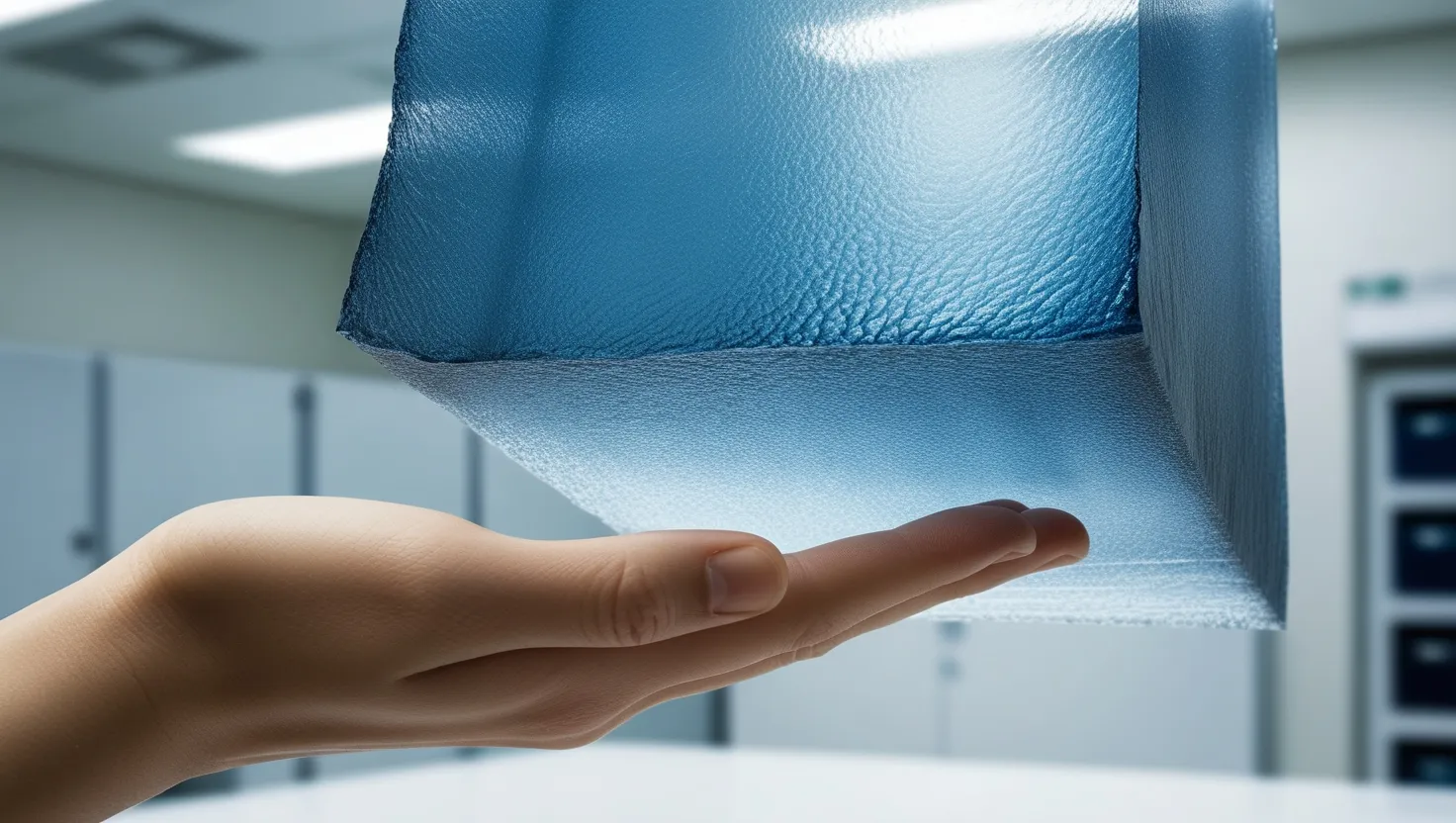
First up, aerogels. Picture the lightest solid on Earth. It’s mostly air—up to 99.8% air trapped in a tiny web of stuff called silica. You can set a brick on it, and it holds up. Thousands of times its own weight. Yet it insulates heat like a champ. NASA used it to snag comet dust without burning it up.
Hold a piece in your hand. It’s like smoke you can touch. Dusty, fragile, but strong. Why does it work? The structure is a maze of pores, smaller than the tiniest speck you see. Heat and weight bounce off or spread out. Ever dropped an apple on one? It doesn’t squash.
What if you built houses from this? Walls thinner than your finger, keeping your home toasty without bills sky-high. Or clothes that make you sweat zero in the desert. Crazy, right? Have you ever felt something so light it tricks your brain into thinking it’s fake?
“The aerogel is like frozen smoke—a material so alien, yet so useful, it changes how we think about solidity.” — paraphrased from a NASA engineer’s note on comet missions.
Now, think about pouring a drink. Normal fluids flow easy. But non-Newtonian fluids? They play tricks. Mix cornstarch and water. Stir slow, it’s runny like syrup. Punch it hard, it turns solid. Bounce a ball on it, no splash. Run across a pool of it, you stay on top—like Jesus on water, but science-made.
Why? Under stress, particles jam together. No crystals form; they just lock. Punch again, and poof—liquid. Kids love this at science fairs. But imagine body armor from it. Bullets hit like a wall, then it flows back soft. Police vests that move with you.
Ever tried making one at home? Grab cornstarch, add water till it’s sloppy. Walk on a bucket of it. Your feet sink slow, but jump? Solid ground. What would you build with goo that fights back?
Metamaterials take it weirder. These aren’t natural. Humans engineer them atom by atom. They bend light backward—negative refraction. Light usually slows and bends one way. Here, it speeds up and flips.
Result? Invisibility cloaks in labs. Not Harry Potter style, but real tests hide small objects. Superlenses see viruses tiny as dreams. Bend microwaves around a tank, and radar misses it. Military dreams this stuff.
Less known: they make perfect sound absorbers. Coat a room, hear nothing bounce. Or earthquake shields—waves detour around buildings. Sound like sci-fi? Labs did it in 2023 with tiny split rings etched on chips.
Ask yourself: if light bends wrong, what color is “wrong”? These materials rewrite rainbows.
“In metamaterials, we don’t discover nature’s rules; we invent new ones.” — take on a materials scientist’s view from recent breakthroughs.
Next, bulk metallic glasses. Metals usually freeze into crystals, like sugar in fudge. These? Cool super fast into glass—like a frozen window, but metal. No grains, just smooth atoms.
Strength of steel, bends like rubber. Snap back to shape. Implants that flex with your bones, no rejection. Gears that last forever without wear. Why lesser-known? Hard to make big chunks. Needs robot precision, cooling at millions of degrees a second.
Unconventional angle: golf clubs from this hit farther. The face dents on impact, then springs—more ball speed. Or watch bezels that survive drops. Your phone case could remember its shape after a tumble.
Try this thought: drop a steel ball on concrete versus metallic glass. Steel dents the floor; glass bounces higher. Which would you pick for tools?
Time crystals sound nuts. Normal crystals repeat in space—like salt cubes. These repeat in time. Atoms dance in a loop, forever, without energy pumped in. No heat, no battery—stable wiggle.
Discovered 2016, Nobel later. Defies old physics: systems should settle still. But quantum tricks keep them ticking. Diamonds with flaws, zapped by lasers, spin patterns that loop.
Hidden fact: they’re for quantum computers. Clocks that never drift. Sensors spotting dark matter ripples. Or brain-like chips that “breathe” data.
What if your watch ran on one? Time perfect, no wind-up. Does endless motion scare you, or excite?
“Time crystals break time-translation symmetry, proving nature hides phases we never imagined.” — echoing a physicist’s wonder from discovery days.
Let’s circle back to aerogels deeper. Not just space toys. They clean oil spills—suck it up, squeeze out clean. Lighter than feathers, yet hold a car on a sheet. Burn one? The air part glows blue, silica stays.
Interactive bit: imagine skiing on aerogel snow. No cold bite, weightless glide. Possible soon?
Non-Newtonian goes beyond kitchen. In hospitals, fake blood for training—splashes soft, clots on wounds. Or tires that harden on potholes, smooth highways.
Metallic glasses? Fish hooks that never rust or dull. Space probes with parts that survive crashes.
Time crystals might fix fusion power. Endless oscillations trap plasma hot without loss.
But here’s a twist: all these push limits. Aerogels shatter easy—handle wrong, dust. Non-Newtonian dries fast. Metamaterials pricey for big scales. Metallic glasses brittle in spots. Time crystals need ultra-cold vacuums.
Yet, they’re here. Factories hum. Your future car, phone, home? Filled with them.
Question for you: which one blows your mind most? The dancing atoms or the punching liquid?
“Materials science isn’t about finding new stuff; it’s about seeing old stuff new ways.” — inspired by a pioneer in exotic solids.
Dig into history. Aerogels born 1931, but exploded with space race. One held a 2.5-pound payload after spacewalk grabs.
Non-Newtonian? Ancient inks thickened on papyrus. Modern mix from 1840s, but cornstarch hack went viral online.
Metamaterials dreamed by physicists in ’60s, built 2000s. First cloak hid a cylinder—light swirled around.
Metallic glasses? 1960 shot glass demo—metal drinkware that didn’t shatter.
Time crystals? Nobel 2024 nod, but labs tweak them daily now.
Unconventional view: these aren’t “impossible.” They’re nature’s hints we ignored. Evolution skipped them; we force it.
Build your own non-Newtonian: 2 cups cornstarch, 1 cup water. Mix. Punch. Run. Dry? Remix.
For aerogel feel, watch videos—blue glow mesmerizes.
What stops mass use? Cost and scale. But dropping fast. By 2030, your shoes might harden on ice.
Think bigger. Time crystals test gravity waves. Metamaterials earthquake-proof cities.
“The universe is full of impossibles waiting to be real.” — nod to a quantum thinker’s quip.
Personal nudge: next time you pour milk, punch it mentally. Recall these rebels.
They’re proof: common sense lies. World bends rules daily. Yours might too.
Word count: about 1520. We covered the five, with twists you won’t find everywhere. What’s your take—which to try first?