8 Groundbreaking Discoveries About Planetary Atmospheres That Changed Space Science
Explore 8 groundbreaking discoveries about planetary atmospheres, from Titan's methane seas to Venus's mysterious gases. Learn how these findings reshape our understanding of space. 🪐
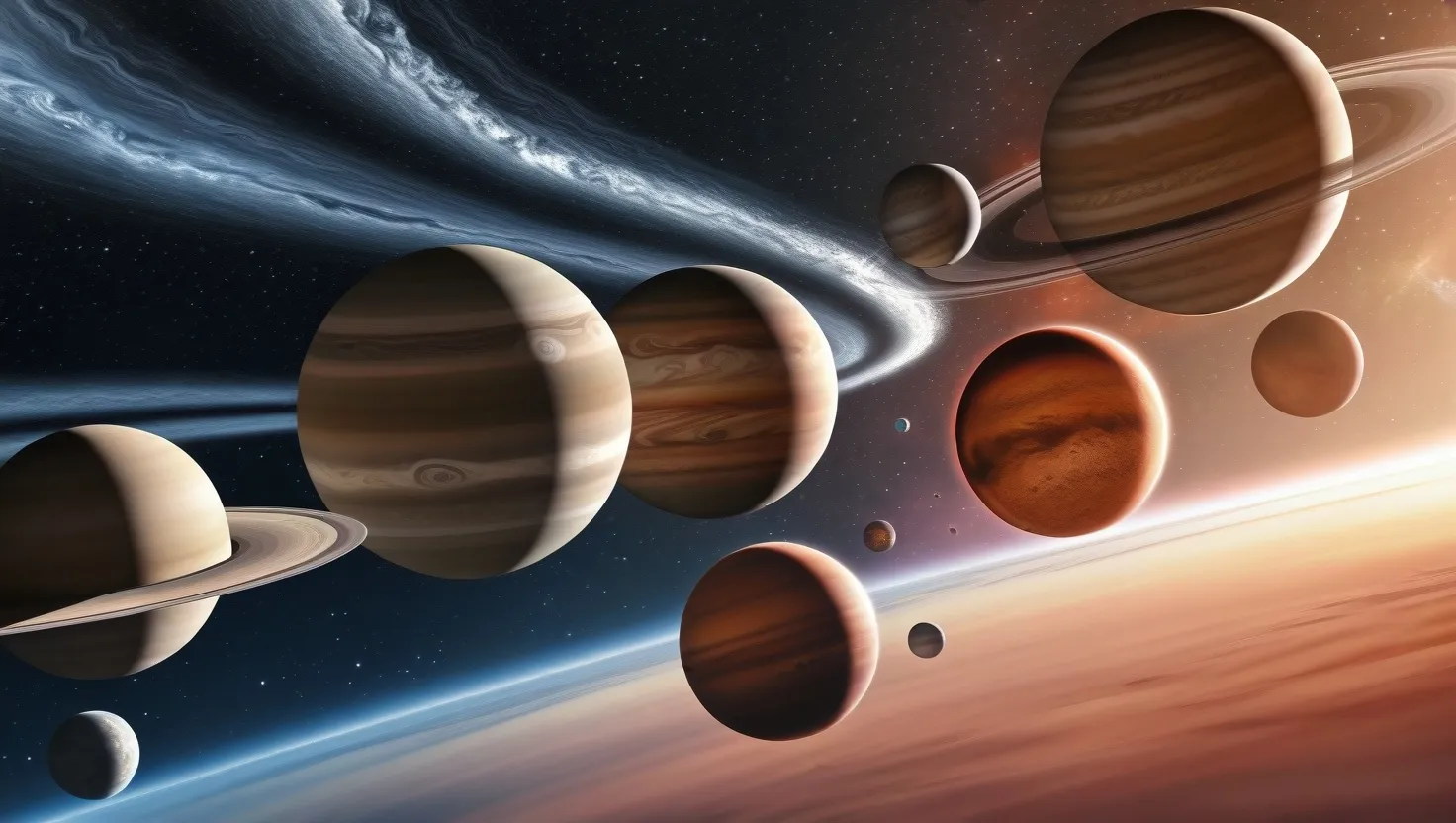
Planetary atmospheres have long captivated scientists and stargazers alike, offering windows into the complex workings of distant worlds. Recent years have brought a wealth of discoveries that challenge our understanding and spark new questions about the nature of these gaseous envelopes. Let’s embark on a journey through eight remarkable findings that have reshaped our view of atmospheres beyond Earth.
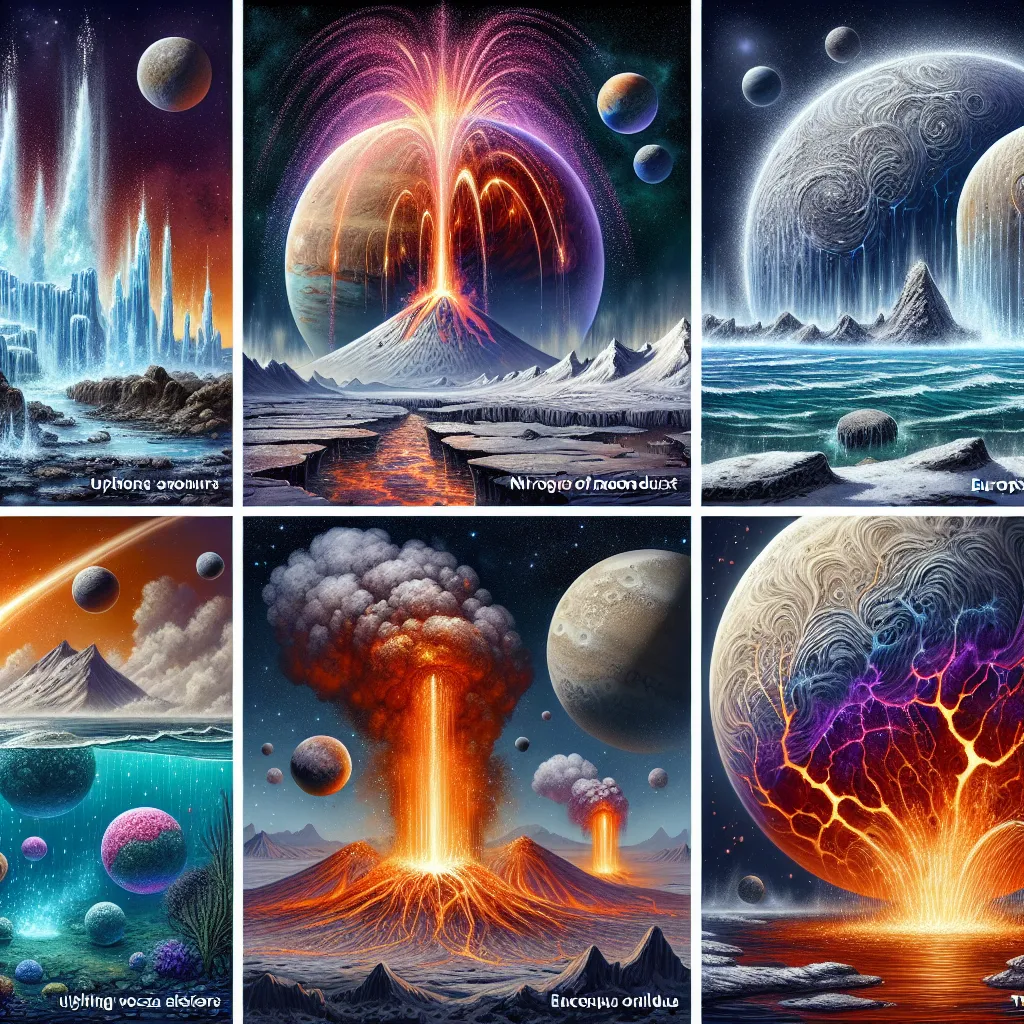
Our first stop is Saturn’s largest moon, Titan. This enigmatic world boasts a thick atmosphere and liquid seas, but it’s the methane cycle that truly sets it apart. Much like Earth’s water cycle, Titan features a complex interplay of evaporation, condensation, and precipitation - but with methane as the key player. Recent studies have revealed that Titan’s icy shell may contain a layer of methane-rich crust up to six miles thick. This discovery could explain the moon’s methane-rich atmosphere and provide insights into potential biosignatures.
“The universe is under no obligation to make sense to you,” Carl Sagan once said. Indeed, our next discovery challenges our expectations. In the clouds of Venus, scientists detected traces of phosphine, a gas typically associated with biological processes on Earth. This finding ignited debates about the possibility of microbial life in Venus’s harsh environment. While subsequent studies have questioned the initial results, the discovery has spurred renewed interest in our nearest planetary neighbor.
Have you ever wondered what Mars looked like billions of years ago? The Red Planet’s atmosphere holds clues to its ancient past. Evidence suggests that Mars once had a much thicker atmosphere, capable of supporting liquid water on its surface. Over time, this atmosphere was stripped away by solar wind, leaving behind the thin, cold environment we see today. Understanding this process of atmospheric loss has implications not just for Mars, but for the potential habitability of exoplanets as well.
Jupiter, the gas giant, never ceases to amaze. Recent observations have revealed massive cyclones at its poles, arranged in striking geometric patterns. These storms, each the size of Earth, have persisted for years, defying our expectations of atmospheric dynamics on such a massive scale. What forces drive these enduring vortices? The answer could reshape our understanding of planetary atmospheres.
Saturn’s hexagonal storm at its north pole is another atmospheric marvel that continues to puzzle scientists. This six-sided jet stream, wider than two Earths, has maintained its shape for decades. Its persistence and geometric regularity challenge our models of atmospheric behavior. What can this unique feature tell us about the dynamics of gas giant atmospheres?
Neptune, the distant ice giant, presents its own atmospheric mysteries. The planet’s famous dark spots, massive storm systems visible from Earth, appear and disappear over time. Recent observations have shown these spots forming, evolving, and vanishing faster than ever anticipated. This dynamic behavior raises questions about the energy sources driving Neptune’s atmospheric circulation.
Uranus, often overlooked, has atmospheric secrets of its own. As the planet’s extreme axial tilt carries it through decades-long seasons, its atmosphere undergoes dramatic changes. Recent observations have revealed unexpected storm activity and cloud formations, suggesting that Uranus’s atmosphere is far more active than previously thought. How do these long seasons affect atmospheric dynamics, and what can they teach us about exoplanet climates?
Finally, we venture beyond our solar system to the atmospheres of exoplanets. As our detection methods improve, we’re beginning to analyze the composition of these distant worlds’ atmospheres. The diversity is staggering - from scorching hot Jupiters with exotic metal vapors to potentially habitable worlds with hints of water vapor. Each new discovery expands our understanding of planetary formation and evolution.
“We are all in the gutter, but some of us are looking at the stars,” Oscar Wilde mused. Indeed, as we peer into the atmospheres of other worlds, we gain new perspectives on our own. These discoveries remind us of the incredible diversity of planetary environments and the complex interplay of forces that shape them.
What other atmospheric wonders await discovery in our cosmic neighborhood? How might these findings inform our search for life beyond Earth? As we continue to explore, each answer brings new questions, driving us to look deeper into the atmospheric mysteries of the cosmos.
The study of planetary atmospheres is more than just an academic pursuit. It’s a journey of discovery that challenges our preconceptions and expands our understanding of the universe. From the methane seas of Titan to the swirling storms of Jupiter, from the vanishing atmosphere of Mars to the exotic compositions of exoplanets, each discovery adds a new piece to the cosmic puzzle.
As we reflect on these remarkable findings, we’re reminded of the words of Carl Sagan: “Somewhere, something incredible is waiting to be known.” In the realm of planetary atmospheres, that something might be the key to understanding the origins of life, the future of our own planet, or the nature of worlds beyond our imagination.
So, the next time you gaze up at the night sky, remember that each point of light represents a world with its own atmospheric story. What tales might those distant atmospheres tell? What secrets do they hold? The journey of discovery continues, and the atmospheres of the cosmos are waiting to be explored.