Are We Destined to Call Mars Home Amidst the Solar System's Deadly Frontiers?
Epic Cosmic Quest: Exploring Hostile Worlds in Search of a New Earthly Home
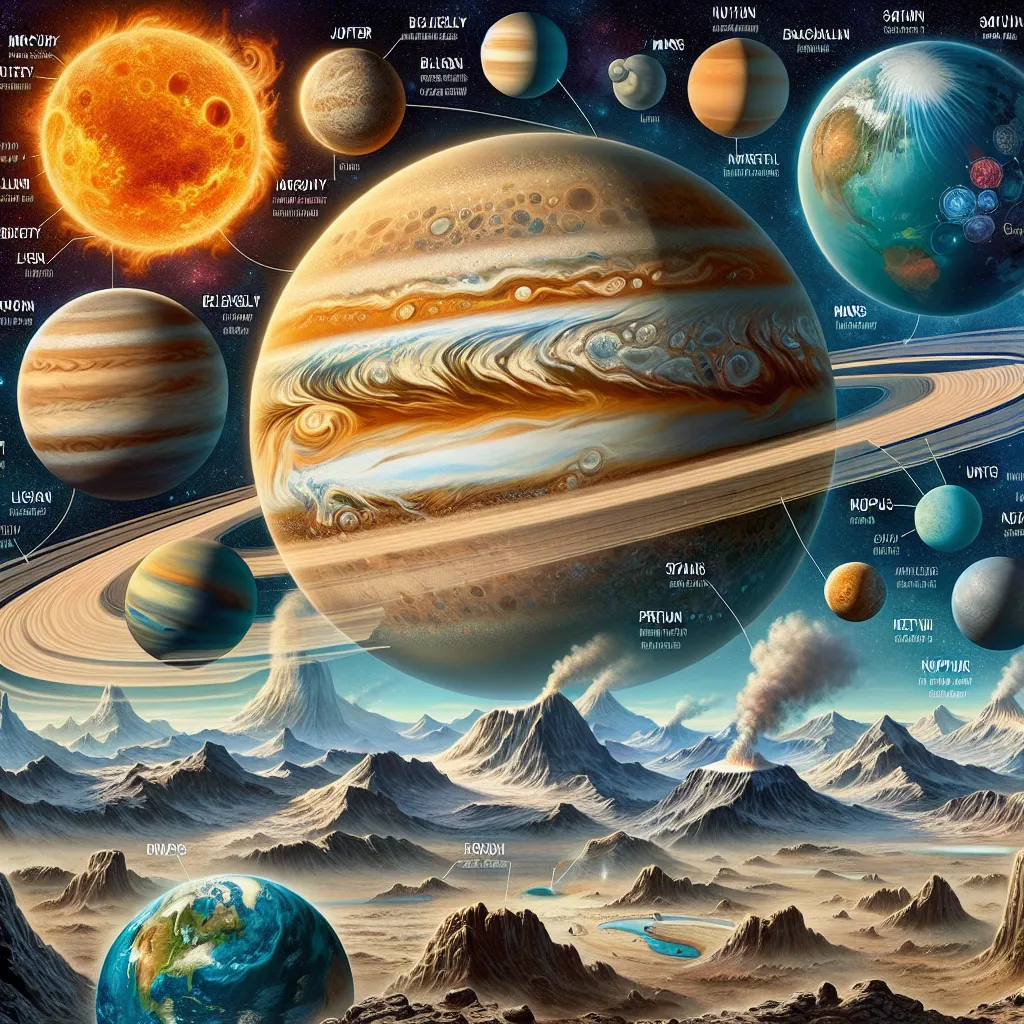
In the future, humanity might leave Earth, searching for a new home in space. Our solar system, however, offers some rather dangerous options with fiery volcanic worlds, deadly winds, and acid clouds. Could we find a habitable planet among these deadly realms?
Joining us on this cosmic quest, let’s start with Mercury. This closest planet to the sun has an oxygen-traced atmosphere but extreme temperatures, swinging from 840°F to -300°F. Such extremities make Mercury an unviable candidate for human life.
Venus, Earth’s “sister planet,” initially seemed promising with speculations of lush, early-Earth-like environments. But as Soviet and NASA missions revealed, Venus’s surface is a torrid desert, shrouded in acid clouds, and incredibly high temperatures. Colonizing Venus would be a mission filled with insurmountable obstacles: pressure 90 times greater than Earth’s and surface temperatures that could melt lead.
Mars, on the other hand, seems the most promising. A Martian day length comparable to ours and historical hints of water make it intriguing. Yet, the radiation from the Sun, which Mars lacks the magnetic shield to deflect, presents a lethal challenge. The fine Martian dust could also wreak havoc on machinery and life support systems.
Venturing further, the gas giants present even more impossible environments. Jupiter’s fierce winds and the Great Red Spot, a storm bigger than Earth, along with crushing pressures, rule it out as a potential habitat. Its moon, Io, with volcanic activity and lethal radiation belts, is equally harsh.
Saturn, though not as stormy, has electrical storms like none on Earth and deadly rings made of high-speed ice and rocks. Uranus and Neptune, with extreme cold and powerful winds, also fall short.
Beyond Neptune lies Triton, a frigid moon covered in nitrogen snow. Its extreme cold and potential nitrogen geysers present significant challenges, though theoretically, humans might someday walk its surface with advanced gear.
As our journey stretches beyond our solar system, new planets are discovered orbiting distant stars. However, many of these worlds are hostile with unbearable conditions. Dr. Jeff Marcy and other astronomers have found over 200 new planets, yet mostly too extreme for life as we know it.
The search continues, with hopes pinned on lower mass stars and their possibly more Earth-like planets. Finding a new, habitable world is not simple. For now, the only feasible option appears to be Mars, should we overcome its hazardous environment.
Until we find a new Earth-like planet, adapting and thriving on our changing planet remains our best course.
This epic cosmic journey highlights just how unique and precious our Earth is, urging us to protect our own world while imagining the vast possibilities of space.