Can People Really Burst into Flames? Unraveling the Myth of Spontaneous Human Combustion
Spontaneous human combustion is a myth; the wick effect and an ignition source explain these mysterious fires scientifically, debunking supernatural theories.
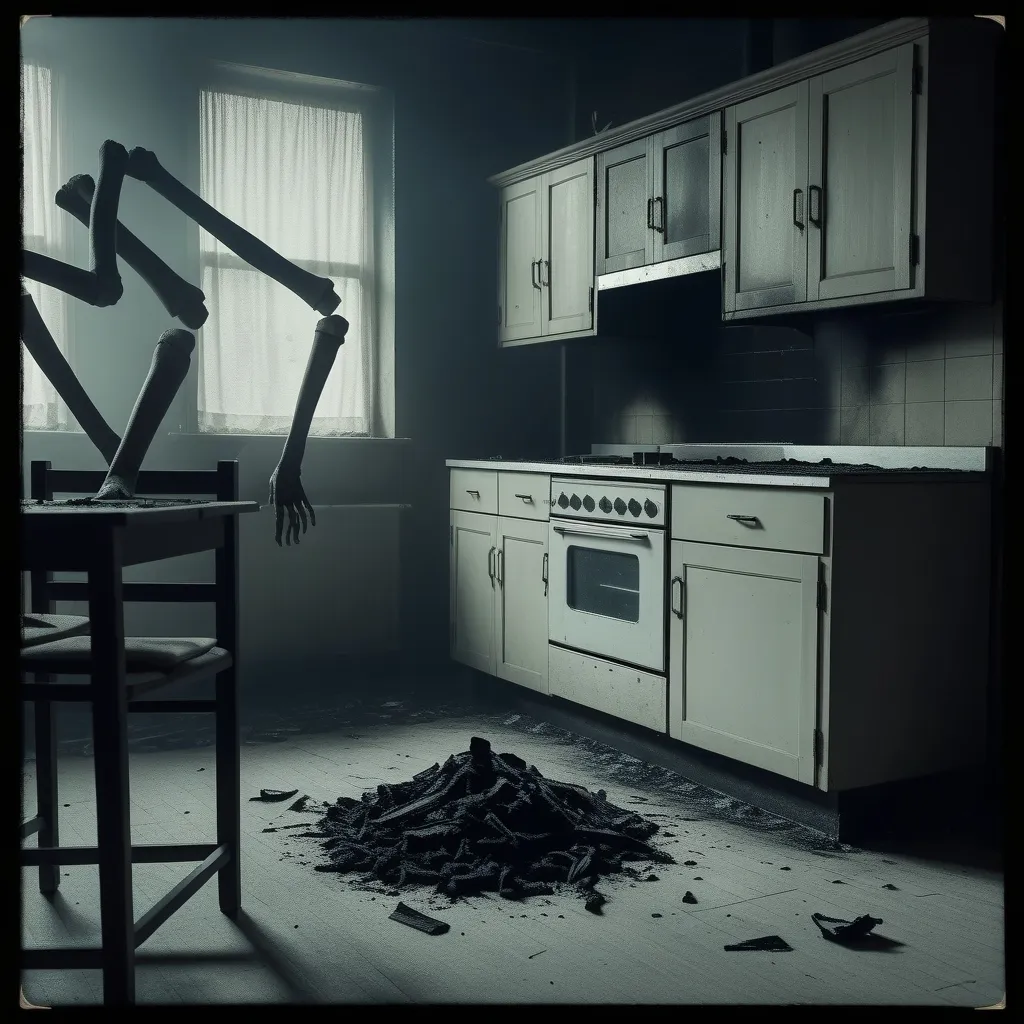
Imagine waking up one day to media reports of someone mysteriously bursting into flames, leaving behind nothing but a heap of ash and a couple of unscathed limbs. It’s a chilling and bizarre thought, isn’t it? This curiosity belongs to a topic that has intrigued and horrified people for ages—spontaneous human combustion (SHC). But can a human body actually catch fire on its own, without any obvious external flame or spark? Let’s dive into the history, perceptions, and science behind this curious concept.
The story of SHC is old, with tales dating back to the 17th century, and countless reports surfacing throughout the 1800s. Investigators at the time were often left scratching their heads, mystified by the lack of clear ignition sources. Take, for example, the infamous case of Matilda Rooney in 1885. She essentially became a pile of ashes in her kitchen, eerily leaving only her feet intact. Her husband, Patrick, was found lifeless too, but he had suffocated from toxic fumes in another room. Strangely, despite the lethal blaze that consumed Matilda, the nearby furniture and the rest of the kitchen seemed virtually untouched by fire.
Back in those days, SHC was frequently tied to superstitions or even imagined as divine retribution for sinners. Works of fiction, like Charles Dickens’ “Bleak House,” fueled this idea further, depicting characters who combusted because of their wicked, drunken lifestyles. The general belief was that these individuals were more inclined to ignite due to their questionable habits, making their bodies ticking time bombs, ready to burst into flames.
However, science has gradually shed light on these puzzling incidents. Experts in forensics have examined numerous SHC cases, proposing the “wick effect” as the most plausible explanation. In essence, it describes a process where the human body mirrors how a candle burns. Fat in the body acts as fuel, and clothes or surrounding materials like bedding play the role of a wick. If ignited, possibly by something as ordinary as a lit cigarette or maybe an electrical spark, the body fat melts and seeps into the clothing material, allowing a slow, intense burn that can reduce the body to ashes while leaving limbs and nearby objects largely intact.
To picture this better, think of a typical candle. Wax melts, is absorbed by the wick, and fuels the flame. Similarly, when the body’s fat liquifies and permeates into clothing, it sustains a smoldering fire. This process elucidates why the torso usually incinerates fully during these incidents, yet the extremities often remain untouched.
Scientific experiments have even re-created the conditions synonymous with SHC. In 1998, a BBC program meticulously demonstrated how a deceased pig’s body could be used to show the wick effect, resulting in the body being mainly reduced to ashes while the extremities remain untouched. Essentially, experiments such as this highlight that what appears to be an eerie phenomenon can actually be reasoned with natural explanations rather than jumping straight to supernatural theories.
A prevalent misunderstanding is that if a person is heavily drunk, this somehow makes their body more susceptible to spontaneous combustion. Contrary to this belief, the alcohol level in a highly intoxicated person isn’t significant enough to make them spontaneously catch fire. Instead, being heavily under the influence might slow down a person’s reaction time, making them less likely to combat a small, emergent fire, thus allowing it to spread unchecked.
Reflecting back on Matilda Rooney’s case, while the scene might initially seem like a clear SHC incident, forensic insights propose a different story. There was probably some external ignition source involved, like a cigarette or a spark which escalated due to the wick effect. The manner in which the fire did not disperse significantly across the room, and confining only to Matilda’s body supports the wick theory rather than unassisted combustion.
In today’s scientific world, the term “spontaneous human combustion” feels a bit misleading. Experts favor the term “fat wick burns” because it more accurately reflects the scientific findings. The hypothesis that a body can suddenly explode into flames without any ignition is not sustained by scientific proof.
Simply put, the supernatural allure of spontaneous human combustion is a myth. Science and logical hypotheses offer clarity to illuminate these uncommon yet scary incidents. The wick effect, coupled with an initial spark, can surely result in the total combustion of a human body, leaving the vicinity barely touched. So, as enchanting or terrifying as SHC might appear, it is best to prioritize scientific understanding and evidence over folklore and ghastly fiction.
Next time discussions about someone mysteriously catching fire arise, remember, there’s generally an ordinary, scientific explanation. The human body isn’t a dormant inferno awaiting ignition; rather, it’s a complex system that, under rare and specific situations, can end up in ashes—only if there’s a spark to commence the ordeal.