Can We Ever Outsmart the World's Most Volatile Volcanoes?
When Earth's Giants Wake: The Epic Quest to Predict Volcanic Fury
Most of the world’s roughly 1,500 active volcanoes are usually calm, majestically blending into their surroundings. But when these sleeping giants wake up, they pose a serious threat to over a billion people globally. When a volcano erupts, it can spew 2,000-degree lava, poisonous gas clouds, and massive ash clouds that suffocate everything in their path. They inflict death and injuries yearly, reminding us of the uncontrollable power of nature.
Scientists strive to predict when eruptions might happen, but it’s not easy. While we have warning signs, fitting them together to create an accurate prediction remains one of science’s biggest challenges. Watching how volcanoes change shape, how hot they get, the gas they emit, and the seismic vibrations below are just pieces of a complex puzzle. Many people think of volcanoes as having a singular magma chamber and crater, but the reality is a complex network of fractures and pathways pushing molten rock to the surface.
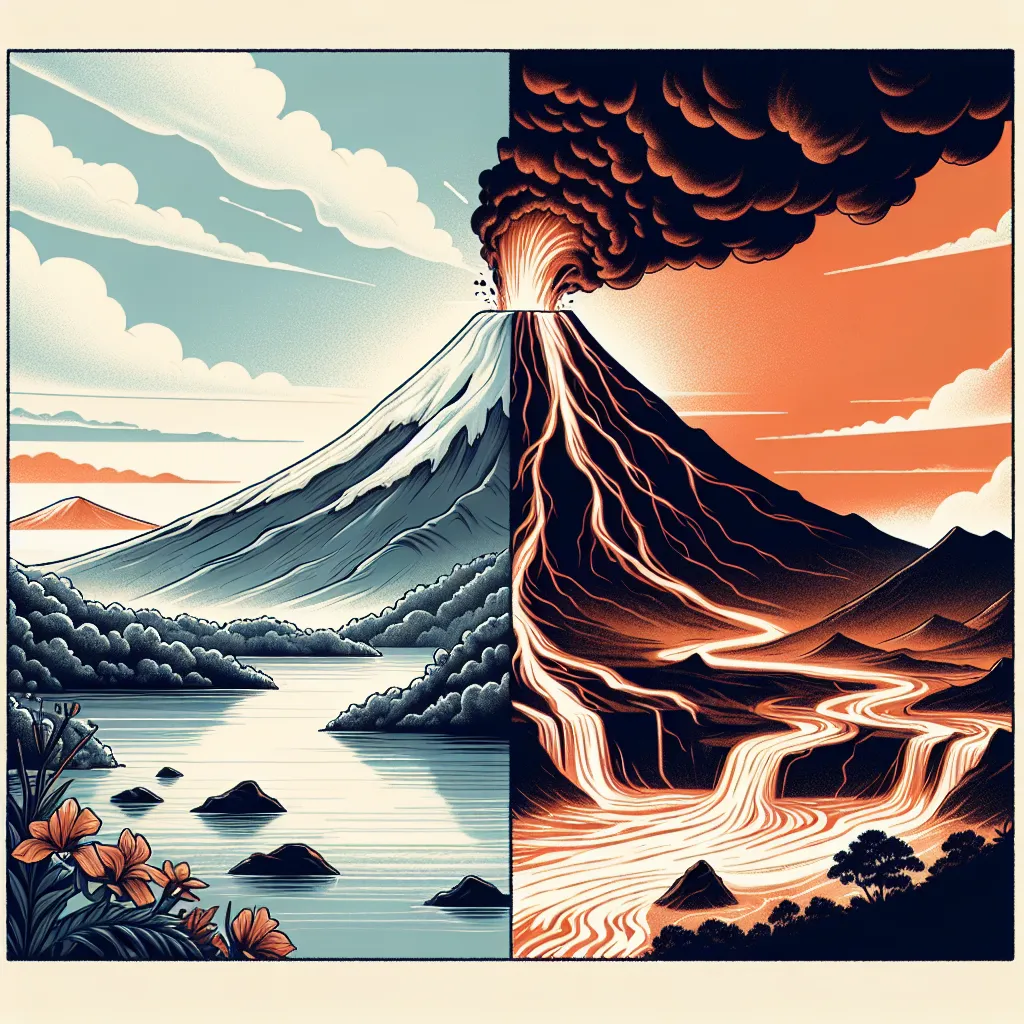
Magma varies from one volcano to another. For example, in Hawaii, the magma is thin and runny, releasing gases easily and creating gentle lava flows. Mount Kilauea has been erupting almost continuously for years, suggesting a pattern easier to predict. Contrast this with Italy’s Mount Vesuvius, home to thick, gas-filled magma that can explosively erupt with little warning, making it much more challenging to predict.
Mount Vesuvius looms dangerously over Naples, with a long history of violent eruptions, including the devastating blast in 79 AD that obliterated Pompeii and Herculaneum. With its potential for catastrophe, the people of Naples resort to ancient rituals, hoping for divine signs to predict an eruption. Twice a year, the faithful gather to watch a vial of Saint Gennaro’s dried blood, believing it turning to liquid will protect them for another year.
Around the world, from Sicily’s Mount Etna to the volcanic peaks of Hawaii, scientists continuously seek clues to predict eruptions. They analyze gas emissions, ground deformations, temperature changes, and seismic activities. For instance, Edna’s sulfur dioxide emissions rise before eruptions, and the ground deformation becomes a critical clue at places like Mount St. Helens, which erupted catastrophically in 1980.
Innovative technologies are making prediction efforts safer and more accurate. In Hawaii, geophysicists use GPS technology to track ground movements. Thermal imaging cameras and remote temperature probes offer thermal data crucial for understanding the behavior of molten rock. This withstanding power of robotics, like the Italian-designed RoboVolc, allows for safer data collection on active slopes.
Beyond tracking the molten pathways, predicting the flows and potential explosions of volcanoes involves critical data gathering and analysis. Seismologists track the tiny quakes leading to eruptions, while cutting-edge methods like those from New Zealand demonstrate how changes in rock fractures can hint at impending eruptions.
One dream of volcanologists is to see deep below the Earth’s surface. With advanced techniques, including using electromagnetic waves created by lightning or solar flares, scientists can now map magma chambers miles underground. These methods help immensely but predicting remains inherently unpredictable.
Tragically, mispredictions have led to significant losses. In 1976, a false alarm in Guadeloupe caused a mass evacuation without an eruption. Conversely, ignoring warnings led to the devastation of Armero in Colombia in 1985, when Nevado del Ruiz erupted, burying the town and killing thousands.
The lessons from history push scientists towards refining prediction techniques, combining data from various methods into comprehensive models, like those used in Iceland. Here, integration of seismic data, gas emissions, ground deformations, and more has led to precise predictions, such as the eruption of Hekla.
While advances are promising, the overwhelming power of nature means scientists may never perfectly predict every event. Despite countless instruments and endless monitoring, some volcanic eruptions will always remain unpredictable. But through persistent global efforts, we continue to improve our understanding and readiness, providing a better chance of saving lives from these natural titans.