Could a House Covered in Synthetic Turf with Randomly Placed Doors Be Austria's Most Unusual Home?
Nature's Camouflage Meets Architectural Whimsy in Austria's Most Bizarre Family Home
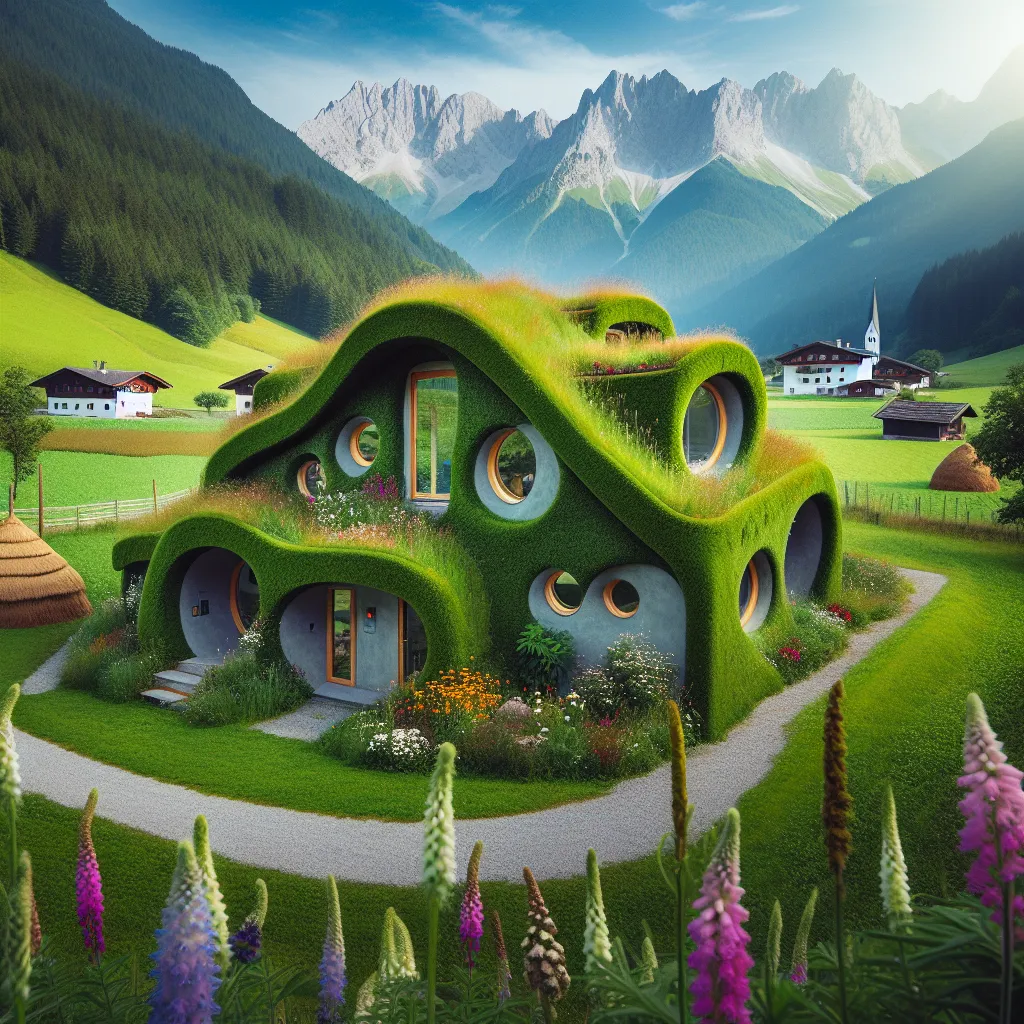
In the rural heartland of Austria, there’s a unique family home that stands out like nothing else. Covered in synthetic turf, its doors, windows, and even staircases are randomly placed around the building. This intriguing house belongs to Martin Reisinger, his wife Isabel, and their three daughters.
Once you step inside, it seems like any regular family home. The kitchen, dining area, and living room are found downstairs. Upstairs, there’s the master bedroom, three children’s bedrooms, and two bathrooms. But there are some clues that hint at the quirky exterior. For instance, a door overlooking the stairway leads to nowhere and could result in a nasty fall if opened. Additionally, a window ledge has been repurposed into a handrail.
The randomness you see outside was intentionally designed by architect Reinhold, assisted by his wife Jill Bauer, using a technique called freestyle planning. This approach argues that windows and doors are usually placed habitually, without much creative thought. By placing these elements wherever he wanted, Reinhold broke the conventional mold.
One of the most fascinating aspects of the home is its design process. The layout was computer-generated, allowing for a kind of randomness that detached from the architects’ personal tastes. By running data from their existing projects through a digital random generator, the designs produced unusual placements, such as stairs serving as load-bearing supports.
Constructed from concrete arranged into three levels, the house first had a timber frame. Rebar was added on top for stability, and then concrete was poured in. Once the concrete set, the wooden framework was removed. Unlike traditional homes, which would be plastered at this stage, this house was covered in synthetic turf two and a half inches thick. This kind of turf, usually used for soccer pitches, was formed around the edges and roof, challenging visual perception and blending with the rural setting.
Despite its camouflaged body blending with the surroundings, the misplaced doors, windows, and staircases make this home a curious sight. Covered in synthetic turf, it defies traditional architectural norms and challenges how we perceive design, making it a unique landmark in the heart of Austria.