Did Life on Earth Really Begin Billions of Years Ago?
Clash of Worldviews: Evolution Versus Creationism Battle Heats Up
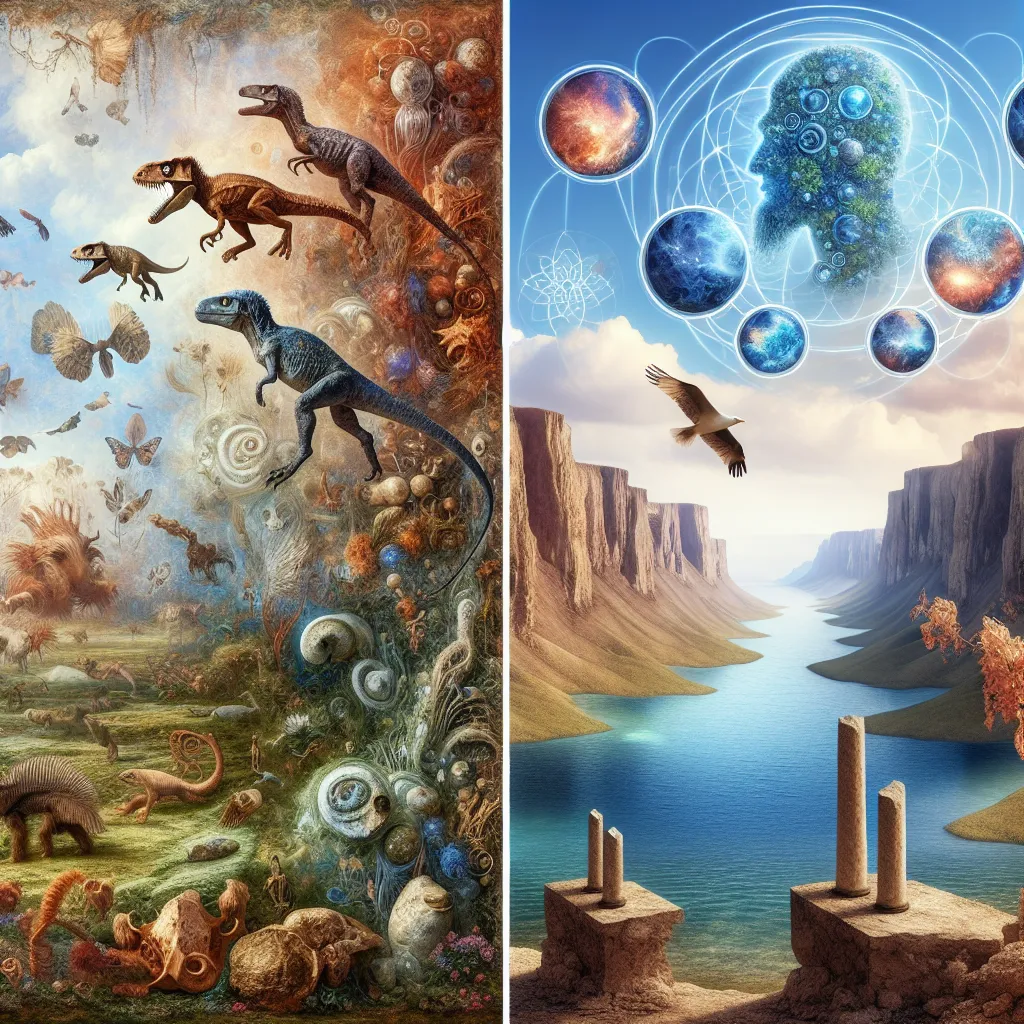
The debate between evolution and creationism has never been more intense. It’s like a battleground of worldviews. Some believe that evolution and the idea of a creator should both be taught. They argue that life on Earth is so complex it must have a creator behind it. On the other side, there are those who think nature alone is responsible for life’s diversity. They call this theory evolution, a term first popularized by Charles Darwin.
Darwin’s theory emerged from a fascinating journey that began in 1831. He spent five years traveling the world, collecting fossils, plants, and animals. Back home in London, he spent 22 years developing his theory about the origins of life. Scientists of his time knew that extinct creatures once roamed the Earth and wondered if modern animals were their descendants. Could one species evolve into another over time? Darwin thought so and published his groundbreaking book, “On the Origin of Species,” in 1859.
In his book, Darwin made three bold claims. First, he suggested that life was ancient, existing for hundreds of millions of years. Second, he proposed that life started with simple organisms that evolved into millions of species we see today. Third, he introduced the concept of natural selection, a natural force driving this evolution. For many religious people, this was a shocking idea—that life didn’t need a creator.
But was Darwin right? Let’s look at his claims one by one. He didn’t claim to know how life started but said it was old. Many creationists argue that life is young, created by God within the last 10,000 years. So, who’s right?
In Western Australia, geologist Martin Van Kranendonk is searching for the world’s oldest fossils. Fossils are remnants of ancient life, and this area has some of the oldest evidence. These fossilized stromatolites are structures built by colonies of bacteria that lived in the sea. Biologists think all life, including humans, evolved from these simple organisms.
So, how old are these fossils? Scientists use radiometry to date rocks. By measuring how certain elements within the rocks decay over time, they can determine their age very accurately. The Australian fossils are about 3.56 billion years old. This supports Darwin’s claim that life is ancient. In fact, scientists have found numerous fossils over a billion years old. Darwin was indeed right—life is incredibly old.