Did the Battle of Currents Shape Our Electrified World as We Know It?
A Tale of Sparks and Struggles: The Epic Battle That Electrified the World
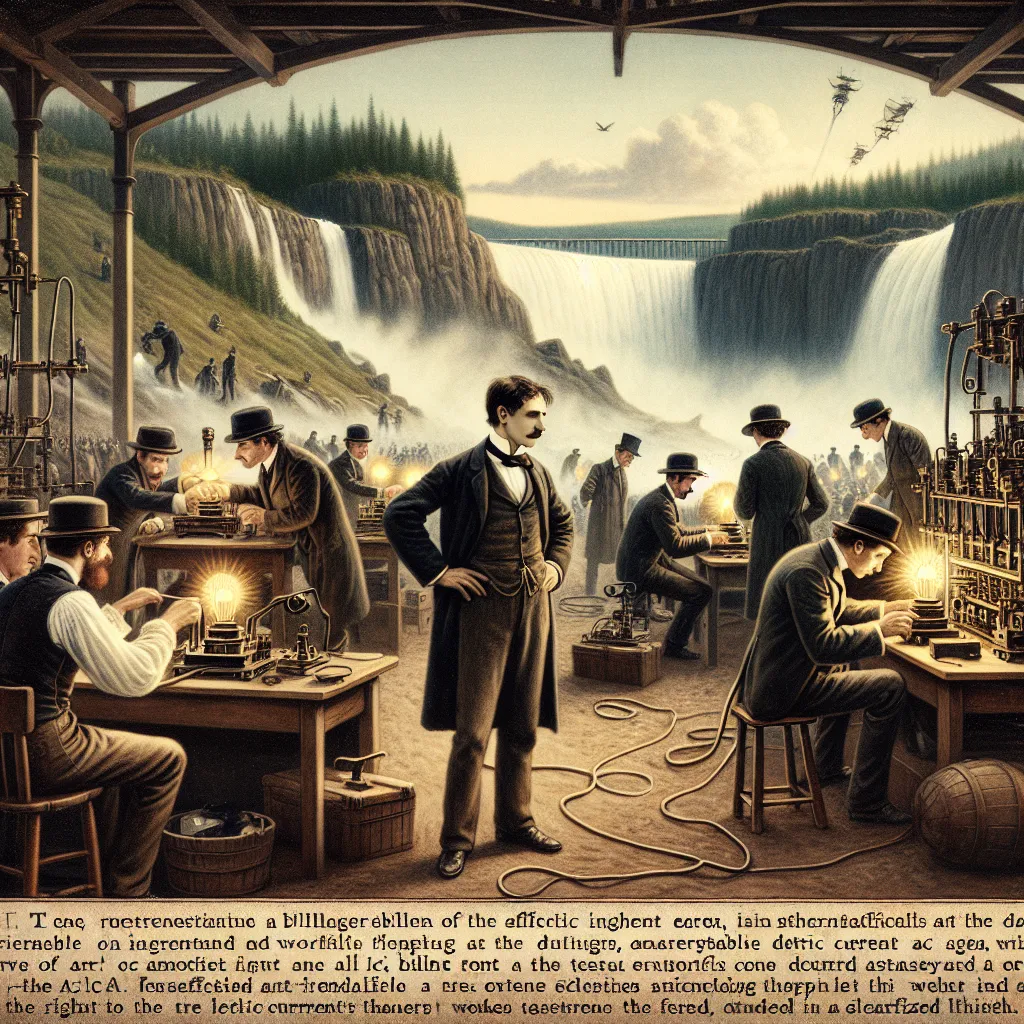
So, let’s rewind to the late 1800s. Picture this: young engineers under stress, trying to solve a huge problem, testing their persistence and patience. They are reminiscent of the legendary Thomas Edison, who at 31, was already a household name thanks to his phonograph. They called him the Wizard of Menlo Park. This guy was a blend of brilliance and sheer stubbornness, a symbol of American innovation.
Edison wasn’t stopping there. He aimed to create a safe, affordable electric light to replace gas lamps. It’s 1879, and after 100 failed attempts, he finally cracks it with carbonized thread. But that was just half the battle. To replace gas lighting, Edison needed to build an entirely new infrastructure – sockets, wiring, and all.
Enter Nikola Tesla, an ambitious young physicist with his eyes set on a revolutionary idea – alternating current (AC). While Edison was pushing his direct current (DC) system, Tesla saw AC as more efficient and powerful. The young genius had to come to America to prove his vision against the backdrop of Edison’s growing electric empire.
Edison was hard-headed, reluctant to abandon DC despite its limitations – it couldn’t transmit power beyond half a mile from a station. Tesla believed AC could change this. Tesla’s stint working for Edison was short-lived. Edison offered him a challenge and even a tantalizing joke of a $50,000 prize, which Tesla solved only to find the promise was hollow. Tesla walked away, determined to prove AC’s superiority.
Tesla found an ally in George Westinghouse, a wealthy entrepreneur willing to back his ideas. With investments in hand, Tesla was ready to put alternating current to the test. But Edison, ever the businessman, waged a fierce campaign to prove AC’s dangers, going as far as electrocuting animals to demonstrate its deadly potential.
It all culminated in a showdown at Niagara Falls. The project to harness its power was a decisive moment. Edison pushed for DC, but his own company’s board sided against him, opting to support Tesla’s AC, leading to Edison’s bitter exit from his own empire.
Tesla’s AC system won the Niagara contract, marking a pivotal victory. However, financial struggles plagued Westinghouse Electric. To save the company and AC’s future, Tesla gave up his hefty licensing fees, sacrificing his fortune for the greater good. Tragically, Tesla spent his final years in poverty, a victim of neglect and mental illness.
Edison, meanwhile, secured over 1,000 patents, but losing the current war to Tesla marked a major defeat. The battle between Tesla and Edison revealed Edison’s human side and exposed his ego and unwillingness to adapt.
In the end, Tesla’s vision of AC powered the world, making him the unsung hero of the electricity battle. Today, nearly all our electricity is thanks to his groundbreaking work on alternating current. Tesla, despite his triumph, remained a poignant figure, his genius evident but overshadowed by tragic personal struggles.
And that’s how the electricity we know today came to be – a tale of persistence, rivalry, and visionary genius.