How Did 33 Miners Survive 69 Days Trapped Under Earth?
Hope and Technological Prowess Unite in Miraculous Chilean Mine Rescue
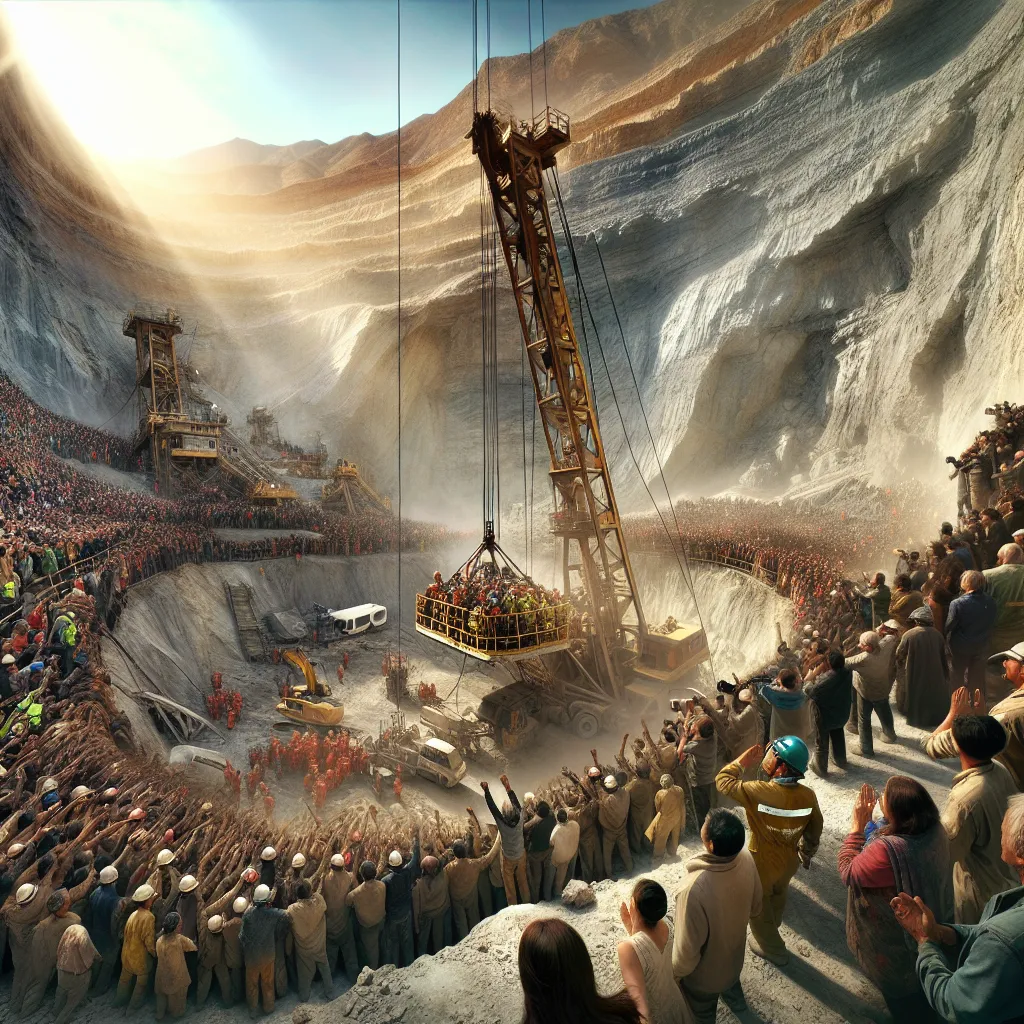
The dramatic rescue of 33 miners from a collapsed copper mine in Chile in 2010 is a story that captured global attention. Starting as a catastrophic disaster, it evolved into a tale of hope, perseverance, and technical brilliance.
The disaster struck on August 5th, 2010, when the San Jose Mine in Northern Chile suffered a massive collapse. When 33 miners, including his son Alex, went missing, retired miner Jose Vega spearheaded a search. He led a desperate attempt through the mine’s unstable tunnels, but a massive rockfall blocked their path. Despite the danger of potential aftershocks, Jose and his team tried to navigate vertical ventilation shafts, only to be thwarted by another collapse.
Mining Minister Laurence Golborne arrived on the scene to coordinate efforts, understanding the complexity of the task ahead. High-speed drilling rigs were brought in to drill exploratory holes into the collapsed tunnels, with time running out for the trapped miners. The initial drills missed the target, raising fears that the miners, confined to a refuge with limited food, might not survive.
Each passing day was filled with anxiety and hope for the miners’ families gathered at the site. Miraculously, after 17 agonizing days, one drill finally hit a tunnel near the refuge. Upon retrieving the drill bit, rescuers discovered a hopeful note indicating that the miners were alive.
A camera and phone line lowered into the hole confirmed their survival as jubilant strains of the Chilean national anthem erupted. While alive, the miners faced severe hardship, having rationed their meager supply of food to survive. Immediate efforts turned to providing nutritional support to avoid fatal refeeding syndrome.
The challenge of extracting the miners required a complex engineering plan. Rescuers needed to bore a half-mile-long shaft wide enough for an escape capsule. The effort, taking months, faced significant hurdles. The drilling rigs struggled with the hard desert rock, often requiring repairs and adjustments.
Among the teams, Brandon Fisher and his American-built Schramm T130 drill stood out. While other drills faced setbacks, Fisher’s drill successfully created a guide path using one of the supply boreholes. Despite a few catastrophic failures, Fisher’s team pushed through. Their drill became the miners’ lifeline, breaking through the tunnel ceiling and providing the final escape route.
Faith and camaraderie played a crucial role in the miners’ psychology. They leaned on their belief in rescuers, their families, and each other. On the surface, the rescue team constantly innovated, including introducing a new, powerful drill known as Plan C.
By day 69, the rescue operation was ready to commence. The meticulous and cautious extraction began with Florencio Avalos, who was the first miner to emerge, followed by the group’s spokesman Mario Sepulveda. Family reunions were emotional and joyous, reflecting the hard-won battle against despair and darkness.
This miraculous rescue underscores the perseverance of human spirit under incredible adversity and the technological prowess that made possible saving 33 lives from the very jaws of the earth.