How Did the Barrett M82 Redefine Modern Sniper Warfare?
Transforming Military Warfare with Portable Precision and Advanced Optics
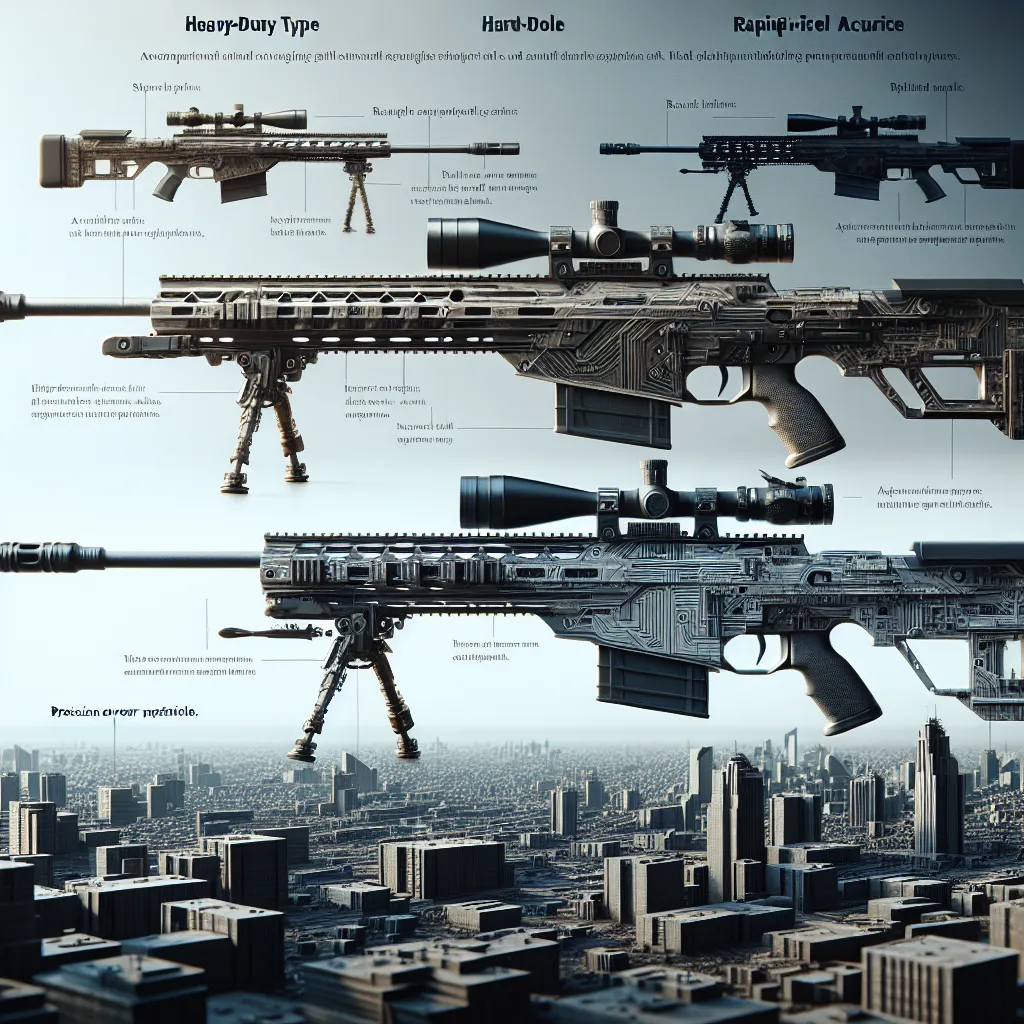
In the 1980s, the military needed a weapon that could easily deal with lighter armor, and that’s how the Barrett M82 came into the picture. This sniper rifle changed the game with its powerful yet portable design. The Barrett M82, also known as a multi-role weapon system, has an effective range of over 1,800 meters. However, it’s typically used against hard targets like buildings, armored vehicles, parked aircraft, and communication systems, rather than personnel.
Creating a weapon like this required significant weight reduction. Lightening heavy weapons makes them much more flexible and easy to use. The Barrett’s barrel is fluted, a design improvement that helps with heat dissipation. Parts of the stock are made using lightweight plastics, enhancing its portability even further. What’s truly groundbreaking about the Barrett M82 is its buffer system. The entire barrel is set on rails and moves back 3.8 centimeters against springs, a development that allows it to be fired from the shoulder without needing tripod support. This recoil-operated system sacrifices a bit of accuracy for reduced recoil, which is crucial when firing the powerful .50 BMG cartridge. The result is a sniper rifle capable of delivering huge energy and distance with minimal observability and extreme precision.
Beyond rifles, advances in glass manufacturing have significantly boosted magnification and the efficiency of modern scopes. Transparent polymers have greatly improved light transmission, making scopes fitted to rifles like the M110 sniper system incredibly precise. The M110’s precision begins with the barrel. Imperfections in a rifle barrel, even microscopic ones, can slightly disrupt the bullet’s path. Using high-quality steel and chrome-plating, the M110’s 50-centimeter barrel minimizes these imperfections. Additionally, it features 5R rifling, which is crucial for accuracy as it reduces projectile damage and barrel vibration. A more uniform projectile leads to less vibration and therefore better accuracy.
The landscape of modern warfare has exposed the limits of traditional single-shot, bolt-action rifles, especially in urban settings like Iraq during the U.S.-led invasion. Non-repeating sniper rifles became a tactical liability in these environments. The M110, with its larger 20-round magazine, allows snipers to switch to automatic mode if threatened, letting them fight their way to safety. It’s essentially two weapons in one, retaining extreme accuracy in skilled hands. Remarkably, the M110 can group 10 shots fired rapidly over a distance of more than 90 meters within a radius of less than 1.5 centimeters, demonstrating its impressive precision and versatility.