How Has Speed Revolutionized Warfare from Rifles to Missiles?
Mastering the Art of Speed and Agility in the Evolution of Warfare
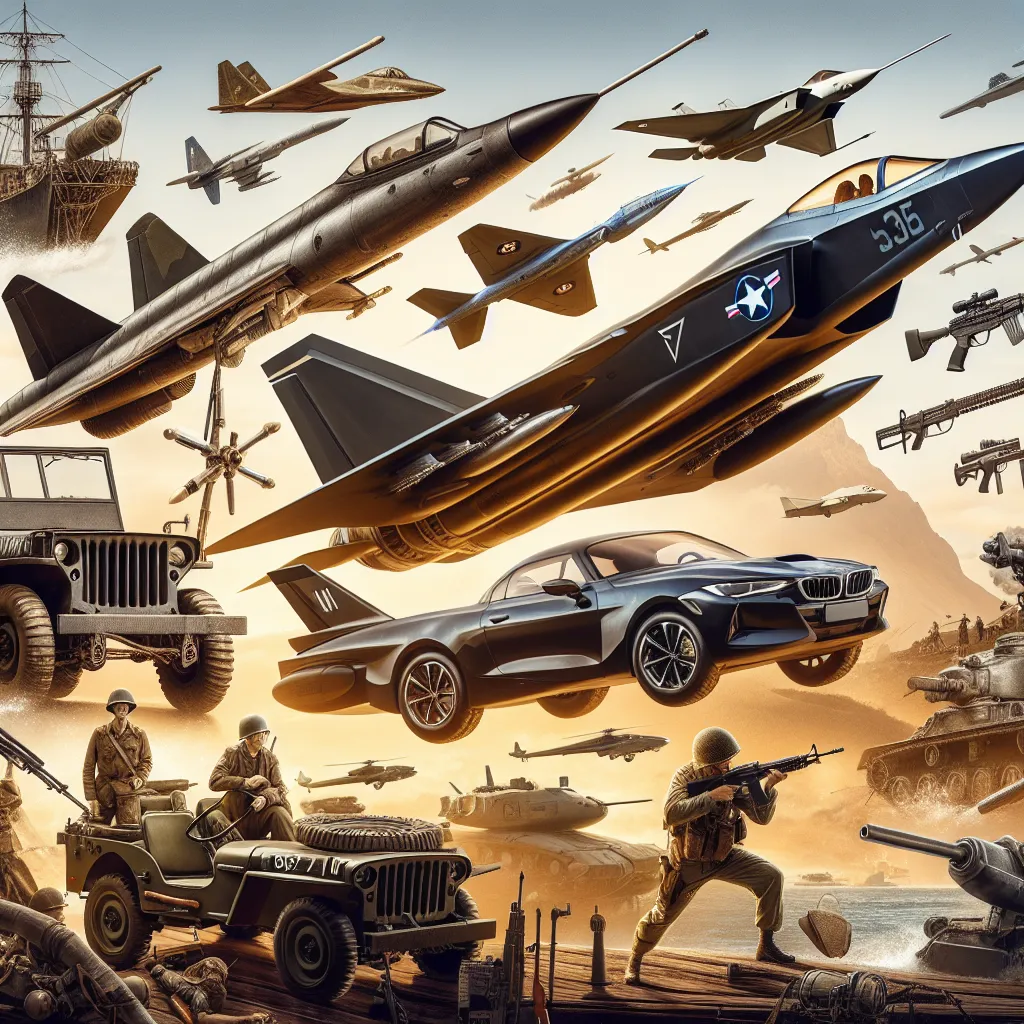
Speed has been a primary weapon in warfare, allowing armies to strike quickly and unexpectedly. From the early 20th century into the 21st, technology has rapidly changed the machinery of war. Bolt-action rifles became machine guns, first jet fighters evolved into long-range missiles, and the humble Jeep turned into high-tech troop carriers. Modern warfare revolves around the ability to strike fast and move flexibly, which is the essence of agility in battle.
Aircraft have captivated minds as the epitome of war machinery, stretching the limits of technology in pursuit of speed and agility since World War I. WWI saw the introduction of the jet engine by Sir Frank Whittle, leading to the emergence of the Gloucester Meteor. The Meteor’s jet power brought new capabilities, with higher altitudes and top speed at lower levels—something piston-driven aircraft couldn’t achieve.
As aircraft technology advanced, flexibility became just as crucial. Enter the Harrier jump jet in the Cold War, which brought vertical takeoff and landing, eliminating the reliance on runways and enabling operations from improvised bases. This flexibility gave the Harrier a unique edge, moving agility in the air to new heights.
During the Cold War, the MiG-29 emerged as a premier air superiority fighter, designed to outmaneuver the lightweight F-16 with its speed and agility. Even though neither aircraft faced combat as intended, their development pushed aviation boundaries.
Then came the F-35B Lightning II, a marvel of modern engineering combining the speed of the MiG-29, the operational flexibility of the Harrier, and the most advanced weapon systems. Designed for both traditional and vertical landing roles, the F-35B epitomizes the blend of speed, agility, and cutting-edge technology.
The race to improve speed and agility wasn’t limited to fighter jets. Heavy bombers like the Canberra and the Avro Vulcan marked strides in long-range attack capabilities, employing advanced jet engines to outpace and outmaneuver defenses. Bombers became deadlier and more effective, capable of reaching extraordinary altitudes and carrying heavy payloads over long distances.
Ground warfare also saw significant advancements in speed and agility. The British introduced the rapid-firing Lee Enfield rifle and the Bren gun, providing infantry with robust firepower and maneuverability. These weapons were crucial during key battles, demonstrating the importance of efficient, agile equipment.
Assault rifles like the AK-47 changed the battlefield even further. Designed to withstand extreme conditions, the AK-47 was reliable, flexible, and easy to use, making it the most widely used infantry weapon of the 20th century.
In World War II, vehicle advancements like the universal carrier and the iconic Jeep provided unprecedented battlefield mobility. The Jeep evolved into the Humvee, a versatile, high-mobility vehicle serving in various combat roles. However, the rise of IEDs highlighted the need for even more robust and agile military vehicles.
Missile technology also advanced, becoming the ultimate expression of speed and agility in warfare. German innovations like the V1 and V2 rockets introduced the concept of long-range, pilotless bombs capable of delivering devastating payloads.
The Cold War era saw the development of intercontinental ballistic missiles (ICBMs) like the American Atlas and Minuteman, capable of devastating targets thousands of miles away. These missiles relied on groundbreaking propulsion and guidance systems, marking the pinnacle of rapid response and strategic deterrence.
In summary, agility in warfare has continually evolved, from rapid-fire rifles and flexible fighter jets to all-terrain vehicles and ICBMs. These developments underscore the relentless pursuit of speed and adaptability as key elements in modern military strategy.