Is Mars Hiding Life Right Under Our Noses?
Mars and the Unending Quest to Rewite Cosmic History
Mars, the red planet, has captivated us for centuries. We’ve constantly looked to Mars, hoping to find signs of life, Probing the question, are we ready to rewrite history and tear up the science books? What if everything we’ve known gets turned upside down?
The allure of Mars is undeniable, often starring in B movies, sci-fi comics, and stories about Martians. It’s all been fiction, right? But what if Mars holds secrets waiting to be unveiled? Up close, Mars seems lifeless, a giant fossil with activities that made Earth livable shut down millions of years ago.
However, something stirs—a massive dust devil sweeps across the planet. With wind comes air, but Mars’ thin atmosphere is unbreathable for us, devoid of an ozone layer, exposing it to harmful ultraviolet rays. There’s water, but it’s locked away in a constant deep freeze. Life here seems unfathomable.
On Earth, life thrives in the most extreme conditions—extreme cold, intense heat, and the deepest ocean trenches. Life, like a virus, adapts and spreads, and maybe that’s precisely what we’re doing, carrying the essence of life across the universe. If life can find a way here, perhaps it can on Mars too.
Olympus Mons, an enormous, ancient volcano thrice the height of Everest, seems dormant, declared extinct since its discovery in the 1970s. But evidence of possible lava flows challenges that notion, hinting it might just be asleep, with magma possibly flowing beneath the crust, melting frozen water, and perhaps creating conditions conducive to life.
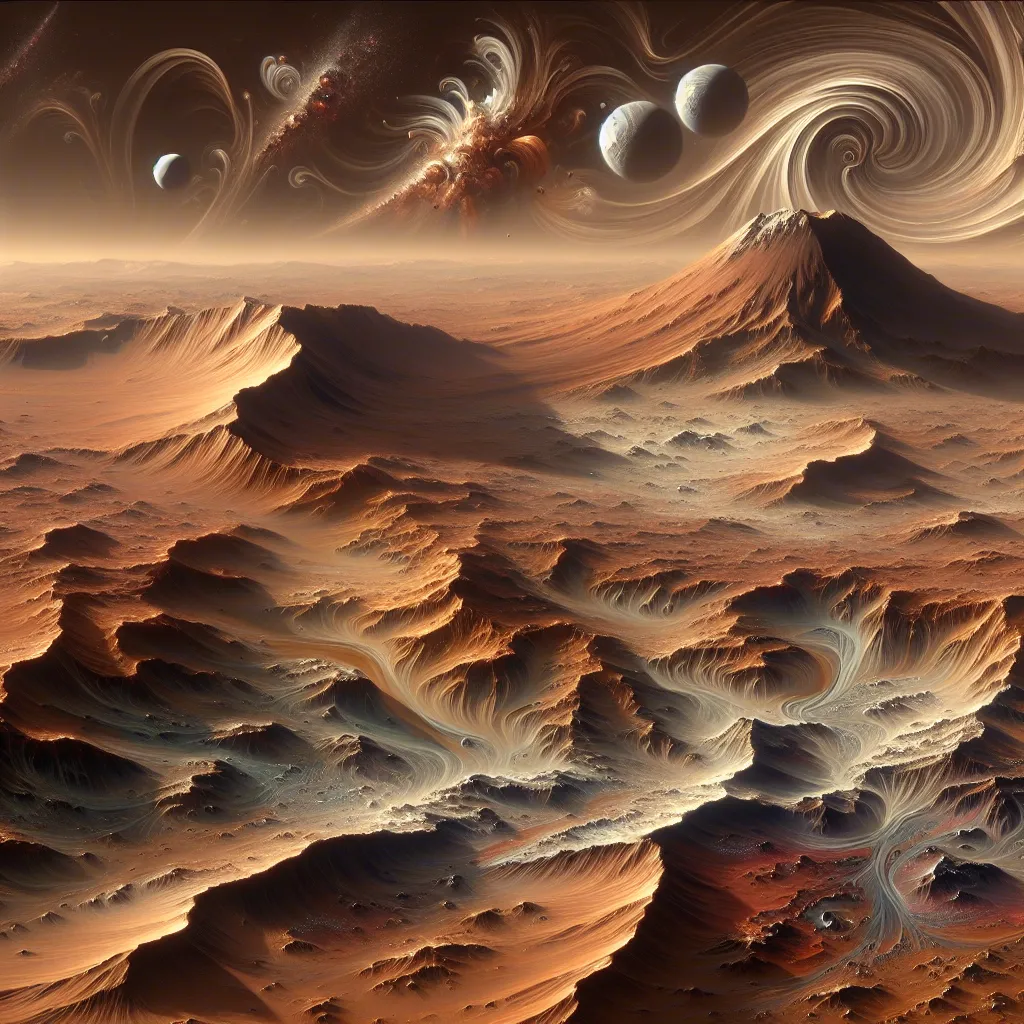
Mars’ landscape showcases vast canyons and signs of erosion, dried-up riverbeds possibly formed by melted ice flowing through. Underground volcanoes might be melting ice even now, creating liquid water, a crucial ingredient for life.
NASA’s rover Opportunity and orbiting probes have found compelling evidence suggesting Mars was once home to ancient lakes or oceans. Gullies spotted by probes reinforce the idea that water, and possibly life, might be flowing beneath Mars’ surface today.
Some speculate life on Earth might have originated from Mars, with meteorite impacts blasting microbial life from Mars to Earth, seeding life here. Could Mars be our ancestral home? It makes Mars intriguingly fascinating, a potential origin point for life on Earth.
The Mars we thought we knew has been replaced by a dynamic, evolving planet. If we barely understand our celestial neighbor, countless surprises await us in the cosmos.