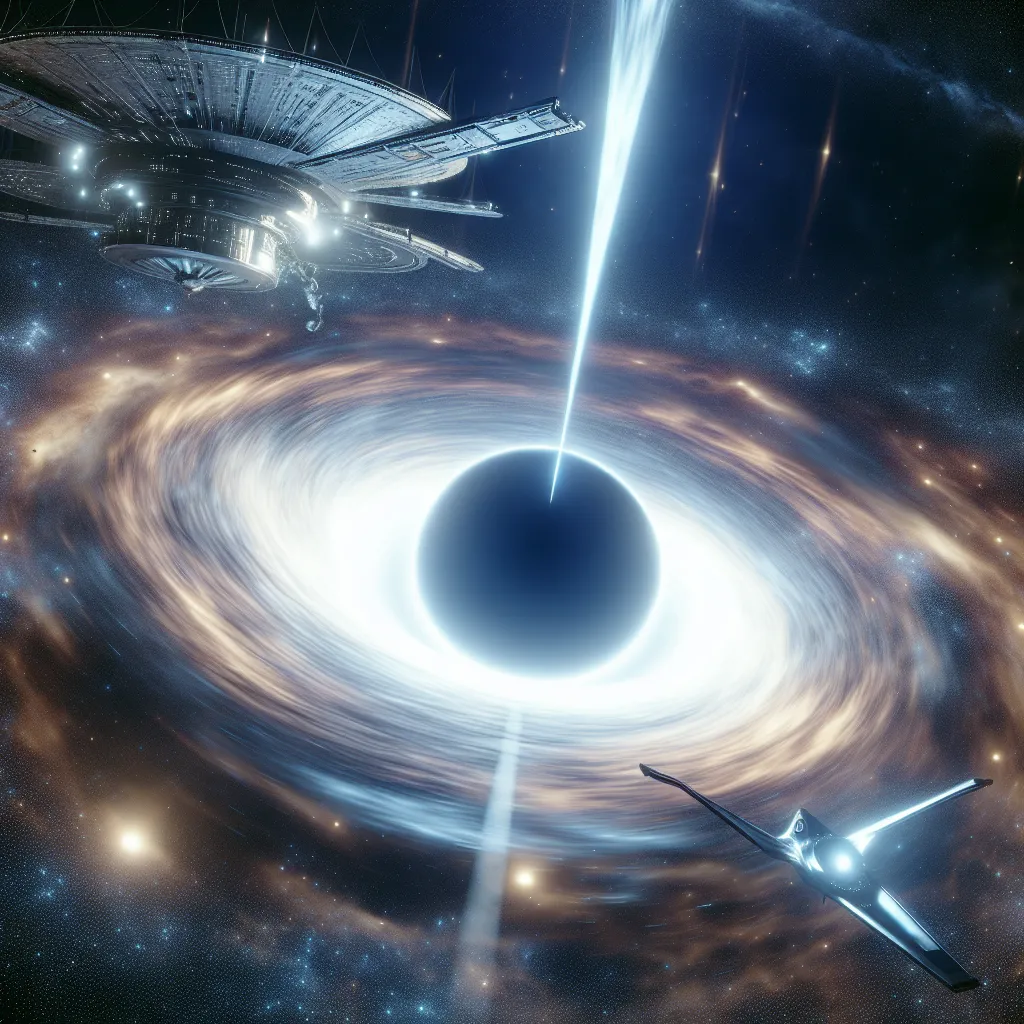
Is the Universe Just One Big Cosmic Flamethrower?
Cosmic Flamethrowers: The Universe’s Violent Display of Mega Flares and Gamma Ray Bursts
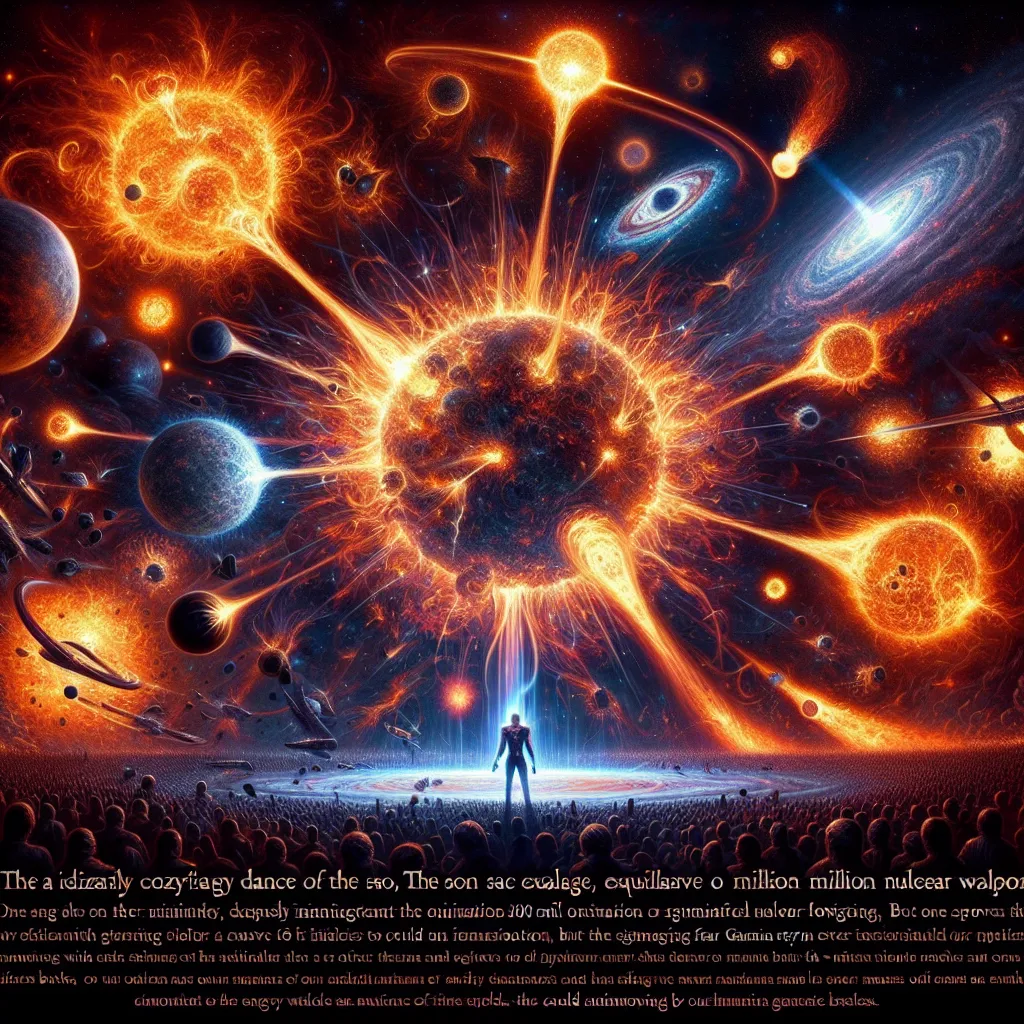
The universe is a chaotic and violent place. Imagine the most intense explosions you can think of, occurring all the time. Our Sun spews flares that reach millions of miles high, and magnetic forces can tear worlds apart. Think of it as cosmic flamethrowers firing gamma rays halfway across the universe. Mega flares are the brightest; they light up hidden secrets and pose threats to anything in their path.
Earth is constantly bombarded by colossal cosmic firestorms. Take UV Ceti, a star 8.7 light years away. It can become five times brighter in less than a minute, and planets orbiting it would be scorched and then frozen in rapid succession. UV Ceti’s unpredictable brightness can lead to runaway mega flares. If our Sun ever unleashed a mega flare like that, our planet would literally be toast.
The Sun, which appears stable to us, is a monster underneath. Solar observatories capture massive flares erupting from its surface, equivalent to over 200 million hydrogen bombs. These flares emit not just visible light but radio waves, infrared heat, ultraviolet light, and even X-rays.
The flares stem from magnetism. The Sun’s immense magnetic field powers these solar flares. When magnetic field lines cross, they create a short circuit, releasing vast amounts of energy and launching hot gas billions of miles into space. This magnetism, which also guides a simple compass, is behind the biggest explosions in our solar system.
But our Sun is relatively small by cosmic standards. There are even more active stars with far more intense magnetism. Mega flares from such stars are much more powerful, capable of destroying planets. For instance, a red dwarf like Evie Leri, 16.5 light years away, can emit flares that make the Sun’s most powerful ones look like a flicker. This stellar firestorm was visible from Earth with the naked eye.
Beyond our solar system, gigantic explosions rock the cosmos. Take magnetars, the most magnetic objects in the universe. These stars have magnetic fields so strong they can obliterate anything within vicinity. A starquake on a magnetar, causing a slight shift in its crust, releases more energy than the Sun emits in 250,000 years.
One of the scariest cosmic events is a gamma ray burst, second only to the Big Bang. These bursters emit beams of gamma rays, the most intense and energetic light, turning entire stars into black holes. If such a flare occurred near us, it would be the end of life on Earth.
In our own neighborhood, the biggest threat is a coronal mass ejection (CME) from our Sun. These colossal solar explosions shoot billions of tons of charged particles into space. When aimed at Earth, they can disrupt power grids, satellites, and communications. While rare, a massive CME could knock us back into the pre-electric age.
Earth survives in this cosmic firing range thanks to its magnetic field, which shields us from harmful solar radiation. Without it, our atmosphere would be stripped away, much like Mars, which lacks a magnetic field.
Mega flares, gamma ray bursts, and CMEs make us understand how crucial magnetism is in the cosmos. They organize the universe, from galaxies down to molecular clouds. These magnetic fields shape everything, making the universe as violent and extraordinary as it is.
So next time you gaze at the night sky, remember that cosmic violence is at play, and we are just lucky to be shielded by our planet’s magnetism. Mega flares act like cosmic time machines, unveiling hidden events and mysteries of the universe, shining a light on the secrets we might never otherwise see.