Unraveling Consciousness: The Brain's Greatest Mystery
Consciousness remains a perplexing mystery, blending neuroscience, philosophy, and physics in exploring how subjective experiences arise from brain activity.
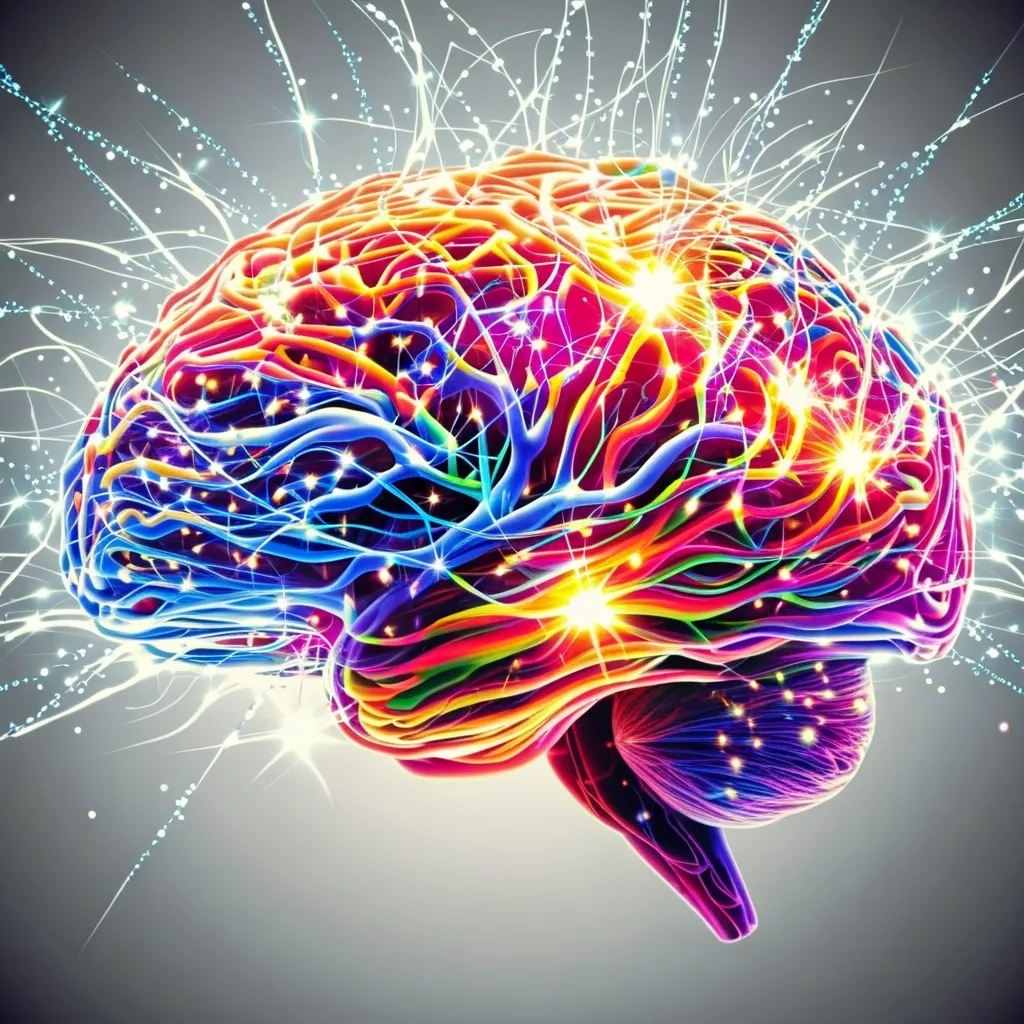
Consciousness is one of those mind-boggling mysteries that keeps us scratching our heads. It’s the driver behind our thoughts, emotions, and perceptions—the very things that make us feel alive and aware of the world around us. Yet, even after centuries of pondering and researching, scientists and philosophers find themselves stumped by the question: How in the world does our brain, that squishy mass weighing about 1.4 kilograms, come up with such vibrant experiences?
Let’s paint a picture: you wake up to the sunlight warming your face, hear birds chirping joyfully outside your window, and perhaps catch the scent of freshly brewed coffee. These aren’t just random signals; they shape your conscious experience. But the big question is, what on earth is happening in our heads to make us feel all of this? It’s a brain teaser that has been around for ages, attracting the wonder of both science and philosophy.
One big hurdle here is the deeply personal nature of consciousness. Take happiness, for example. Your brain buzzes with a specific pattern when you’re happy. Yet, that pattern isn’t the happiness itself—it’s a reflection of it. A scientist could observe your brain lit up like a firework display but wouldn’t feel your joy. And therein lies the conundrum: conscious experiences seem impossible to boil down to mere brain activity.
For over a century, the journey into the brain’s workings has been nothing short of a rollercoaster. Sure, we’ve laid down significant groundwork on how it functions, but the hard problem of consciousness lingers on, coined back in the 1990s by philosopher David Chalmers. It questions why we don’t just operate like computers, processing data, but instead have rich, personal experiences.
Digging deeper, various parts of the brain have been pegged as key players in conscious experiences. For example, the posterior cortex plays a role in blending different sensations into our conscious perception, while the reticular neurons help in maintaining alertness and awareness. Yet, just identifying these regions doesn’t cut it when it comes to understanding how they give birth to subjective experiences.
Lately, there have been whispers of consciousness not just being tied to neural activity alone. Some new theories suggest looking at it from a relativistic angle, hinting that consciousness might not just be a brain computation but something that doesn’t quite fit into physical processes. This fresh perspective attempts to fill the gap between personal experience and the cold, hard data of brain scans.
Another approach to this puzzle involves examining the signature brain activity changes that occur with conscious experiences—what scientists call the neural correlates of consciousness. Different states of being, like being awake, asleep, or in a vegetative state, reflect unique brain activity patterns, observable with tools like fMRI and TMS.
TMS, or transcranial magnetic stimulation, has offered some intriguing insights. When used on awake individuals, it sets off a chain of activity across multiple brain areas. Yet, during non-REM sleep, it only has a brief, localized effect. This suggests that our brain’s knack for processing information shifts drastically across different consciousness states.
Despite these advances, the enigma of how the brain conjures consciousness is still unsolved. It’s a bit like trying to understand why a painting stirs the soul—you can dissect the colors and brushstrokes till the cows come home, but you can’t quite capture the magic.
Picture a future where technology can replace human brains with machines that replicate all its intricate workings. Would these machines possess consciousness? If it’s all about complexity, then maybe. But if consciousness depends on something innately biological, like our neurons, perhaps not. This mental exercise highlights the complex nature of consciousness and leaves us in a bit of a quandary.
Understanding what makes us conscious is more than just idle curiosity; it has real-world applications. Anesthesia, for instance, is a wonderful tool that lets us endure surgery without pain—yet it also sparks questions about the whereabouts of our consciousness during those times. Does it vanish or just take a timeout?
Consciousness is not just a playground for abstract thought; it plays a critical role in medical fields, especially when looking at disorders of consciousness like vegetative states. Patients might be unable to communicate, yet may still have conscious experiences locked within. Improving how we assess consciousness in such patients could change their treatment trajectory.
At the end of the day, peering into the mystery of consciousness is like diving into a sea of neuroscience, philosophy, and even physics, all mingling together. We’ve charted some parts of these waters by identifying its neural correlates, but the hard puzzle stands firm. This grand challenge intrigues both scientists and philosophers, pushing them to unravel how our minds create the wonders of subjective experience.
As we navigate this perplexing mystery, we remember that consciousness is the very essence of our humanity. It’s the spark that ignites our thoughts and feelings, crafting our individual realities. Even as the picture remains incomplete, the pursuit of understanding keeps us engaged, highlighting both the complexity and the beauty of human consciousness.