Life on Earth, and particularly human life, thrives by pure chance. Only 1% of all species that ever existed still do. A series of global catastrophes wiped out the rest, shaping evolution in the process. Our very existence might never have happened if not for these ancient disasters.
Let’s journey back 250 million years to what was Earth’s deadliest volcanic event. Volcanoes nearly obliterated life on the planet. I used to think our rise as the dominant species was straightforward. Turns out, it was anything but—more a game of survive or die. To appreciate this, imagine squeezing Earth’s 4.5 billion-year history into just 24 hours. At the stroke of midnight, our planet forms. By 12:02 AM, it takes its first hit—an astronomical collision. Billions of years whiz by with the planet facing challenge after challenge, until at 10:40 PM, disaster strikes again.
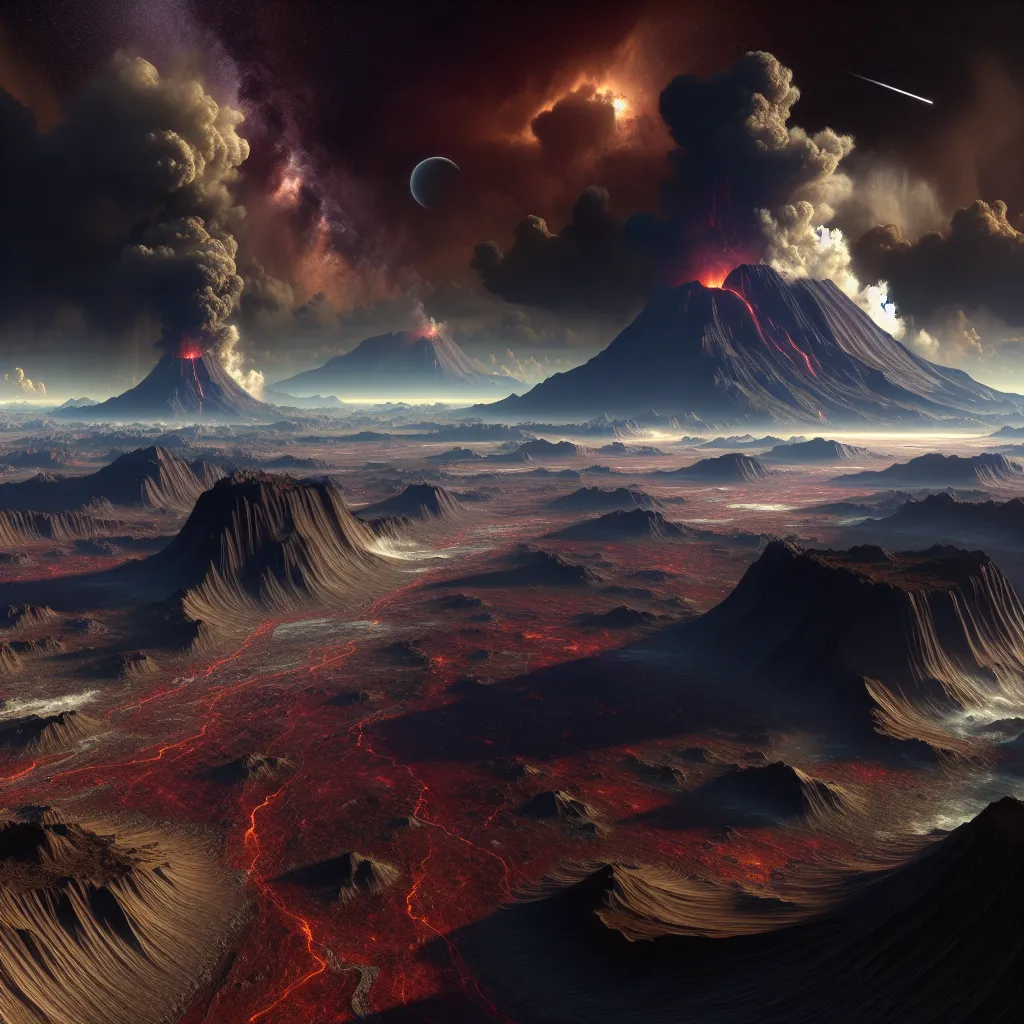
This was the Permian extinction, a period of catastrophic volcanic activity that nearly ended life on Earth. At this moment, 95% of all species were wiped out, marking Earth’s darkest hour. This event, still a scientific puzzle, happened around what is today the Karoo Basin in South Africa. Back then, it was a thriving world, now reduced to scrubland.
The Permian period supported unique plant and animal species, including fierce predators and herds of large herbivores. However, none of them survived the mass extinction, an event marked by significant changes in rock strata—from lush, wet environment evidence to dry, desolate red layers depicting a dire shift in climate.
Extinct layers show the near-destruction of life, with Earth experiencing rapid drying and warming. Scientists like Paul Wignall have investigated this dead zone extensively, discovering that the transition to lifeless red rocks happened not due to an asteroid, but primarily through prolonged volcanic eruptions.
These volcanic eruptions ejected lava and gases over extended periods, releasing sulfur dioxide. This caused chilling volcanic winters and following acid rains, disrupting ecosystems brutally. The Larki eruption in Iceland, a tiny version of these eruptions, caused massive local damage, illustrating the scale of the Siberian eruptions.
The real killer was the volcanic gases. Carbon dioxide levels skyrocketed, causing global warming to spiral out of control. This resulted in severe global climate changes that dried up equatorial regions and altered global weather systems, wiping out 70% of all marine and 35% of terrestrial species.
As the catastrophes continued, Earth’s oceans stagnated, leading to even more deaths due to hydrogen sulfide poisoning. Methane hydrate, another potent greenhouse gas, thawed due to increased temperatures, releasing even more gas and further spiking global climate changes. This chain reaction effects from our ancient past left only 5% of species as survivors, ancestors to all modern life.
Today, we face different challenges but echo similar patterns. Human activities have ramped up carbon emissions at alarming rates, risking another potential mass extinction. If history teaches us anything, it’s that life must adapt or perish. This ancient story of devastation is a vivid reminder of our planet’s vulnerability and the critical need to address climate change. We must act now to prevent repeating a catastrophe millions of years in the making.