What Compels a Millionaire to Collect Tanks?
Tank Baron Fred Roppkey: From Korean War Commander to Millionaire Collector
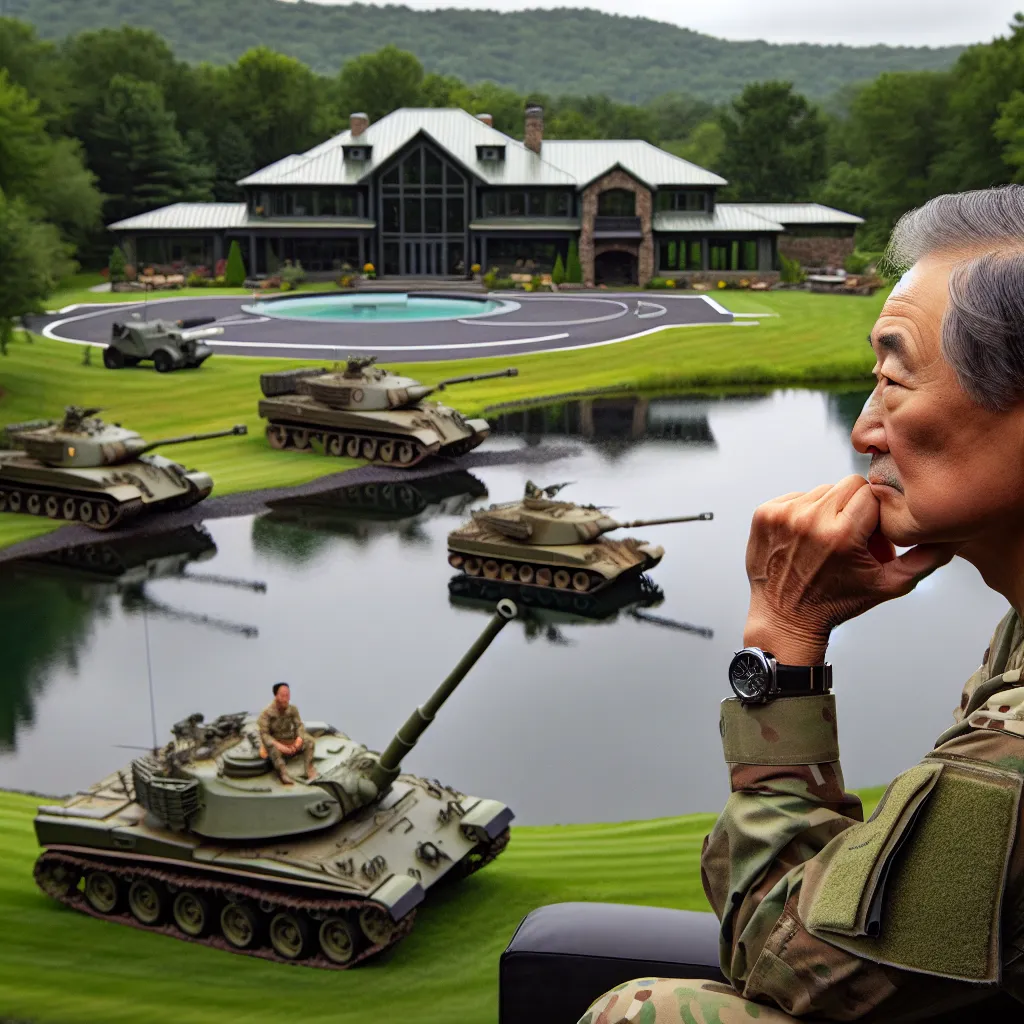
Fred Roppkey has witnessed the brutal realities of tank warfare firsthand. Known as the “Tank Baron,” Fred saw combat in the Korean War and later became the first serious tank collector in the United States. Even today, his love for tanks remains strong.
Fred doesn’t like to reveal the exact number of tanks he owns, joking that it might make him appear crazy. His collection includes a vast array of armored cars and tactical vehicles, a hobby that has spiraled out of control. After leaving the military, Fred channeled his skills into building a successful printing and graphics company, amassing millions in the process.
Now, Fred lives on a sprawling estate outside Indianapolis. His property features a private lake for boating and even a runway for his aircraft. Instead of filling a garage with old knick-knacks, Fred filled his estate with military equipment. “I’ve got more tanks than some South American countries,” he laughs, hinting that he could probably control one if he wanted to.
With such a formidable collection, security is paramount. The events of 9/11 heightened Fred’s awareness of the responsibility that comes with owning aggressive military hardware. He keeps his gates locked at all times, and his reputation alone is enough to deter most would-be intruders. “Anyone with an ounce of sense wouldn’t mess with old Fred Roppkey,” he asserts.
Fred’s favorite piece in his collection is the M26 Pershing, the tank he served in over 50 years ago during the Korean War. He fondly recalls how the Pershing, with its heavier armor and powerful main gun, consistently outperformed the Soviet T-34/85 tanks. The Pershing could fire a 24-pound high-explosive shell over 12 miles and was equipped with three machine guns for various combat situations.
The tank commander role brought a heavy responsibility. Fred was in charge of his crew and the main gun’s firing. The biggest threat in tank warfare was getting hit or set on fire. Fred vividly remembers the frightening possibility of a round piercing the turret and ricocheting inside, a deadly scenario.
Decades have passed since Fred commanded his Pershing, but the instincts and memories of tank warfare are still with him. The horrors and heroism associated with tanks have significantly shaped his life. For Fred, each tank represents a profound chapter of history, both personal and universal.