What Cosmic Secrets Did Hubble Uncover After an Epic Space Rescue?
Witnessing the Cosmos: Hubble's Journey from Flawed Vision to Cosmic Revelation
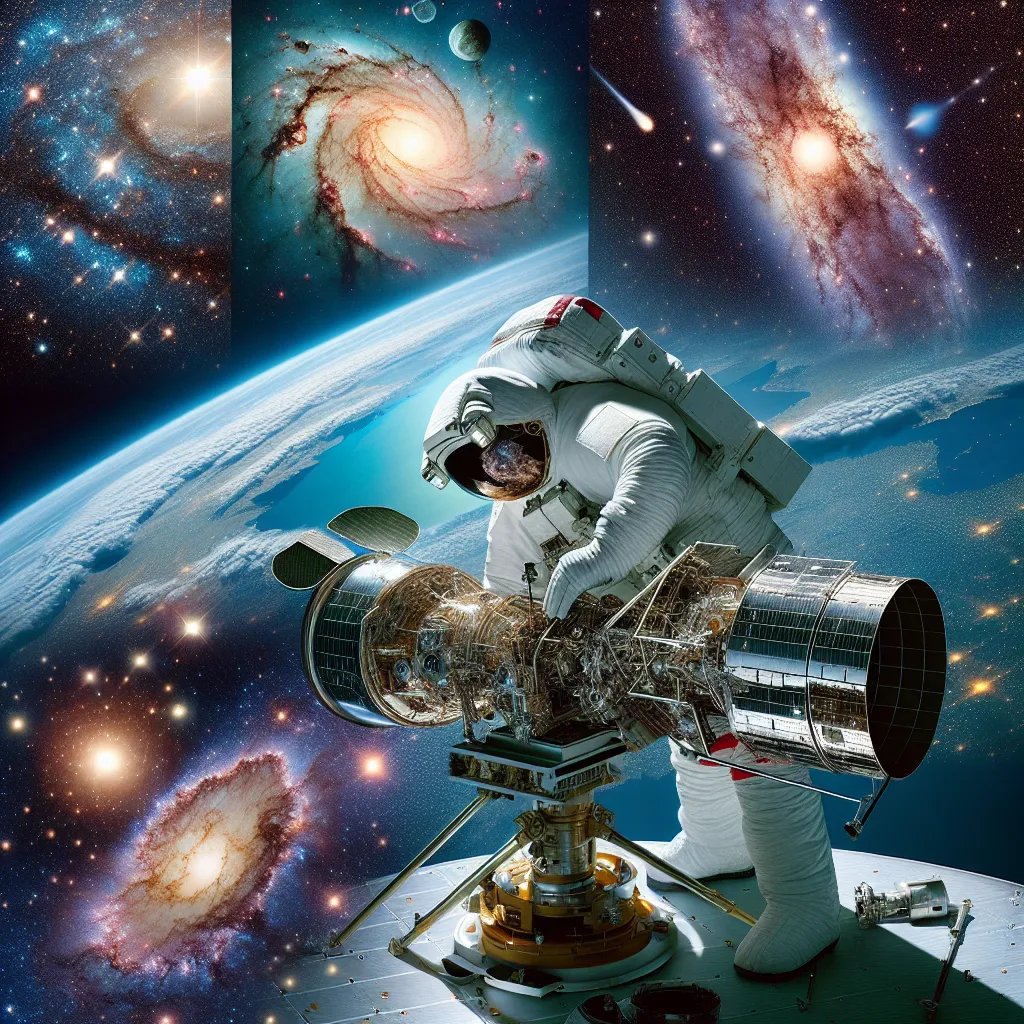
Back in 1990, NASA sent the Hubble Space Telescope into orbit. The mission, launched aboard the Space Shuttle Discovery, marked the beginning of an era of unprecedented astronomical discoveries. The idea was to peer deep into the universe, capturing images of early stars and potentially uncovering new elements.
However, the excitement soon turned to panic. Shortly after its launch, scientists realized Hubble’s mirror was flawed. Everything was out of focus, and the only solution was a high-stakes repair mission. Astronaut Jeff Hoffman was part of the team tasked with this monumental job. Faced with the prospect of damaging a $2 billion telescope, precision was critical.
The repair mission involved capturing the troubled telescope and opening its access doors. Doing this kind of delicate work while floating in space, with Earth below and stars above, added an extra layer of complexity. The thick gloves of their space suits made the task akin to fixing a car while wearing ski mittens.
Things were tense when Hoffman couldn’t close the warped access doors. If they didn’t close properly, the telescope would be lost. With some improvised tools and teamwork, they finally succeeded. Over the course of five days, the team fixed the telescope as cosmologists around the globe anxiously awaited the results.
On New Year’s Eve in 1993, Hoffman received a call confirming the success. The first images were stunning and surpassed all expectations. Hubble captured a star’s explosive death, star nurseries, and vast cosmic dust pillars, including the iconic Pillars of Creation in the Eagle Nebula. The images sparked a sense of awe and wonder akin to biblical declarations of “let there be light.”
Hubble’s crowning achievement came in 1995 with the Deep Field image. For ten days, the telescope focused on a seemingly empty patch of space. What emerged was a breathtaking view of thousands of previously unseen galaxies, some dating back to just a billion years after the Big Bang. The universe suddenly appeared far richer and more complex than previously imagined.
Hubble changed our understanding of the cosmos, offering insights that were once beyond our wildest dreams. It’s a testament to human ingenuity and the relentless pursuit of knowledge.