What Happens When You Mix Water with 275,000 Volts to Prevent a Disaster?
Navigating the High-Wire Act of 275,000 Volts: A Daily Dance with Danger
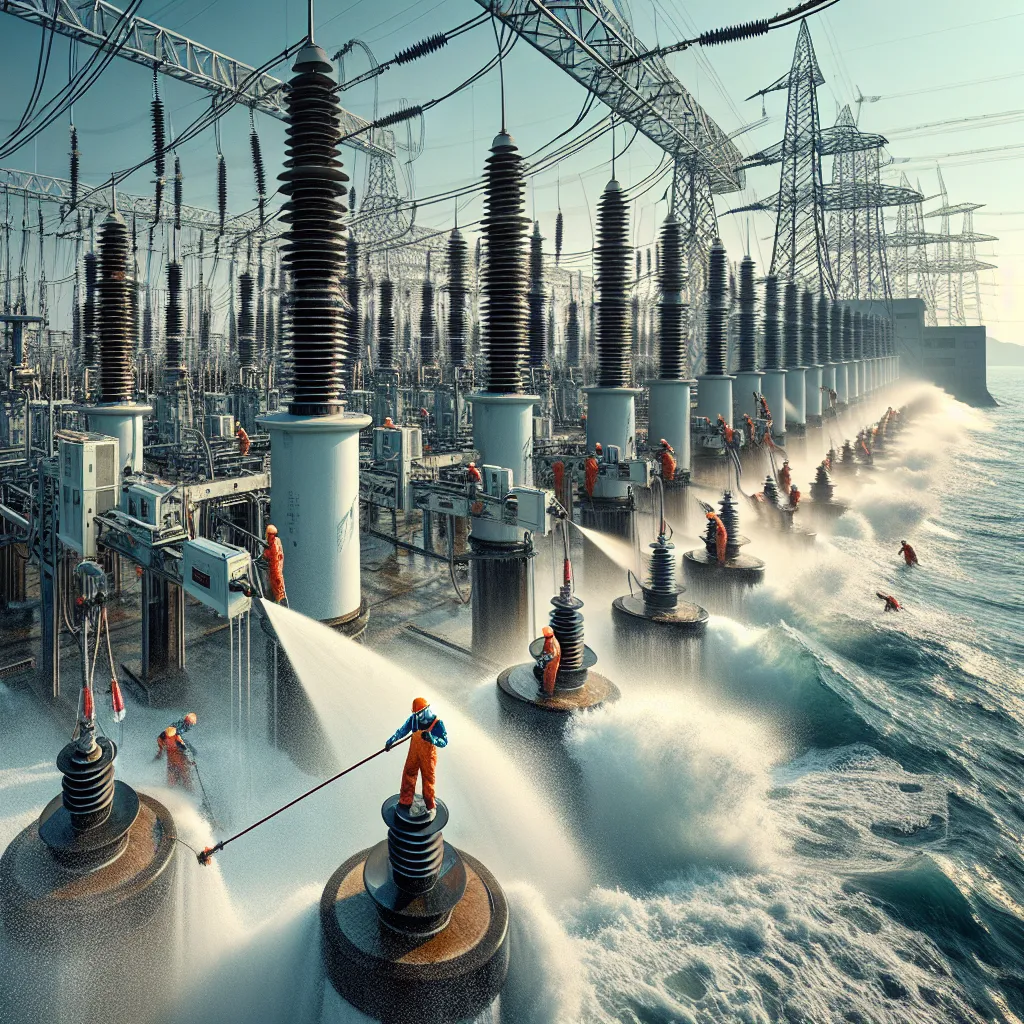
At Hinkley Point Nuclear Power Station, nestled on the Bristol Channel, there’s a bustling 275 kV substation handling electricity enough to power a city half the size of Bristol. This substation hums with life at 275,000 volts but faces a looming threat unless action is taken fast. Salt from the sea forms an invisible layer on the brown porcelain insulators, setting the stage for a flashover—a scenario where an electrical spark can leap from the live bars to the ground. This would shut down the substation instantly.
Frank, James, and Pete are tasked with cleaning this substation without turning it off. It’s a high-stakes job, given that water and electricity should never mix. Yet, with 275,000 volts on the line, these men are about to do just that. Their mission is to spray water to clean the insulators and prevent a flashover. These insulators are visible as briny porcelains suspending the bus bars. The Bristol Channel’s salty breeze is relentless, and the team’s goal is to keep the insulators spotless to avoid costly and dangerous flashovers.
Before anything starts, formal permission is needed, and Mr. Thompson gives the green light. Pete, at the forefront, ensures every precaution is in place. He’s protected by thousand-volt gloves and stands on an Earth platform. This extra layer of safety involves connecting an Earth cable from the monitor to grounding strips throughout the substation.
Once the water pressure hits the right mark—80 pounds per square inch—Pete begins his crucial task. With a fine mist of water droplets designed to prevent electricity from tracing the water back to him, Pete carefully cleans each insulator. The wind’s direction is a critical factor—spray must only hit already cleaned insulators to avoid turning the water conductive.
The team undertakes this cleaning routine regularly, more frequently during the salty winter months. Surprisingly, the water’s conductivity is constantly monitored. If it gets too conductive, an alarm triggers, and everything shuts down within 15 seconds.
After two intense days and thousands of liters of water, the team wraps up the wash. The substation is now safe for the next couple of weeks. But the job isn’t over. Adjacent to this one is another substation running at a staggering 400,000 volts. Washing this one manually is out of the question due to its extreme danger.
Fortunately, an automatic system takes over here. This system, independent and devoid of human intervention, includes pollution detectors that monitor salt build-up. Once the salt reaches a particular threshold, the system initiates a wash, day or night. This automatic wash happens every two hours, ensuring no manual labor is involved during a 400,000-volt flashover.
Hinkley Point Power Station, reliant on the Bristol Channel’s seawater for cooling, has battled salt-induced challenges for over 25 years. Frank and his team, through a paradoxical dance of water and electricity, ensure that power continues to flow smoothly. It’s a daring, meticulous operation that underscores the incredible lengths gone to keep our lights on.



![Space Debris Clean-Up: 6 Revolutionary Technologies Transforming Satellite Safety [2024]](/images/4dab4574-421c-4a54-9880-54b6e8732e15.webp)