Why We Age: 5 Unsolved Biological Mysteries Science Cannot Fully Explain Yet
Discover the 5 unsolved mysteries behind why we age — from zombie cells to epigenetic clocks. Science is closer to answers than ever. Read on to find out.
Why do we age? It sounds like a simple question. But the more scientists look at it, the more confusing and fascinating it gets. We all know aging happens. We see it in the mirror. We feel it in our knees. But why it happens — at the deepest biological level — is something we still cannot fully explain.
Let me walk you through five of the most puzzling mysteries behind why we age. Not the obvious stuff you’ve heard before. The weird, uncomfortable, genuinely unsolved stuff.
The Tiny Clock Inside Every Cell
Imagine every time you make a photocopy of a photocopy, the image gets a little worse. That’s basically what happens with your DNA every time a cell divides. At the tips of your chromosomes sit these little protective caps called telomeres. Think of them like the plastic tips on shoelaces. Every time a cell copies itself, those tips get slightly shorter.
When telomeres get too short, the cell stops dividing. Scientists saw this and thought — aha, we found the aging clock. But here’s the thing nobody talks about enough: some animals with very short telomeres live incredibly long lives, while others with long telomeres die young. Mice have telomeres much longer than humans. They still only live a few years. That immediately breaks the simple story.
“To know how to grow old is the master work of wisdom, and one of the most difficult chapters in the great art of living.” — Henri Frédéric Amiel
So why do we even have this shortening mechanism at all? One theory, and it’s a disturbing one, is that telomere shortening might actually be a protection against cancer. If cells kept dividing forever without any brakes, tumors would form much more easily. The aging of your cells might be the price your body pays to avoid cancer in your younger years. Evolution doesn’t care if you live to 90. It cares if you survive long enough to reproduce.
Ask yourself this: would you rather live a shorter life with lower cancer risk built in, or would you risk it for a longer run? Evolution already made that choice for you, without asking.
The Power Plant Problem
Inside almost every cell in your body, there are tiny structures called mitochondria. Their job is to produce energy. They’re the reason you can think, move, breathe, and digest food. Without them, you’d be dead in seconds.
Here’s the strange part. Mitochondria have their own separate DNA — a remnant of the fact that they were once independent bacteria that got absorbed into early cells billions of years ago. And that DNA is much more vulnerable than the DNA in your cell’s nucleus. It has fewer repair tools. It sits right next to where the energy-making reactions happen, which produce damaging byproducts called free radicals.
Over time, mitochondrial DNA accumulates damage. The mitochondria start working less efficiently. They produce more damaging byproducts. Those byproducts damage more DNA. It’s a vicious cycle.
But here’s what scientists still argue about: is mitochondrial dysfunction causing aging, or is it just a symptom of aging caused by something else entirely? We genuinely don’t know. And this matters enormously. Because if it’s the cause, fixing mitochondria could slow aging. If it’s just a side effect, you’d just be cleaning up the mess without solving the actual problem.
The Zombie Cells Living Rent-Free in Your Body
This one is genuinely strange. When a cell gets too damaged or too old, it’s supposed to do one of two things: repair itself or die. There’s even a dedicated self-destruction process for this called apoptosis. It’s basically cellular suicide, and it’s a normal, healthy thing.
But some cells refuse to do either. They stop dividing, stop functioning properly, yet they refuse to die. Scientists call them senescent cells. I call them zombie cells because that’s exactly what they are — not quite alive in any useful way, not dead, just sitting there causing trouble.
“Age is not lost youth but a new stage of opportunity and strength.” — Betty Friedan
And trouble they cause. Zombie cells pump out inflammatory chemicals that damage the surrounding tissue. They seem to play a role in arthritis, heart disease, diabetes, and even cognitive decline. In studies with mice, clearing out these senescent cells extended the animals’ healthy lifespan noticeably.
So why hasn’t evolution simply gotten rid of this problem? Here’s the uncomfortable answer: senescent cells might actually be useful, at least early in life. They seem to play a role in wound healing and in suppressing tumors. The same cells that protect you in your 30s become a burden in your 60s. Evolution built a system optimized for early survival, not for long, healthy old age.
Does that make you look at inflammation differently? It should.
The Clock That Knows Your Age Better Than You Do
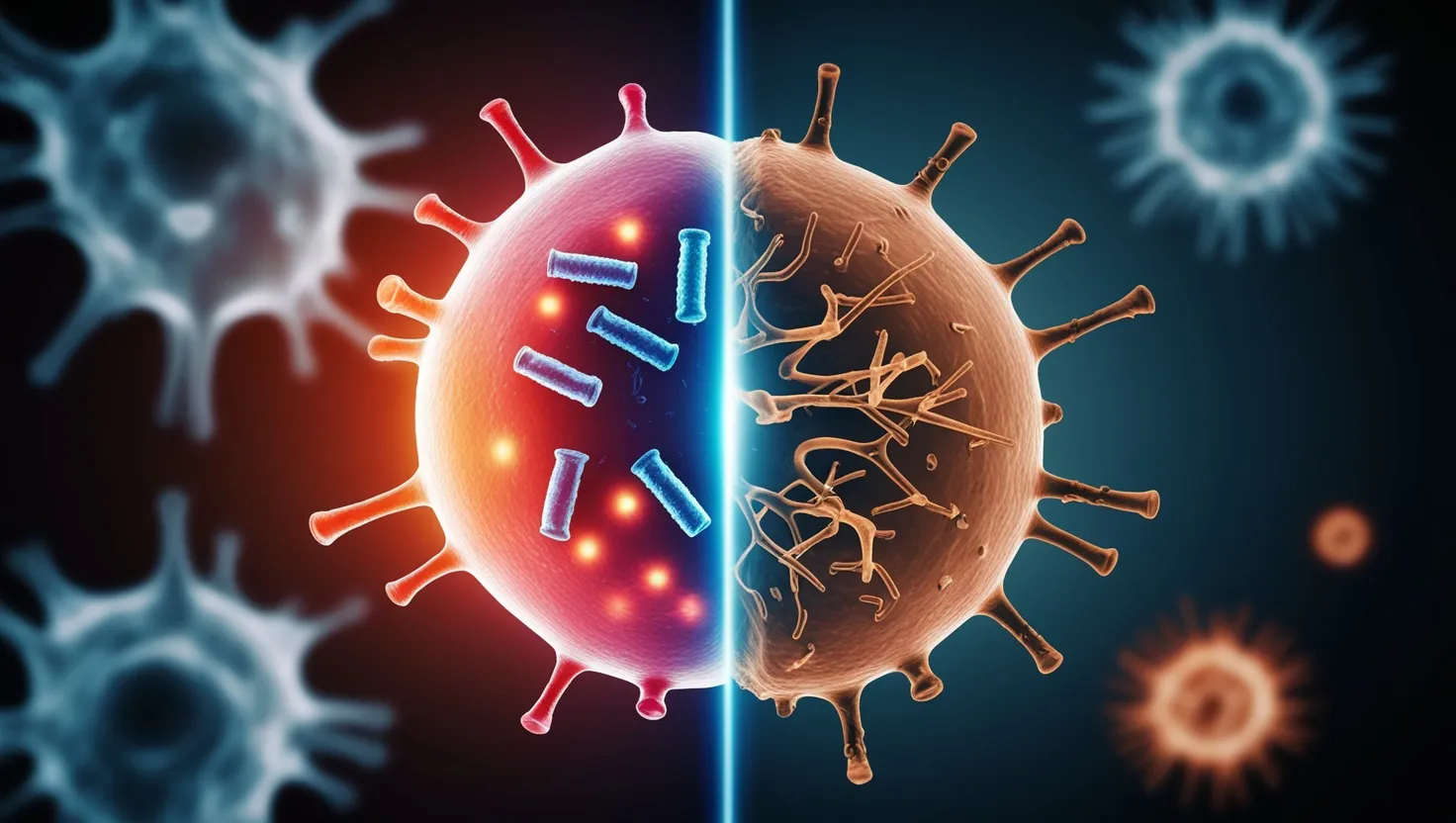
A scientist named Steve Horvath discovered something remarkable. By looking at specific chemical modifications on your DNA — not changes to the DNA itself, but changes to how it’s packaged and read — he could predict a person’s biological age with startling accuracy. This is called the epigenetic clock.
What’s unsettling is that this clock can sometimes show a biological age very different from your actual age. Identical twins, who share the same DNA, can have epigenetic clocks ticking at different speeds based on their lifestyles, stress levels, and environments. Someone who smokes, sleeps poorly, and lives under constant stress can look biologically older on the molecular level than their birth certificate suggests.
“The longer I live, the more beautiful life becomes.” — Frank Lloyd Wright
But here’s what nobody has properly explained yet: why does the epigenetic clock tick in the first place? What is actually driving these chemical modifications to accumulate in a predictable pattern? We can measure it. We can use it. We just don’t fully understand what’s orchestrating it underneath.
Some researchers think the epigenetic clock might be actively programmed — like a timer someone set. Others think it’s drift, just random noise accumulating over time. If it turns out to be programmed, that would have enormous implications. You could, in theory, reset the clock. Scientists have already done early experiments in animals, reprogramming cells to a younger epigenetic state. The results were promising enough to make a lot of serious people very excited, and very cautious at the same time.
The Oldest Argument: Is Aging a Bug or a Feature?
This is the debate that underlies everything else. Is aging something that evolved — something built in deliberately by natural selection — or is it just unavoidable wear and tear, like a car eventually breaking down no matter how well you maintain it?
The programmed aging camp argues that aging serves a purpose. By clearing out older individuals, species make room for younger, more adaptable ones. The gene pool keeps refreshing. The environment keeps getting new problem-solvers.
The damage camp argues that’s nonsense. Natural selection can’t select for aging because by the time aging really kicks in, most animals in the wild are already dead from predators, disease, or starvation. There’s no evolutionary pressure to fix a problem that nature never really has to deal with.
Both sides have evidence. Neither side has won.
What makes this especially interesting is the naked mole rat. This small, ugly, hairless creature from East Africa lives for over 30 years — roughly ten times longer than a similar-sized rodent. It barely shows signs of aging. It’s nearly immune to cancer. Its cells handle protein damage in unusual ways. It can survive oxygen deprivation that would kill a human in minutes.
“Life is not measured by the number of breaths we take, but by the moments that take our breath away.” — Maya Angelou
The naked mole rat didn’t get these abilities by accident. Something in its biology actively resists the processes that age other mammals. If we understood exactly what — and we’re getting closer — we might finally answer whether aging is something that was designed in, or just something we haven’t yet designed out.
Think about how much of modern medicine is built around treating the symptoms of aging. Arthritis medication. Blood pressure drugs. Dementia care. What if we could address the aging process directly, rather than chasing individual diseases one by one?
The honest answer is we don’t know enough yet. But we know more than we did ten years ago. And the five puzzles above — telomeres, mitochondria, zombie cells, the epigenetic clock, and the programmed versus damage debate — are the places where the real answers are hiding.
Aging is not simple. It’s not one thing. It’s probably five or ten overlapping processes that feed into each other in ways we’re only beginning to map. Understanding them won’t just extend life. It could change the quality of every year we get.