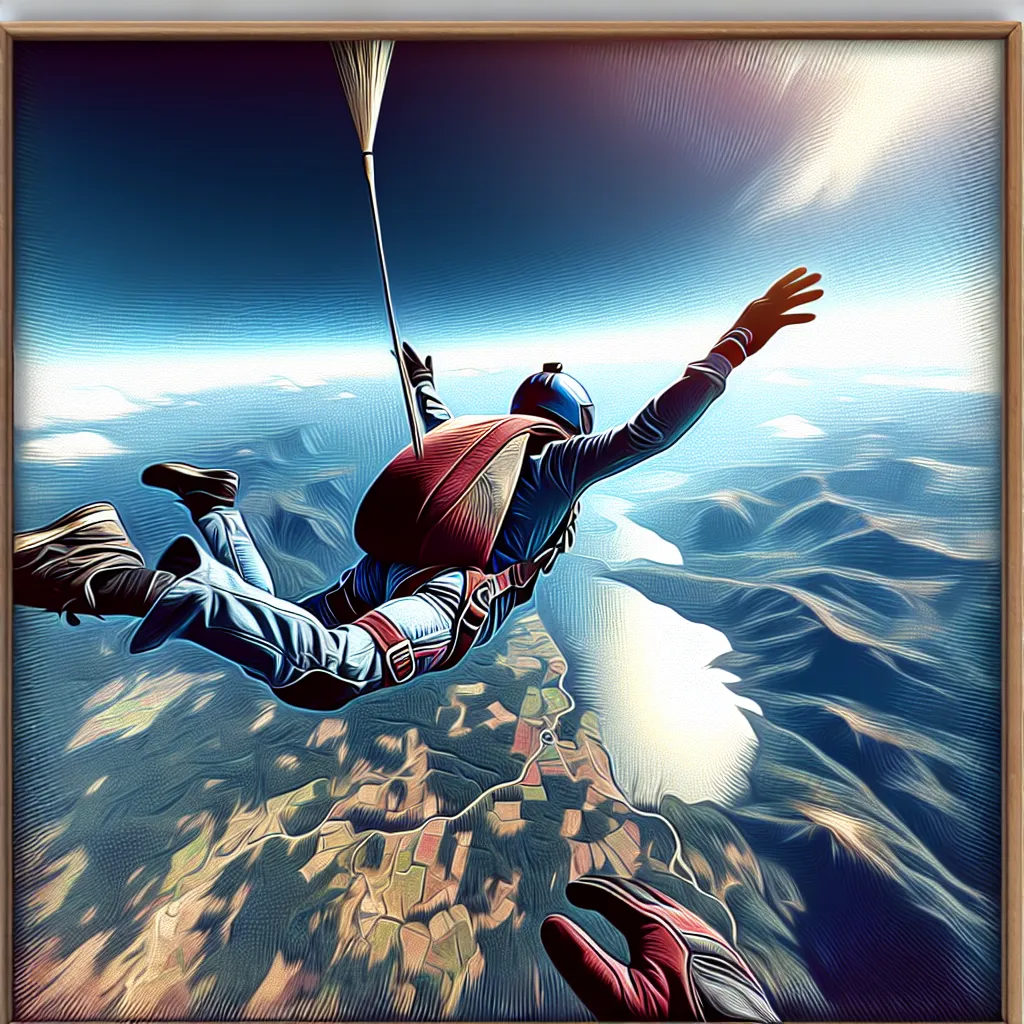
Skydiving at 7,600 meters without a parachute—sounds insane, right? But for Luke Aikins, it’s just another day at the office. With over 20,000 jumps under his belt, he’s well-acquainted with the rush of free-fall. Yet, the idea of plunging without a parachute initially seemed laughable. Let’s be real—he has a wife and a son; he thought it was madness. However, Luke’s curiosity won. He pondered, “What if?“. That’s when the idea of landing in a net took shape.
You’d think a net sounds simple, but it’s not. It’s meticulous science. Missing the net? Fatal. Landing wrong? Devastating injuries. Even the net’s setup had to be perfect—not too loose, not too tight. On jump day, nerves kicked in. Halfway up, Luke questioned his sanity. Yet, he pushed forward, ready to sit down if doubts crept in.
But sit down, he did not. He jumped, did a flip, and waved to his buddies mid-air. Free-falling for two minutes without a parachute was new territory. Approaching the net, it grew more defined and unavoidable. He maneuvered to align precisely, battling winds determined to push him off course. He hit 209 kilometers per hour. At that dizzying speed, he flipped onto his back and braced.
Impact struck like a thunderclap. Astonishingly, it didn’t hurt. He landed safely, no injuries. The euphoria was indescribable. Luke had just smashed a world record, proving you can indeed defy gravity without wings—or in this case, a parachute.
This wasn’t the only thrill-seeking madness. Take Rich Goodwin, a pilot who sliced a ribbon between two hot-air balloons by flying his plane on its side at 120 miles per hour! The precision required was astronomical. Imagine achieving such a feat based on split-second calculations and fine motor skills.
From the death-defying air stunts, we also dig into urban daredevils like Ali Law, who turned parkour into an internet sensation. Running from killer clowns over Southampton rooftops sounds straight out of a video game, but for Ali, it was reality.
These narratives don’t end with professional stunts. Every ordinary daredevil adds to the tapestry—from cliff divers risking death for a splash on Instagram to those attempting to knife-edge buildings in Dubai. The line between brilliance and lunacy blurs.
Lessons from today? If you leap from planes, a parachute is optional. If you jump off buildings, aim for something soft because concrete really hurts. And when friends suggest crazy ideas, maybe they’re not friends, but just equally crazy adventurers.