Did 9/11’s Tragic Events Hide a Startling Secret?
When Belief Defies Evidence: The Stubborn Lifeline of 9/11 Conspiracy Theories
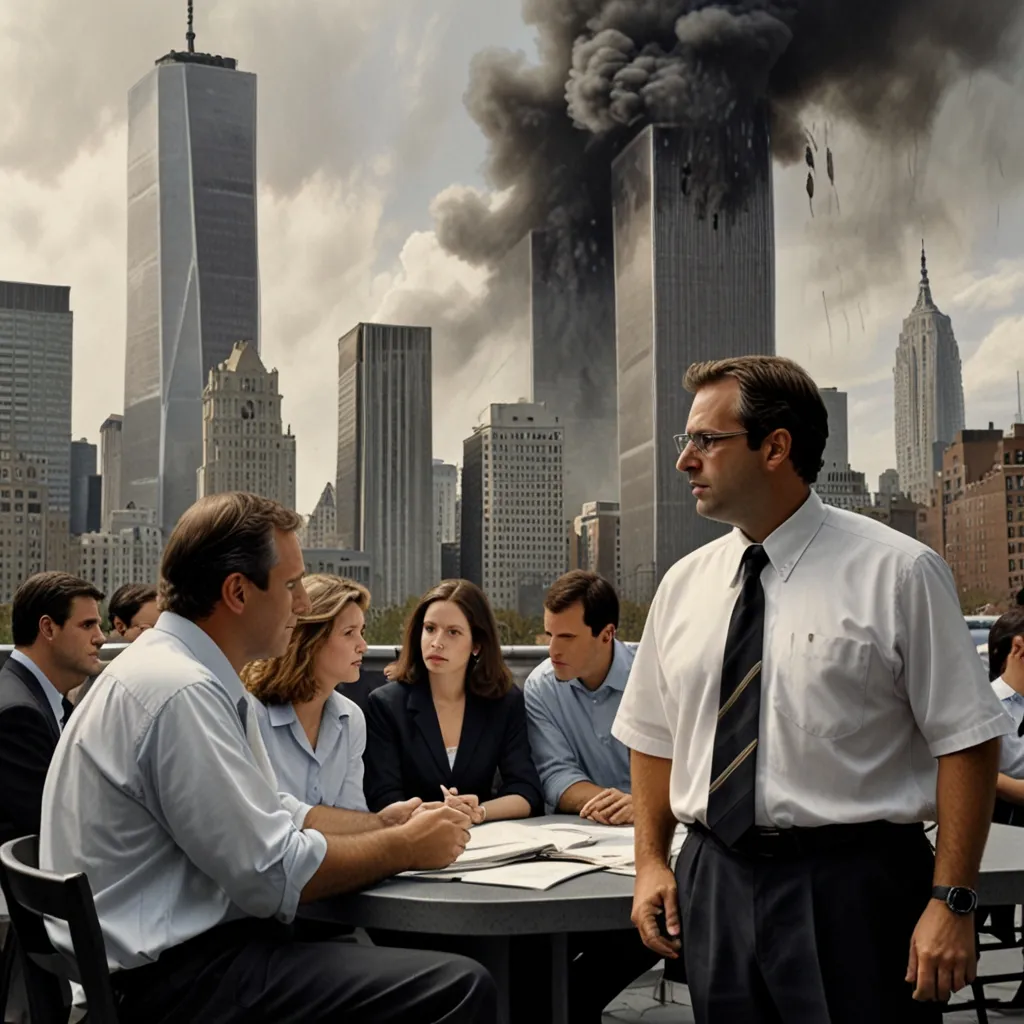
The events of September 11 were a seismic shift in modern history, leaving behind not just physical destruction but a maze of unanswered questions. One of the most intriguing, yet controversial, ideas is that the attacks were an inside job by the U.S. government. Despite a mountain of evidence dismissing this theory, it has captivated many and given rise to the 9/11 Truth movement.
The thought that the U.S. had a hand in the attacks surfaced almost immediately after the towers fell. People started speculating about how the buildings collapsed, with some saying it looked more like controlled demolitions than a result of planes hitting them. This theory caught fire online, making people question the official story that the towers fell due to structural damage and ensuing fires.
David Ray Griffin became one of the loudest voices in this movement, accusing the U.S. government of playing a role in the attacks. His ideas rallied a community of skeptics who believed the official narrative was either incomplete or misleading. The movement picked up even more steam with films like “Loose Change,” which offered various conspiracy theories that reached a broad audience.
Conspiracy theorists also zeroed in on the collapse of Building 7 at the World Trade Center. They argued that its fall, happening hours after the main towers went down, seemed too perfect to be blamed on fires and debris. This added fuel to the idea that controlled demolition was involved.
However, multiple investigations and studies have shown that the towers collapsed due to the plane crashes and the subsequent fires. The National Institute of Standards and Technology (NIST) did extensive research and found that the fires weakened the steel beams, leading to structural failure. But even with these findings, many conspiracy theorists aren’t convinced. They point to what they see as inconsistencies in the official narrative and a lack of transparency from government agencies.
These theories persist for various reasons. One is the human need for a more satisfying explanation for such a devastating event. For some, the idea that a small group of terrorists could wreak such havoc seems too simplistic. Plus, the internet and social media have made it easier for these ideas to spread, creating communities of like-minded people who reinforce each other’s beliefs.
Mistrust in the government also drives the 9/11 Truth movement. Some argue that the government’s failure to stop the attacks, despite warnings, hints at either complicity or negligence. Others point to redacted official reports and a perceived lack of full disclosure as evidence that there’s more to the story.
These conspiracy theories have real-world implications. They can undermine trust in democratic institutions and distract from understanding the true causes and perpetrators of the attacks. They also spread harmful misinformation, leading to the demonization of innocent groups and fueling dangerous ideologies.
In the end, the idea that the 9/11 attacks were an inside job by the U.S. government remains a hotly debated topic. While it has gained attention and followers, experts and evidence have thoroughly debunked it. The sticking power of these theories shows how complex human psychology is and how misinformation can thrive in the digital age.