The 1987 Max Headroom Broadcast Hijacking: Corporate Sabotage or Technical Prank Gone Viral?
Explore the 1987 Max Headroom broadcast hijack - was it a prank or message? Discover how unknown hackers beat TV security systems and challenged media control forever.
On that Sunday night in 1987, when a rubber mask briefly beat two big TV stations, something important broke on your screen: the idea that the people in charge always have control. I want to walk you through this story as if we are sitting together, TV remote in hand, asking the same simple question again and again: was this just a prank, or was someone sending a message?
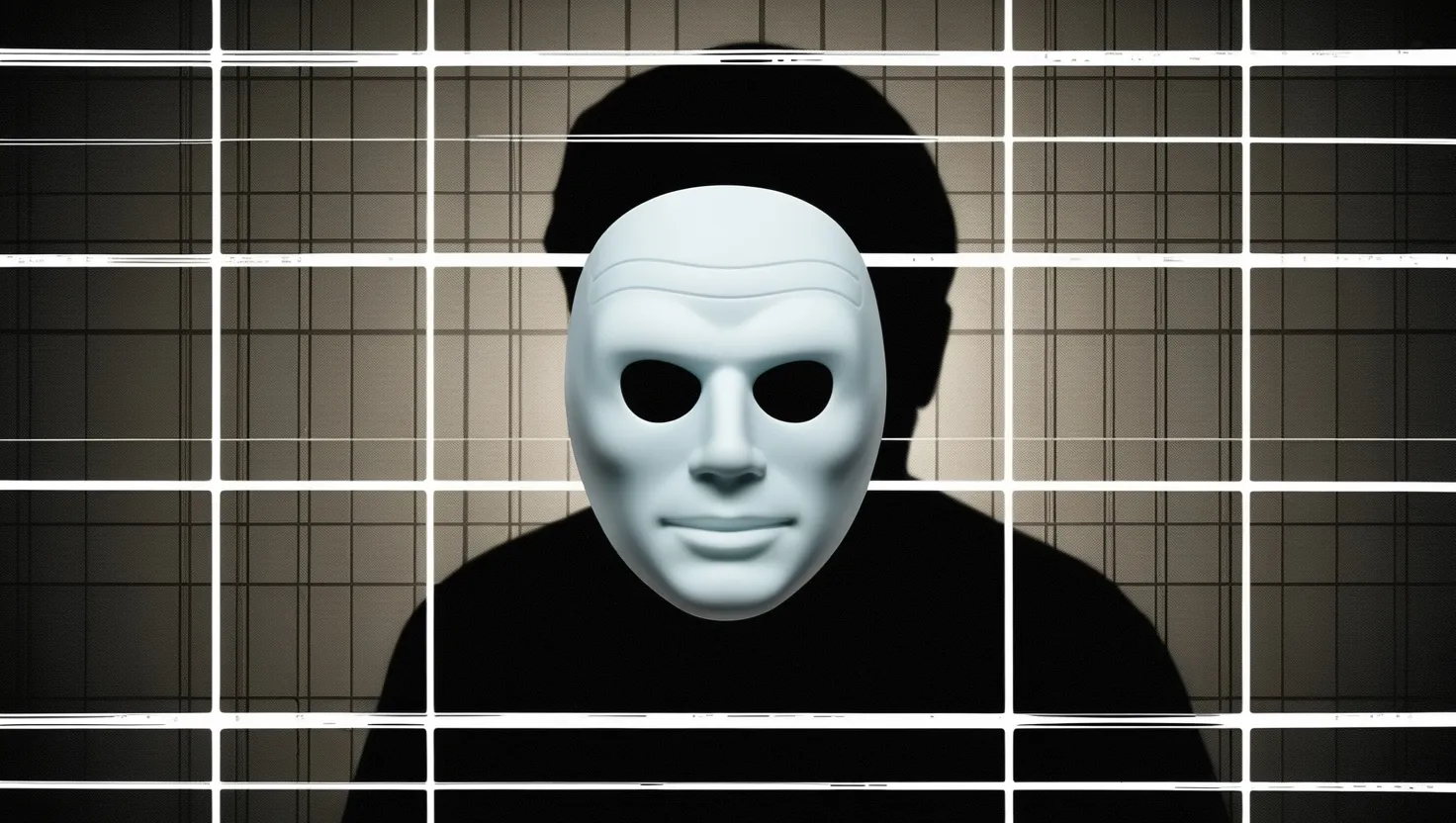
First, let me set the scene in plain terms. You are watching the news. A football game recap. Everything is normal. Then the picture suddenly cuts to a figure in a plastic Max Headroom mask, standing in front of a moving metal background that looks like a cheap copy of the real TV character’s virtual world. The image shakes. There is no clear sound. It lasts for a few seconds and then the station cuts back. People at home stare, confused. Do you change the channel, or do you wait and wonder?
A couple of hours later, another station, this time a public TV channel, is playing Doctor Who. This is quiet, nerdy Sunday-night comfort viewing. Suddenly, again, the same masked figure appears. This time the sound works. The voice is distorted, nonsense phrases are thrown around, there are brand names, crude jokes, and a weird ending involving a flyswatter. And then, just as suddenly, the normal show returns.
The person behind this was never caught. No arrest. No solid name. Nothing. For nearly forty years, people have argued over one thing: was this just a very weird joke, or something more serious, maybe even planned by people with real power or real grudges?
Let us start with the part most people skip over: how hard this was to pull off. To override a TV broadcast in 1987, you could not just plug in a VCR and hope. You had to get a signal of your own to beat the station’s signal being sent to the big transmitter on a skyscraper. That meant:
You needed to know exactly what frequency the station was using.
You needed the right kind of transmitter, not a toy, but serious radio equipment.
You needed enough power to overpower the station’s link signal, at the right place and angle.
You needed to time it right so you hit the link between the studio and the tower, not just send noise into the air.
So whoever did this knew how broadcast chains worked, not in theory, but in real-world detail. They either worked in TV, worked near TV, or spent a lot of time studying it. Does that sound more like a bored teenager, or like a frustrated engineer, or maybe a small team of hobbyists with time, tools, and a chip on their shoulder?
Now let me ask you something simple: if you had to risk prison to send one short message to hundreds of thousands of people, would you waste it on nonsense? That is where this story starts to get strange.
Many people treat the Max Headroom intrusion as nothing but a prank. It is easy to see why. The video looks silly. The mask is cheap. The lines are scattered and often crude. There is no clear manifesto, no “we demand” speech, no obvious threat. It looks like someone with a dirty sense of humor finally found a big stage.
But when I look at it closely, the “joke” label feels too thin. The technical setup was serious. The planning was tight. The choice of target was pointed: first a big commercial station, then a calm public station showing a British sci‑fi show with a loyal cult audience. Why those two, and why the character of Max Headroom?
Max Headroom, the real one from TV ads and shows, was a fake digital man: a “computer-generated” talk-show host played by an actor with heavy makeup. He lived inside screens. He talked fast, glitched, and made fun of commercial TV while also selling you things like soft drinks. He was both satire and brand mascot at the same time.
Now think about that for a moment. The hijacker put on a plastic version of a fake digital man who already represented the idea that television is artificial and controlled. In other words, a copy of a copy of a copy. Was that an accident? Or was the intruder saying, “Your TV is fake, your ads are fake, your news is a performance, and now I’m stepping into it”?
There is a line often linked to Marshall McLuhan:
“The medium is the message.”
In this case, the medium was the hijack itself. The content inside the hijack may sound like nonsense, but the act of taking over the screen was clear: this system can be overpowered. Someone outside the building can stand between the station and your living room.
Let us talk about the “corporate sabotage” idea, because on the surface it sounds exciting, but when we strip it down, we need to ask some very basic questions.
WGN, the first target, was a major commercial channel owned by a big media company. WTTW, the second, was a public station. If this was corporate sabotage, who was supposed to be hurt financially? Ads were not replaced by a rival station’s logos. Stocks did not crash. No one used the time to push a competitor’s brand.
If a rival company wanted to humiliate WGN, why use such a small time window and such a confusing message? Why not broadcast something clearly damaging, like faked news or a direct insult to the station? And why hit a public TV station afterward, which is not a commercial rival in the usual sense?
Corporate sabotage usually has a very boring trail: contracts, lawyers, internal emails, employees with grudges, money changing hands. None of that has ever surfaced. No whistleblower. No “tell-all” confession in old age. If a group inside a corporation did this, they kept quiet longer than almost any other corporate dirty trick we know of. Is that likely? You can decide for yourself.
But there is another version of “inside job” that is more subtle and more believable: not a whole company, just a few people who knew the system from the inside. Maybe an engineer who understood the link from studio to tower. Maybe a tech at another station. Maybe a cluster of radio amateurs with a friend in TV who liked to talk too much.
I want you to picture this: three or four young engineers in the 1980s, fascinated by signals, angry about something—maybe about how the company treats staff, maybe about media in general, maybe just eager to show “this thing is not as safe as you think.” They do not have millions of dollars, but they do have old gear, access to parts, and brains. They plan for weeks. They test their gear at low power. They drive near the towers. They watch TV schedules like hawks.
Is that impossible? Not at all. For me, the most believable scenario is not a giant corporate operation or a lone kid in a basement, but a very small, tight‑lipped group with just enough inside knowledge and just enough recklessness.
Then there is the Cold War theory. In the late 1980s, governments really were experimenting with ways to control or disrupt communication systems. Jamming enemy broadcasts, sending fake signals, and flooding radio bands were real tools. So some people ask: was this a test run for a larger ability to seize civilian TV during a crisis?
Here I want to slow down and ask you a basic logic question: if a government or military unit wanted to test a secret broadcast hijack ability, would they do it using a rubber mask, crude jokes, and random brand references… on civilian stations… in front of millions of regular viewers, knowing the FCC and FBI would investigate and record every detail?
Real covert tests try to be boring. They aim to look like normal glitches or minor technical failure. The more attention you draw, the more risk you face. The Max Headroom intrusion did the opposite: it screamed, “Look at me!” It is possible some intelligence person was curious about the case afterward, but the style does not match official practice.
Still, the world of the 1980s absolutely shaped how people read this event. People were already nervous about propaganda, secret experiments, and electronic warfare. So when a strange figure broke onto the screen, minds filled in the blanks with the fears of that time. In that way, the hijack acted like a mirror for public anxiety: you saw in it what you were already worried about.
Let us turn to something that often gets ignored: the cost‑benefit side. This intrusion needed equipment, planning, vehicles, and people willing to risk a serious federal crime. That is a lot of effort for 90 seconds of air time.
So ask yourself: what “return” did the hijackers expect? Fame? They never stepped forward. Political change? There was no clear statement. Money? No ransom note was reported. Corporate panic? The stations upgraded their defenses, but that is about it.
Here is one angle many people miss: for some hackers and tech‑obsessed people, the “reward” is not money or politics; it is the act itself. It is being able to say to themselves, “We beat the system they said could not be beaten.” In that sense, the Max Headroom intrusion is closer to people climbing a skyscraper or sneaking into a secure building just to prove they can. It is a stunt, but a very targeted, very technical one.
You might ask, “So is that it? Just a show‑off move?” Not exactly. Even without a clear manifesto, the intrusion carried a quiet message about vulnerability. It showed the public that the TV system, which looked smooth and solid from the outside, was in fact held together by links that could be overpowered by someone in the right place with the right gear.
Think about how you feel when a major website goes down today, or when someone hacks a big social media account. You suddenly remember that these systems are not magic; they are machines, and machines can be hijacked. The Max Headroom incident was an early, analog version of that same feeling.
There is a famous question by the media critic Neil Postman, which I want you to keep in mind as we think about that night:
“What happens to a culture when its serious public conversation becomes a form of entertainment?”
On that night, the serious flow of news and public broadcasting was literally turned into a form of absurd entertainment by an outsider. The line between “broadcast” and “prank” blurred on your screen in real time. The people in control did not choose it. Someone else did.
Let me share one more thought that is easy to miss: the intrusion affected two very different types of viewers. Sports fans watching a local news recap. Sci‑fi fans watching Doctor Who on public TV. Two different groups, but they shared one thing: they trusted that the flow from the station to their home was one‑way and safe.
After this, could they feel fully sure of that? Or did a small doubt stay in the back of their minds: “If someone can do this once, what else could they do if they really wanted to?”
You might wonder, “Why does this matter today when we have the internet, streaming, and social media?” That is exactly why it matters. The Max Headroom hijack was an early warning that:
Control of channels does not always equal control of content.
Security built for one era can be shattered by people thinking like the next era.
Systems that seem “too big to mess with” can be bent by a handful of determined people.
Now we live in a world where people hijack not just TV signals, but online accounts, live streams, and even entire news cycles. They do it by hacking infrastructure, yes, but also by gaming attention and algorithms. The basic lesson is still the same: the gatekeepers are never as all‑powerful as they look on screen.
Let me ask you one last question, the simplest of all: if the person behind the mask sat across from you today and you could ask them only one thing, what would you ask? “How did you do it?” “Why did you do it?” “Were you scared?” or maybe, “Are you proud of it now?”
Your answer to that question reveals what you really think this event was about: method, motive, emotion, or meaning.
To me, when I strip away the myths, I see a small group of technically skilled people using a mask of a fake TV personality to briefly grab real control of the broadcast system. Not for money. Not for a clear political program. But to prove a point that they never fully explained.
It was both a broadcast hijack and, in a smaller way, a kind of sabotage—not of a company’s finances, but of television’s illusion of safety and control. It showed that behind the polished studio lights and confident anchors, a noisy human hand could still reach into the signal, shake it, and laugh.
And once you have seen that, can you ever look at a “perfectly controlled” screen in quite the same way again?