The 1990 Calvine Photograph: What Really Happened That August Evening in Scotland?
On the evening of August 4, 1990, two hotel workers in rural Scotland stumbled upon something that would spark decades of mystery and speculation. They were walking on the moors above Calvine, a small hamlet in Perthshire, when they spotted a massive diamond-shaped object hovering silently above the landscape. The object was enormous—witnesses estimated it was at least the size of a fighter jet. It didn’t make a sound. It didn’t seem to move. And they did what anyone would do: they pulled out a camera and started shooting.[1] Within minutes, they had captured six photographs of this impossible thing. Within months, those photographs would vanish from public view for more than thirty years.
Think about that for a moment. We live in an era where governments struggle to keep secrets. Yet for over three decades, the clearest photograph of an unexplained aerial object ever documented simply disappeared. Not destroyed, not debunked, not explained—just gone. This is not a story about aliens or government conspiracies in the traditional sense. This is a story about how institutions handle information they don’t understand and the mechanisms they use to make inconvenient evidence disappear.
The two men who witnessed this event did the obvious thing. They developed their film and took the images to the Daily Record, a Glasgow-based tabloid newspaper.[1] The newspaper was intrigued. A genuine mystery sells papers. But the journalists didn’t just run the story. They did what any responsible outlet might do in the early 1990s—they contacted the Ministry of Defence for comment. They asked the government to help explain what their photographers had captured.
Here is where the story becomes interesting. The Ministry of Defence took the photographs, took the negatives, and told the newspaper they would investigate. What came back was silence. Complete, institutional silence.[1] The photographs were never returned. The negatives vanished. The MoD’s files on the incident, when finally released in 2009 and more fully in 2022, contained no technical analysis of the object. No conclusion about what it might be. No explanation of where it went or why it was kept. Instead, the files focused on media management—how to handle the press, how to contain the story, how to make sure it didn’t become a larger problem.
This raises an uncomfortable question: Why would a government seize evidence of something they officially claimed to not understand? If the object was truly unidentified and posed no threat, why keep the evidence hidden? The official classification was “UAP”—Unidentified Aerial Phenomenon—which is simply another way of saying “we don’t know.” But “we don’t know” doesn’t usually result in confiscation and decades of secrecy.
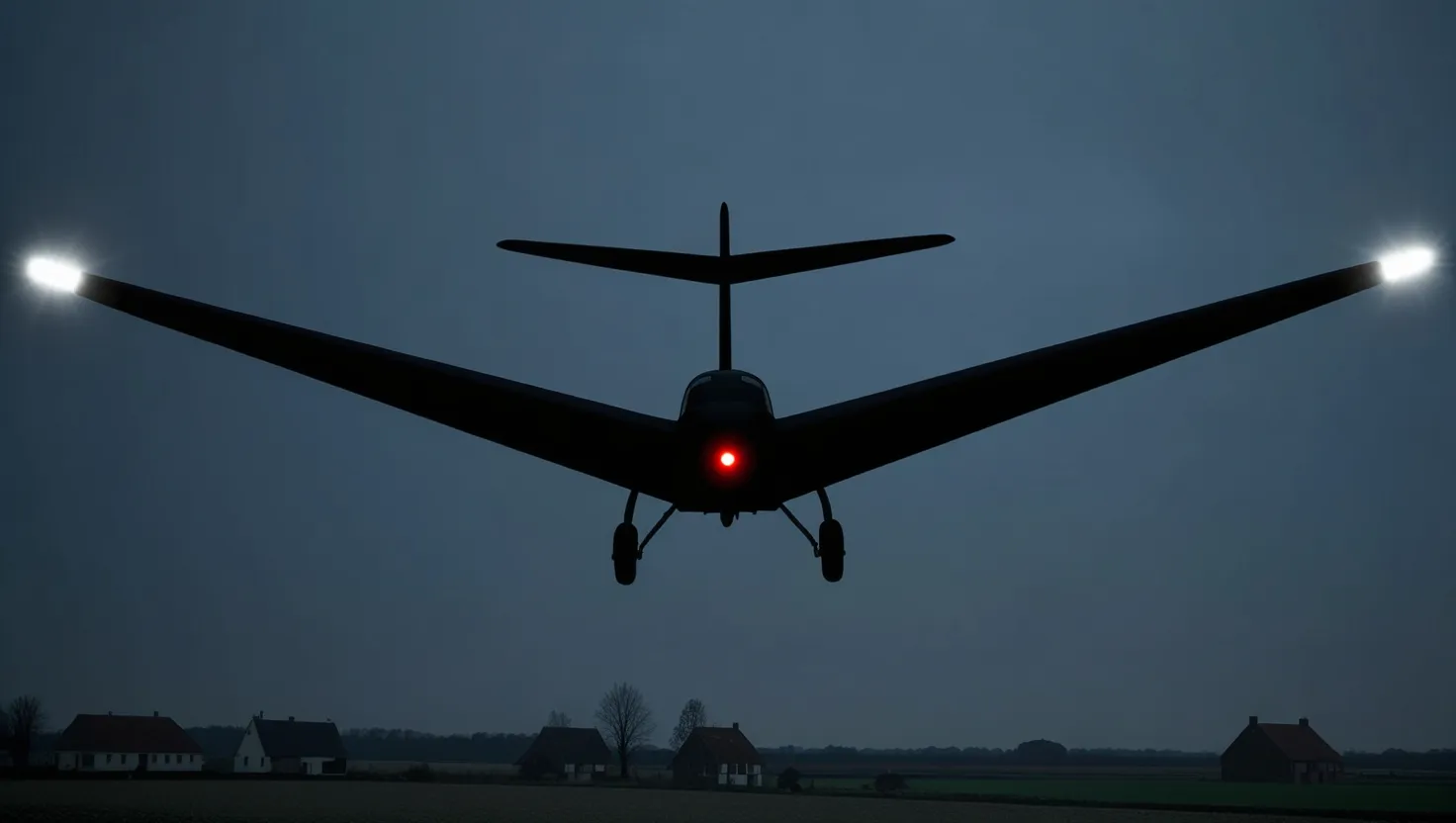
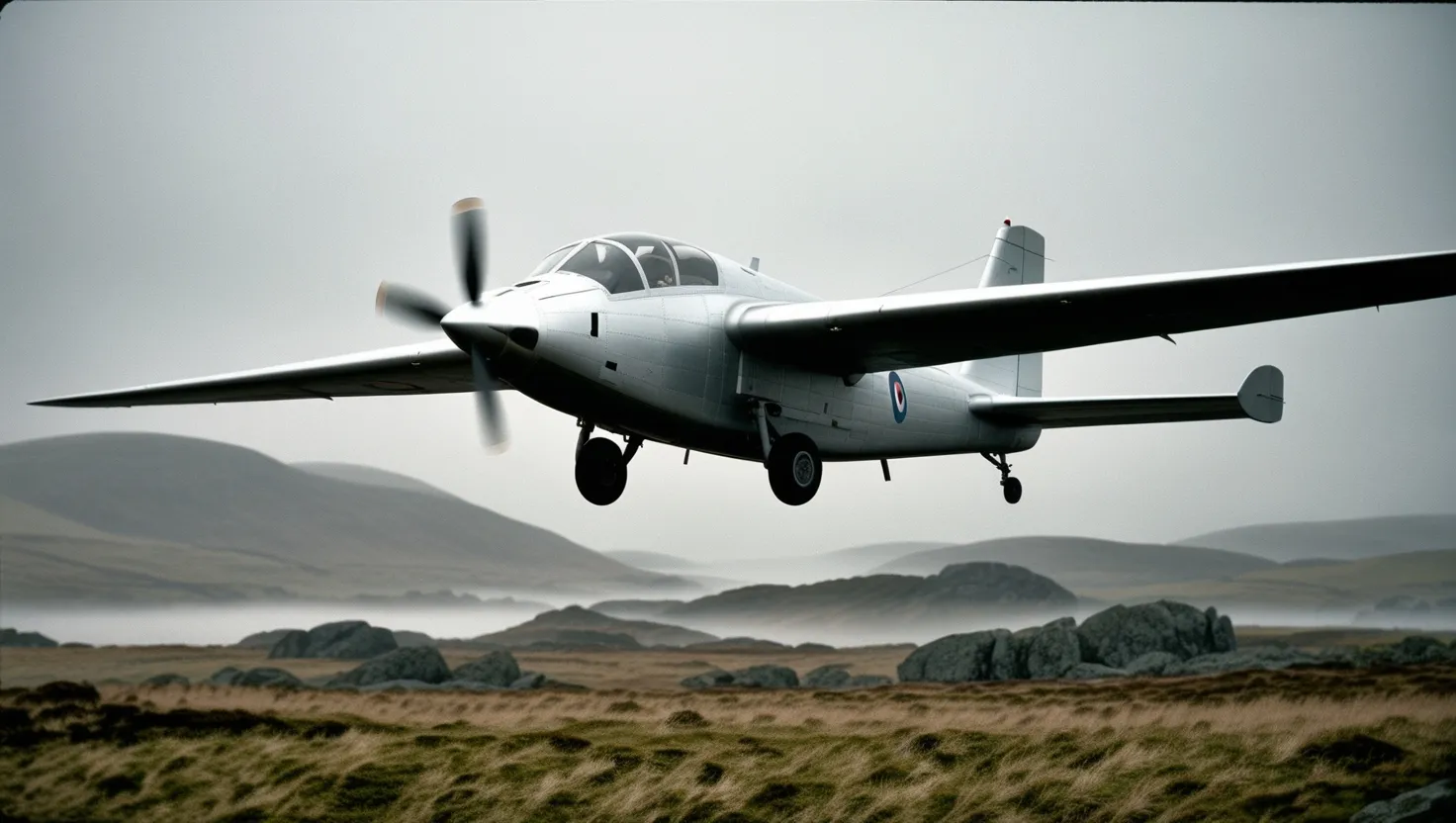
The object itself, based on witness testimony and the surviving faxed copies, was extraordinary in its description. It was completely silent.[1] This is the detail that matters most. Modern jet aircraft, even with advanced sound dampening, produce audible noise. They have to. The physics of propulsion systems require it. Yet here was an object described as completely silent, hovering for approximately ten minutes, then ascending vertically at great speed.[1] As one observer noted, a jet made several low passes near the object “as if the pilot had seen the object as well and was homing in for a closer look.”[1] This suggests that even the military personnel in the area were trying to understand what they were witnessing.
The historical moment is crucial to understanding what might have been happening. August 1990 was a specific time in aerospace history. The Cold War was ending, but that’s precisely when military budgets become most secretive. Nations don’t publicize their most advanced weapons systems during transitions. The United States was rumored to be testing something called the Aurora—a hypersonic reconnaissance platform that allegedly existed in the black budget, hidden from public knowledge and congressional oversight. Some speculated designs for this aircraft involved delta or diamond-shaped configurations.[1] The Calvine location, near Scottish military airspace and NATO training ranges, falls squarely within probable testing corridors for such classified platforms.
But here’s what makes this case genuinely perplexing: the object’s behavior doesn’t match even theoretical models of advanced human aircraft. It hovered. It was silent. It rose vertically at exceptional speed. These characteristics strain credulity when applied to any known or theoretically documented experimental system. This is where the conversation typically splits into two camps—those who believe this was a classified military platform and those who believe it was something else entirely.
The academic analysis that finally emerged in 2022 provides fascinating technical details. The surviving photograph showed no evidence of being faked through conventional darkroom techniques.[2] The film grain distribution appeared consistent with genuine photographic capture from 1990. The chromatic aberration present in the image suggested an older, lower-quality enlarging lens—exactly what would be expected from a photograph taken with equipment available in that era and then reproduced through multiple generations of copying.[2] In other words, the forensic evidence supported authenticity. This was a real photograph of something real. The question remained: what?
One of the most intriguing aspects of this case is what researchers discovered about the object’s visual characteristics. The craft displayed what appeared to be deliberate angular design—sharp edges, geometric precision, a form that seemed engineered rather than natural.[1] This is significant. Natural phenomena don’t typically manifest in perfect diamond shapes. Atmospheric tricks, ball lightning, optical illusions—these things tend to be amorphous, shifting, formless. The Calvine object appeared deliberately constructed.
Yet here’s a counterpoint worth considering: advanced aerodynamic design in the 1990s was increasingly moving toward angular, stealth-oriented forms. The F-117 Nighthawk had already demonstrated that diamond and angular shapes could be highly functional for radar avoidance. Could a next-generation platform, perhaps a joint UK-US development, have been testing over Scottish airspace? Some researchers have suggested exactly this scenario. They point to RAF Machrihanish, a facility involved in classified programs, as a potential launch point.[1]
The disappearance of the witnesses adds another layer of mystery. After their initial reporting to the Daily Record, the two men effectively vanished from the public record. They gave no further interviews. They made no appearances in media coverage. They simply stopped being part of the story. Were they debriefed by military intelligence? Were they asked to remain silent? Standard security protocols might explain this, but it also fuels speculation that something more significant occurred—that they knew something or had captured something sensitive enough to warrant official suppression.
The role of institutions in this case cannot be overstated. The Ministry of Defence didn’t deny anything. They didn’t ridicule the witnesses. They simply absorbed the evidence into bureaucratic machinery and kept it there. This is actually more effective than denial or mockery. When you deny something, you create an argument. When you ridicule something, you create martyrs and conspiracy theorists. But when you simply file something away and maintain institutional silence, you create forgetfulness. Time passes. Original witnesses fade. The story becomes old news. Eventually, most people forget it ever happened.
What makes the 2022 recovery of the original photograph so significant is that it broke this cycle of institutional forgetfulness. The image emerged through academic research, not government disclosure.[1] Suddenly, the Calvine incident was back in the news. Suddenly, people were looking at actual photographic evidence rather than crude fax copies. And suddenly, the question became impossible to dismiss: if this was truly nothing—a misidentification, a weather balloon, a hoax—why did the government keep it secret for more than thirty years?
The most compelling insight this case offers isn’t about UFOs or aliens or hidden technology. It’s about how powerful institutions manage information. A photograph exists. Witnesses exist. Physical evidence once existed. Yet for a generation, none of this could be publicly examined because it had been absorbed into state archives and covered by classification procedures. This is the real mystery of Calvine—not what was in the sky, but why what was in the sky mattered enough to hide.
Think about what this means for other incidents, other sightings, other anomalous events that have never seen public light. How much genuine evidence sits in filing cabinets across government facilities, waiting for declassification deadlines that may never come? How many real mysteries remain unsolved simply because the people who witnessed them were silenced and their evidence was locked away?
The Calvine photograph, now public, shows something that defies easy explanation. Was it terrestrial? Was it extraterrestrial? Was it classified? Was it something else? The photograph itself cannot answer these questions. But what it does reveal is how institutions respond to genuine anomalies—with silence, with seizure, with bureaucratic invisibility. And that, perhaps, is the most unsettling aspect of the entire incident.